Atropa acuminata Royle ex Lindl.
1. Taxonomic, Nomenclature & Therapeutic Summary Table
| Botanical Attribute | Pharmacognostic & Therapeutic Specification |
|---|---|
| Synonym | A. belladonna auct. non L. |
| Family | Solanaceae. |
| Habitat | Kashmir and Himachal Pradesh up to 2,500 m. |
| English | Indian Belladonna, Indian Atropa. |
| Ayurvedic | Suuchi. |
| Unani | Luffaah, Luffaah-Barri, Yabaruj, Shaabiraj. |
| Action | Highly poisonous; sedative, narcotic, anodyne, nervine, antispasmodic (used in paralysis); parkinsonism; encephalitis; carcinoma; spastic dysmenorrhoea; whooping cough, spasmodic asthma; colic of intestines, gall bladder or kidney, spasm of bladder and ureters; contraindicated in enlarged prostate. |
| Key Application | In spasm and colic-like pain in the areas of the gastrointestinal tract and bile ducts. (German Commission E, The British Herbal Pharmacopoeia.) It is contraindicated in tachycardiac arrhythmias, prostate adenoma, glaucoma, acute oedema of lungs. |
| Dosage | Leaf, root—30–60 mg powder. (CCRAS.) |
| Taxonomic Cohort | Genus Atropa (1 documented species); Family Solanaceae (38 documented species). |
2. Classical Nomenclature, Taxonomy & Biogeographical Context
Atropa acuminata (taxonomically cited with authority Royle ex Lindl.) is an established medicinal plant species in Indian materia medica. It is classified under the botanical family Solanaceae (primary family classification: Solanaceae), placing it within a well-defined chemotaxonomic group of medicinal flora. In classical and modern botanical literature, the species is cross-referenced under the botanical synonymy A. belladonna auct. non L, which is synchronized to prevent taxonomic ambiguity across regional herbal formularies. Biogeographically, its documented habitat and ecological distribution span: Kashmir and Himachal Pradesh up to 2,500 m.
Across classical and vernacular Indian systems of medicine, Atropa acuminata is recognized under distinct polyglot nomenclature: in English botanical and trade usage as Indian Belladonna, Indian Atropa; in the Ayurvedic system (synchronized across The Ayurvedic Pharmacopoeia of India, CCRAS Standard Nomenclature, Sharangadhara Samhita, and Bhava Prakash) as Suuchi; in the Unani-Tibb materia medica (recorded in The National Formulary of Unani Medicine and CCRUM literature) as Luffaah, Luffaah-Barri, Yabaruj, Shaabiraj. Romanized Sanskrit and Ayurvedic spellings follow standard National Academy of Ayurveda (Rashtriya Ayurveda Vidyapeeth) transliteration conventions, using double vowels to preserve authentic classical pronunciation across regional medical traditions.
3. Therapeutic Actions, Phytochemistry & Pharmacological Profile
In therapeutic and clinical pharmacognosy, the primary recorded actions and clinical indications of Atropa acuminata are: Highly poisonous; sedative, narcotic, anodyne, nervine, antispasmodic (used in paralysis); parkinsonism; encephalitis; carcinoma; spastic dysmenorrhoea; whooping cough, spasmodic asthma; colic of intestines, gall bladder or kidney, spasm of bladder and ureters; contraindicated in enlarged prostate. These traditional and clinical attributes reflect the plant part-specific pharmacological profile documented across classical Indian treatises and modern herbal pharmacopoeias. Furthermore, international and national regulatory monographs highlight its validated key clinical application: In spasm and colic-like pain in the areas of the gastrointestinal tract and bile ducts. (German Commission E, The British Herbal Pharmacopoeia.) It is contraindicated in tachycardiac arrhythmias, prostate adenoma, glaucoma, acute oedema of lungs.
Experimental phytochemistry, active chemical constituents, and pharmacological screening studies reported for Atropa acuminata establish the following evidence base: A. belladonna L. (European sp. Belladonna, Deadly Nightshade) is cultivated in Kashmir and Himachal Pradesh. The herb contains tropane (tropine) or solanaceous alkaloids (up to 0.6%), including hyoscamine and atropine; flavonoids; coumarins; volatile bases (nicotine). Tropane alkaloids inhibit the parasympathetic nervous system, which controls involuntary bodily activities; reduces saliva, gastric, intestinal and bronchial secretions, and also the activity of urinary tubules. Tropane alkaloids also increase the heart rate and dilate the pupils. These alkaloids are used as an additive to compound formulations for bronchitis, asthma, whooping cough, gastrointestinal hypermotility, dysmenorrhoea, nocturnal enuresis and fatigue syndrome. Atropine provides relief in parkinsonism and neurovegetative dystonia. The root is the most poisonous, the leaves and flowers less, and the berries the least. (Francis Brinker.)
4. Comparative Genus & Family Pharmacognosy
Within Indian medicinal flora, Atropa acuminata stands as a distinct representative of the genus Atropa. Its therapeutic profile underscores the role of selectively utilized medicinal genera alongside larger polytypic genera.
At the family level, Solanaceae encompasses 38 documented medicinal species (2.09% of the 1,814-species flora). Other representative medicinal members of Solanaceae include: Brugmansia suaveolens (Angel’s Trumpet), Capsicum annuum (Raktamaricha), Capsicum frutescens (Katuviraa), Datura alba (Dhattuura), Hyoscyamus muticus (Paarsika-yavaani). In comparative pharmacognosy, evaluating species within the same botanical family aids quality control, authentication of crude drugs, and identification of chemotaxonomic markers.
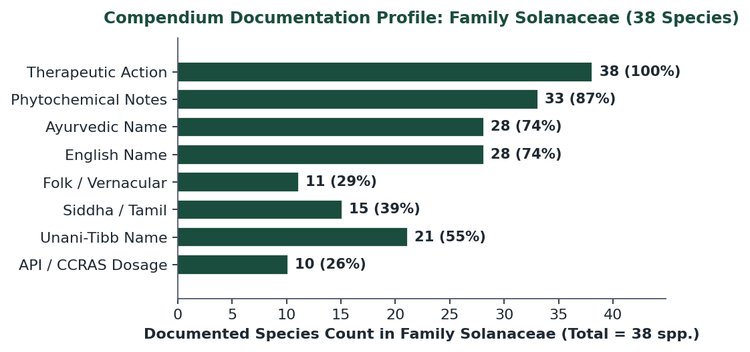
Figure 1: Quantitative documentation profile across all 38 medicinal species of family Solanaceae.
5. Pharmacopoeial Standards, Posology & Reference Framework
For clinical and traditional dispensing, the standardized posology and crude herb dosage for Atropa acuminata are prescribed as follows: Leaf, root—30–60 mg powder. (CCRAS.). Crude drug dosages are calibrated against The Ayurvedic Pharmacopoeia of India (Vols. I–IV) and the Standard Nomenclature of Ayurvedic Medicinal Plants published by the Central Council for Research in Ayurveda and Siddha (CCRAS). Classical and modern pharmacognostic synchronization for Atropa acuminata integrates standards from The Ayurvedic Pharmacopoeia of India, The National Formulary of Unani Medicine, Formulary of Siddha Medicine, The Wealth of India (CSIR), Compendium of Indian Medicinal Plants (CDRI), Dictionary of Indian Medicinal Plants (CIMAP), German Commission E, ESCOP, WHO monographs, British Herbal Pharmacopoeia, and Natural Medicines Comprehensive Database.