Cassia angustifolia Vahl.
1. Taxonomic, Nomenclature & Therapeutic Summary Table
| Botanical Attribute | Pharmacognostic & Therapeutic Specification |
|---|---|
| Synonym | C. senna Linn. var. senna. |
| Family | Caesalpiniaceae. |
| Habitat | Native to Sudan and Arabia. Now cultivated mainly in Tirunelveli and Ramnathpuram districts and to a lesser extent in Madurai, Salem and Tiruchirapalli districts of Tamil Nadu. Also grown on a small scale in Cuddapah district of Andhra Pradesh and certain parts of Karnataka. |
| English | Indian Senna, Tinnevelly Senna. |
| Ayurvedic | Svarna-pattri, Maarkandikaa, Maarkandi. |
| Unani | Sannaa, Sanaa-makki, Senaai, Sonaamukhi, Sanaa-Hindi. |
| Siddha / Tamil | Nilaavaarai. |
| Folk | Sanaai. |
| Action | Purgative (free from astringent action of rhubark type herbs, but causes gripe), used in compounds for treating biliousness, distention of stomach, vomiting and hiccups. Also used as a febrifuge, in splenic enlargements, jaundice, amoebic dysentery. Contraindicated in inflammatory colon diseases. |
| Key Application | Leaf and dried fruit—in occasional constipation. (German Commission E.) As a stimulant laxative. (The British Herbal Pharmacopoeia.) 1,8dihydoxy-anthracene derivatives have a laxative effect. This effect is due to the sennosides, specifically, due to their active metabolite in the colon, rheinanthrone. The effect is primarily caused by the influence on the motility of the colon by inhibiting stationary and stimulating propulsive contractions. (German Commission E, ESCOP, WHO.) Seena has been included in I.P. as a purgative. |
| Dosage | Leaves—500 mg to 2 g (API Vol. I.) |
| Taxonomic Cohort | Genus Cassia (10 documented species); Family Caesalpiniaceae (25 documented species). |
2. Classical Nomenclature, Taxonomy & Biogeographical Context
Cassia angustifolia (taxonomically cited with authority Vahl.) is an established medicinal plant species in Indian materia medica. It is classified under the botanical family Caesalpiniaceae (primary family classification: Caesalpiniaceae), placing it within a well-defined chemotaxonomic group of medicinal flora. In classical and modern botanical literature, the species is cross-referenced under the botanical synonymy C. senna Linn. var. senna, which is synchronized to prevent taxonomic ambiguity across regional herbal formularies. Biogeographically, its documented habitat and ecological distribution span: Native to Sudan and Arabia. Now cultivated mainly in Tirunelveli and Ramnathpuram districts and to a lesser extent in Madurai, Salem and Tiruchirapalli districts of Tamil Nadu. Also grown on a small scale in Cuddapah district of Andhra Pradesh and certain parts of Karnataka.
Across classical and vernacular Indian systems of medicine, Cassia angustifolia is recognized under distinct polyglot nomenclature: in English botanical and trade usage as Indian Senna, Tinnevelly Senna; in the Ayurvedic system (synchronized across The Ayurvedic Pharmacopoeia of India, CCRAS Standard Nomenclature, Sharangadhara Samhita, and Bhava Prakash) as Svarna-pattri, Maarkandikaa, Maarkandi; in the Unani-Tibb materia medica (recorded in The National Formulary of Unani Medicine and CCRUM literature) as Sannaa, Sanaa-makki, Senaai, Sonaamukhi, Sanaa-Hindi; in the Siddha and Tamil medical tradition (compiled from the Formulary of Siddha Medicine and IMPCOPS Chennai) as Nilaavaarai; in regional Indian folk and vernacular ethnobotany as Sanaai. Romanized Sanskrit and Ayurvedic spellings follow standard National Academy of Ayurveda (Rashtriya Ayurveda Vidyapeeth) transliteration conventions, using double vowels to preserve authentic classical pronunciation across regional medical traditions.
3. Therapeutic Actions, Phytochemistry & Pharmacological Profile
In therapeutic and clinical pharmacognosy, the primary recorded actions and clinical indications of Cassia angustifolia are: Purgative (free from astringent action of rhubark type herbs, but causes gripe), used in compounds for treating biliousness, distention of stomach, vomiting and hiccups. Also used as a febrifuge, in splenic enlargements, jaundice, amoebic dysentery. Contraindicated in inflammatory colon diseases. These traditional and clinical attributes reflect the plant part-specific pharmacological profile documented across classical Indian treatises and modern herbal pharmacopoeias. Furthermore, international and national regulatory monographs highlight its validated key clinical application: Leaf and dried fruit—in occasional constipation. (German Commission E.) As a stimulant laxative. (The British Herbal Pharmacopoeia.) 1,8dihydoxy-anthracene derivatives have a laxative effect. This effect is due to the sennosides, specifically, due to their active metabolite in the colon, rheinanthrone. The effect is primarily caused by the influence on the motility of the colon by inhibiting stationary and stimulating propulsive contractions. (German Commission E, ESCOP, WHO.) Seena has been included in I.P. as a purgative.
Experimental phytochemistry, active chemical constituents, and pharmacological screening studies reported for Cassia angustifolia establish the following evidence base: Most of the Senna sp. contain rhein, aloe-emodin, kaempferol, isormamnetin, both free and as glucosides, together with mycricyl alcohol. The purgative principles are largely attributed to anthraquinone derivatives and their glucosides. Senna is an Arabian name. The drug was brought into use by Arabian physicians for removing capillary congestion (pods were preferred to leaves). The active purgative principle of senna was discovered in 1866. Cassia acutifolia Delile is also equated with Maarkandikaa, Svarna-pattri, Sanaai.
In specialized pharmacognostic classifications, Cassia angustifolia is also listed among standardized commercial herbal extracts used in India with defined quantitative phytochemical markers; and represented by authenticated macro-photographic crude drug specimens in institutional pharmacognostic collections.
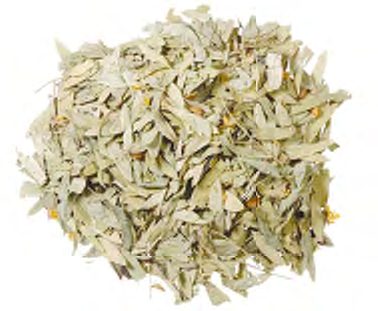
Figure 1: Authenticated crude herb specimen — Cassia angustifolia leaf.
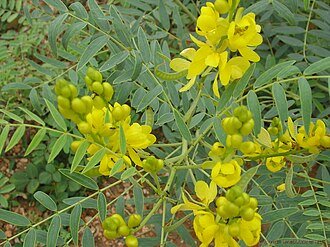
Botanical Reference 1: Senna alexandrina — Botanical specimen
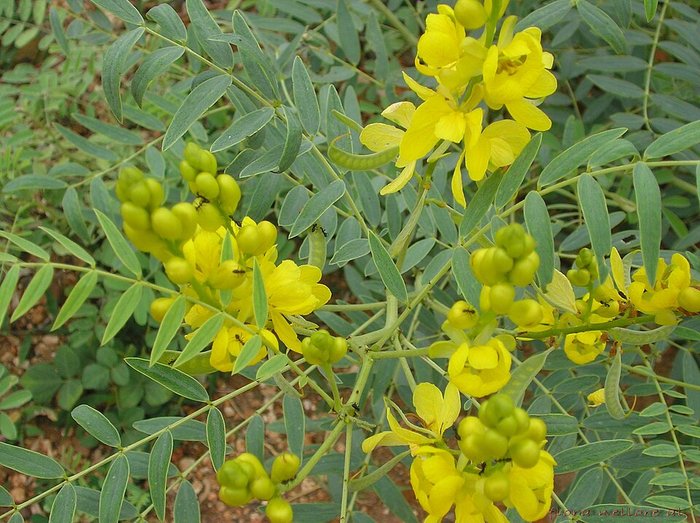
Botanical Reference 2: Senna alexandrina — Botanical specimen
Botanical Reference 3: Cassia angustifolia — Wikimedia Commons reference
4. Comparative Genus & Family Pharmacognosy
Taxonomically, the genus Cassia comprises 10 distinct medicinal species in Indian herbal literature. Closely allied congeneric species include: Cassia absus (Action: Seed—bitter, blood-purifier, astringent, stimulant, diuretic. Used topically for…); Cassia alata (Action: Leaf—used in skin diseases like herpes, blotch, eczema, mycosis (washerman’s…); Cassia auriculata (Action: Roots—used in skin diseases and asthma. Flowers enter into compounds for…); Cassia fistula (Action: Flowers and pods— purgative, febrifugal, astringent, antibilious. Seed…); Cassia obovata (Action: An adulterant of the true senna. Leaves and seeds—purgative and anthelmintic) along with 4 additional congeneric species. Comparing Cassia angustifolia alongside its congeners in genus Cassia highlights both shared secondary metabolite classes and species-specific organotropism across different ecological zones.
At the family level, Caesalpiniaceae encompasses 25 documented medicinal species (1.38% of the 1,814-species flora). Other representative medicinal members of Caesalpiniaceae include: Bauhinia acuminata (Kaanchnaara), Bauhinia malabarica (Ashmantaka var), Bauhinia purpurea (Kovidaara), Bauhinia racemosa (Ashmantaka), Caesalpinia bonduc (Puutikaranja). In comparative pharmacognosy, evaluating species within the same botanical family aids quality control, authentication of crude drugs, and identification of chemotaxonomic markers.
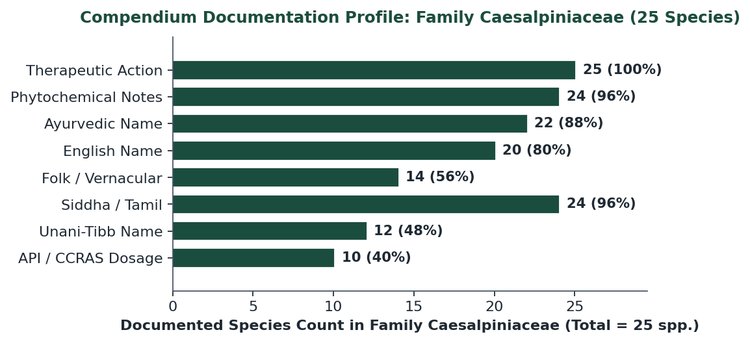
Figure 2: Quantitative documentation profile across all 25 medicinal species of family Caesalpiniaceae.
5. Pharmacopoeial Standards, Posology & Reference Framework
For clinical and traditional dispensing, the standardized posology and crude herb dosage for Cassia angustifolia are prescribed as follows: Leaves—500 mg to 2 g (API Vol. I.). Crude drug dosages are calibrated against The Ayurvedic Pharmacopoeia of India (Vols. I–IV) and the Standard Nomenclature of Ayurvedic Medicinal Plants published by the Central Council for Research in Ayurveda and Siddha (CCRAS). Classical and modern pharmacognostic synchronization for Cassia angustifolia integrates standards from The Ayurvedic Pharmacopoeia of India, The National Formulary of Unani Medicine, Formulary of Siddha Medicine, The Wealth of India (CSIR), Compendium of Indian Medicinal Plants (CDRI), Dictionary of Indian Medicinal Plants (CIMAP), German Commission E, ESCOP, WHO monographs, British Herbal Pharmacopoeia, and Natural Medicines Comprehensive Database.