Chrysanthemum indicum Linn.
1. Taxonomic, Nomenclature & Therapeutic Summary Table
| Botanical Attribute | Pharmacognostic & Therapeutic Specification |
|---|---|
| Synonym | Pyrethrum indicum L. |
| Family | Compositae; Asteraceae. |
| Habitat | Native to China and Japan. Cultivated as an ornamental. |
| English | Chrysanthemum. |
| Ayurvedic | Shatapatri. |
| Unani | Guldaaudi. |
| Siddha / Tamil | Samanthipoo, Akkarakkaram. |
| Action | Flowers—stomachic, aperient, anti-inflammatory. Leaves— prescribed in migraine (as circulatory stimulant). Uses same as those of chamomile. |
| Taxonomic Cohort | Genus Chrysanthemum (1 documented species); Family Compositae (91 documented species). |
2. Classical Nomenclature, Taxonomy & Biogeographical Context
Chrysanthemum indicum (taxonomically cited with authority Linn.) is an established medicinal plant species in Indian materia medica. It is classified under the botanical family Compositae; Asteraceae (primary family classification: Compositae), placing it within a well-defined chemotaxonomic group of medicinal flora. In classical and modern botanical literature, the species is cross-referenced under the botanical synonymy Pyrethrum indicum L, which is synchronized to prevent taxonomic ambiguity across regional herbal formularies. Biogeographically, its documented habitat and ecological distribution span: Native to China and Japan. Cultivated as an ornamental.
Across classical and vernacular Indian systems of medicine, Chrysanthemum indicum is recognized under distinct polyglot nomenclature: in English botanical and trade usage as Chrysanthemum; in the Ayurvedic system (synchronized across The Ayurvedic Pharmacopoeia of India, CCRAS Standard Nomenclature, Sharangadhara Samhita, and Bhava Prakash) as Shatapatri; in the Unani-Tibb materia medica (recorded in The National Formulary of Unani Medicine and CCRUM literature) as Guldaaudi; in the Siddha and Tamil medical tradition (compiled from the Formulary of Siddha Medicine and IMPCOPS Chennai) as Samanthipoo, Akkarakkaram. Romanized Sanskrit and Ayurvedic spellings follow standard National Academy of Ayurveda (Rashtriya Ayurveda Vidyapeeth) transliteration conventions, using double vowels to preserve authentic classical pronunciation across regional medical traditions.
3. Therapeutic Actions, Phytochemistry & Pharmacological Profile
In therapeutic and clinical pharmacognosy, the primary recorded actions and clinical indications of Chrysanthemum indicum are: Flowers—stomachic, aperient, anti-inflammatory. Leaves— prescribed in migraine (as circulatory stimulant). Uses same as those of chamomile. These traditional and clinical attributes reflect the plant part-specific pharmacological profile documented across classical Indian treatises and modern herbal pharmacopoeias.
Experimental phytochemistry, active chemical constituents, and pharmacological screening studies reported for Chrysanthemum indicum establish the following evidence base: The flowers contain daucosterol, cumambrin-A, glyceryl-l-monobehenate and palmitic acid. The flowers also contain chrysanthemol which showed strong anti-inflammatory activity in mice. The flavones, apigenin and luteolin, are reported to exhibit marked antitumour activity. Flowers yield an essential oil containing camphor (16.0%), trans-carane-trans-2-ol (15.0%), bornyl acetate (12.0%) and sabinene (7%). A related species C. parthenium (Linn.) Berhh., Feverfew, synonym Tanacetum parthenium, used for the management of migraine in Western herbal, is found in Jammu and Kashmir. The plant extracts have a powerful and prostaglandin-independent inhibitory effect on the secretion of granule content by leucocytes and platelets. The inhibition of the agonist-induced serotonins release by platelets could be accounted for the benefit in migraine. The compound responsible for the anti-secretory activity has been identified as sesquiterpene alpha-methylenegamma-lactone derivatives; parthenolide being the main constituent of the lactones. (Two fresh or frozen leaves a day are chewed or capsules or pills containing 86 mg of the leaf material is taken for migraine. Fresh leaves may cause mouth sores.)
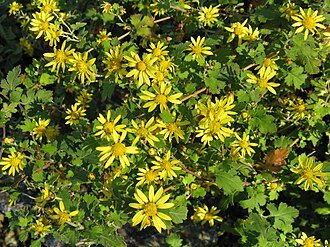
Botanical Reference 1: Chrysanthemum indicum — Botanical specimen
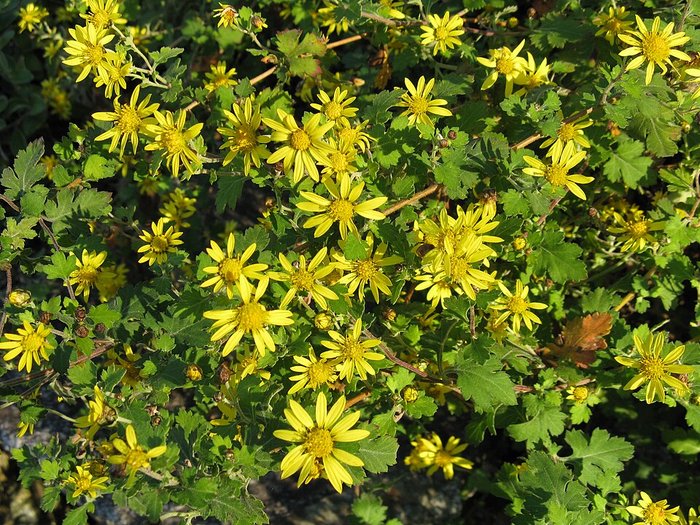
Botanical Reference 2: Chrysanthemum indicum — Botanical specimen
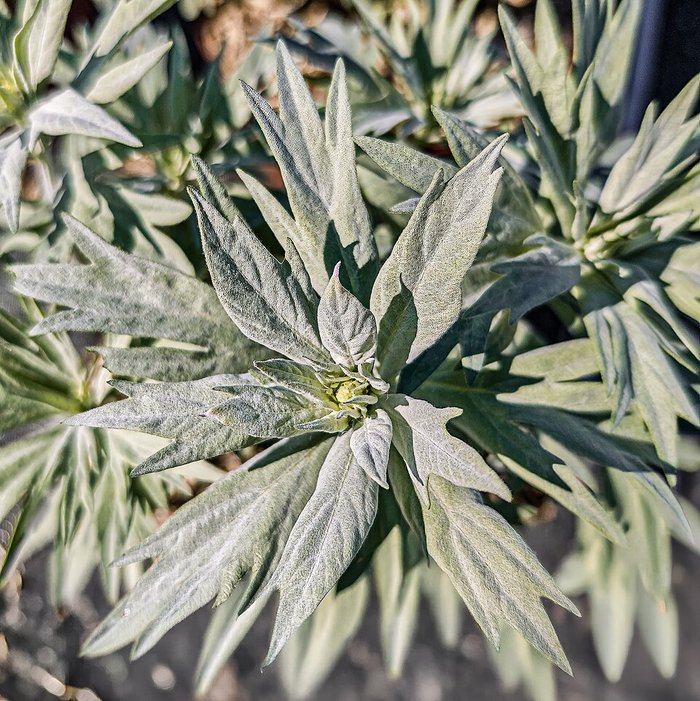
Botanical Reference 3: Chrysanthemum indicum — Wikimedia Commons reference
4. Comparative Genus & Family Pharmacognosy
Within Indian medicinal flora, Chrysanthemum indicum stands as a distinct representative of the genus Chrysanthemum. Its therapeutic profile underscores the role of selectively utilized medicinal genera alongside larger polytypic genera.
At the family level, Compositae encompasses 91 documented medicinal species (5.02% of the 1,814-species flora). Other representative medicinal members of Compositae include: Acanthospermum hispidum (Trikantaka), Achillea millefolium (Milfoil), Ainsliaea aptera (Karui Buuti), Amberboa divaricata (Brahmadandi), Anacyclus pyrethrum (Aakaarakarabha). In comparative pharmacognosy, evaluating species within the same botanical family aids quality control, authentication of crude drugs, and identification of chemotaxonomic markers.
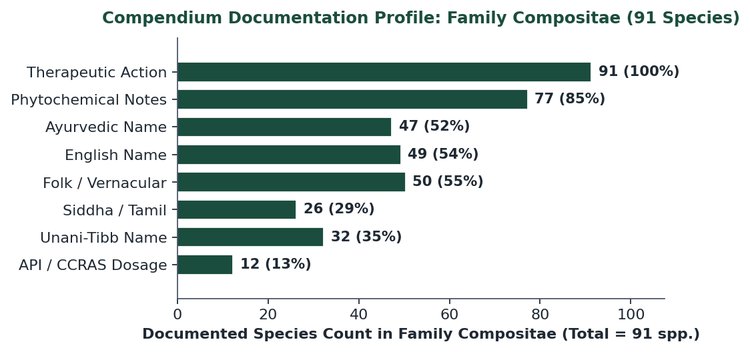
Figure 1: Quantitative documentation profile across all 91 medicinal species of family Compositae.
5. Pharmacopoeial Standards, Posology & Reference Framework
In clinical and traditional dispensing, preparation and administration of Chrysanthemum indicum follow the plant-part modalities specified under its therapeutic action (Flowers—stomachic, aperient, anti-inflammatory. Leaves— prescribed in migraine (as circulatory stimulant). Uses same as those of chamomile), guided by the standard posological principles of The Ayurvedic Pharmacopoeia of India (Vols. I–IV) and CCRAS formularies. Classical and modern pharmacognostic synchronization for Chrysanthemum indicum integrates standards from The Ayurvedic Pharmacopoeia of India, The National Formulary of Unani Medicine, Formulary of Siddha Medicine, The Wealth of India (CSIR), Compendium of Indian Medicinal Plants (CDRI), Dictionary of Indian Medicinal Plants (CIMAP), German Commission E, ESCOP, WHO monographs, British Herbal Pharmacopoeia, and Natural Medicines Comprehensive Database.