Coffea arabica Linn.
1. Taxonomic, Nomenclature & Therapeutic Summary Table
| Botanical Attribute | Pharmacognostic & Therapeutic Specification |
|---|---|
| Family | Rubiaceae. |
| Habitat | Grown in Tamil Nadu, Karnataka and Kerala. |
| English | Arabian coffee. |
| Unani | Kahvaa. |
| Siddha / Tamil | Kaapi, Bannu. |
| Action | Diuretic, antinarcotic, psychotropic agent, direct heart stimulant (raises blood pressure). Neutralizes therapeutic effects of many herbs; potentiates the action of aspirin and paracetamol; depletes the body of B-vitamins. Charcoal of the outer seed parts—astringent, absorbent. |
| Key Application | Powdered coffee charcoal—in nonspecific, acute diarrhoea; local therapy of mild inflammation of oral and pharyngeal mucosa (average daily dose 9 g). (German Commission E.) |
| Taxonomic Cohort | Genus Coffea (1 documented species); Family Rubiaceae (40 documented species). |
2. Classical Nomenclature, Taxonomy & Biogeographical Context
Coffea arabica (taxonomically cited with authority Linn.) is an established medicinal plant species in Indian materia medica. It is classified under the botanical family Rubiaceae (primary family classification: Rubiaceae), placing it within a well-defined chemotaxonomic group of medicinal flora. Within botanical taxonomy, this taxon is cataloged directly under its primary accepted binomial without secondary botanical synonyms. Biogeographically, its documented habitat and ecological distribution span: Grown in Tamil Nadu, Karnataka and Kerala.
Across classical and vernacular Indian systems of medicine, Coffea arabica is recognized under distinct polyglot nomenclature: in English botanical and trade usage as Arabian coffee; in the Unani-Tibb materia medica (recorded in The National Formulary of Unani Medicine and CCRUM literature) as Kahvaa; in the Siddha and Tamil medical tradition (compiled from the Formulary of Siddha Medicine and IMPCOPS Chennai) as Kaapi, Bannu. Romanized Sanskrit and Ayurvedic spellings follow standard National Academy of Ayurveda (Rashtriya Ayurveda Vidyapeeth) transliteration conventions, using double vowels to preserve authentic classical pronunciation across regional medical traditions.
3. Therapeutic Actions, Phytochemistry & Pharmacological Profile
In therapeutic and clinical pharmacognosy, the primary recorded actions and clinical indications of Coffea arabica are: Diuretic, antinarcotic, psychotropic agent, direct heart stimulant (raises blood pressure). Neutralizes therapeutic effects of many herbs; potentiates the action of aspirin and paracetamol; depletes the body of B-vitamins. Charcoal of the outer seed parts—astringent, absorbent. These traditional and clinical attributes reflect the plant part-specific pharmacological profile documented across classical Indian treatises and modern herbal pharmacopoeias. Furthermore, international and national regulatory monographs highlight its validated key clinical application: Powdered coffee charcoal—in nonspecific, acute diarrhoea; local therapy of mild inflammation of oral and pharyngeal mucosa (average daily dose 9 g). (German Commission E.).
Experimental phytochemistry, active chemical constituents, and pharmacological screening studies reported for Coffea arabica establish the following evidence base: According to WHO, coffee drinking is not responsible for breast cancer and may protect against cancer of colon and rectum. Caffeic and chlorogenic acids in coffee act as anticarcinogens. Bronchial asthma is less frequent among coffee drinkers due to caffeine and theophylline. The aroma components include several furfuryl methyl mercaptan derivatives. Coffee extracts yielded organic acids. Atractyloside, several sterols and acids, as well as alkaloids, have been reported. Caffeine is the major alkaloid of coffee. One cup of coffee contains approx. 60–120 mg caffeine; other active constituents include chlorogenic acid, caffeol and diterpenes. Chlorogenic acid in coffee might inhibit glucose-6-phosphatase, which might lower hepatic glucose production caffeine seems to stimulate pancreatic beta cells to secrete insulin. (Natural Medicines Comprehensive Database, 2007.)
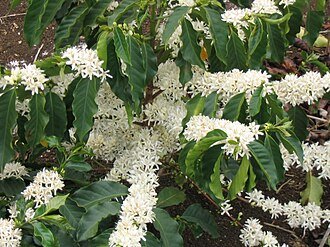
Botanical Reference 1: Coffea arabica — Botanical specimen
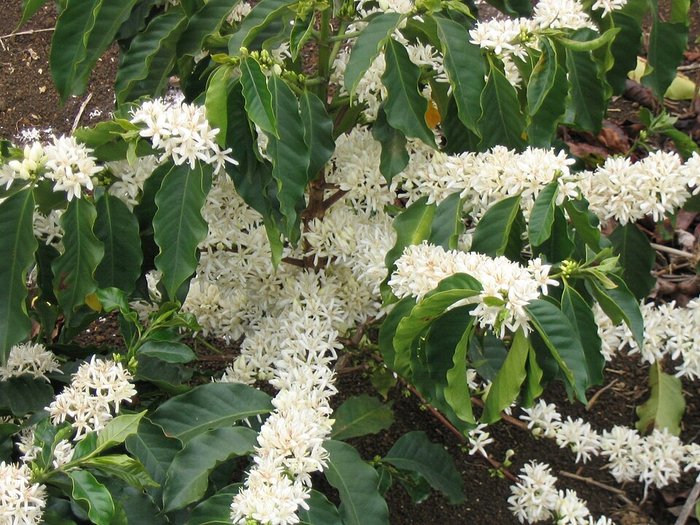
Botanical Reference 2: Coffea arabica — Botanical specimen
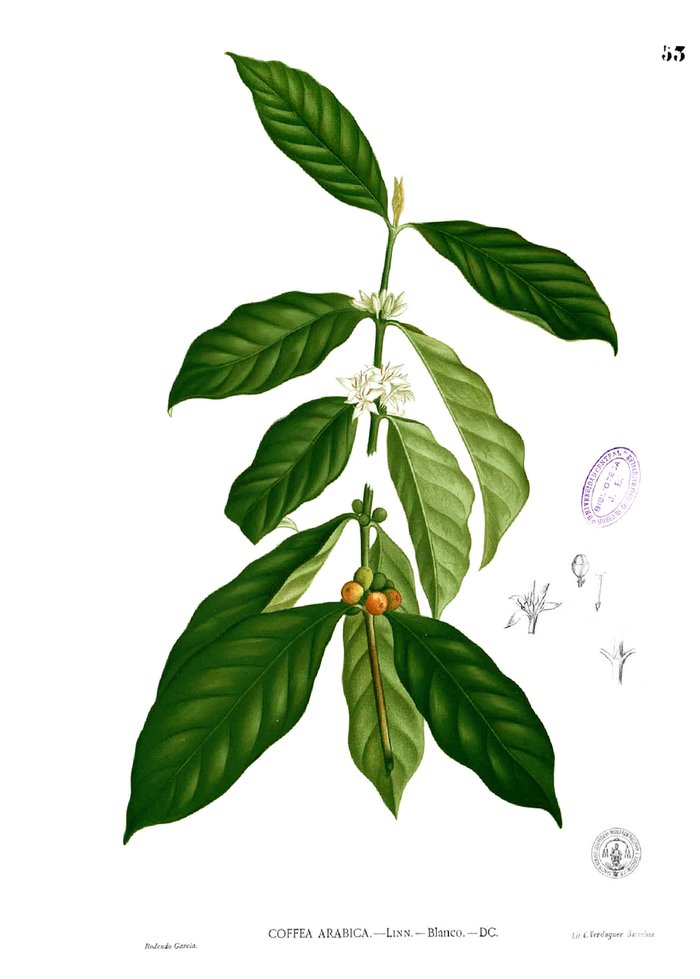
Botanical Reference 3: Coffea arabica — Wikimedia Commons reference
4. Comparative Genus & Family Pharmacognosy
Within Indian medicinal flora, Coffea arabica stands as a distinct representative of the genus Coffea. Its therapeutic profile underscores the role of selectively utilized medicinal genera alongside larger polytypic genera.
At the family level, Rubiaceae encompasses 40 documented medicinal species (2.21% of the 1,814-species flora). Other representative medicinal members of Rubiaceae include: Adina cordifolia (Haridru), Anthocephalus cadamba (Kadamba), Borreria articularis (Madana-ghanti), Canthium parviflorum (Wild Jasmine), Cephaelis ipecacuanha (Ipecac). In comparative pharmacognosy, evaluating species within the same botanical family aids quality control, authentication of crude drugs, and identification of chemotaxonomic markers.
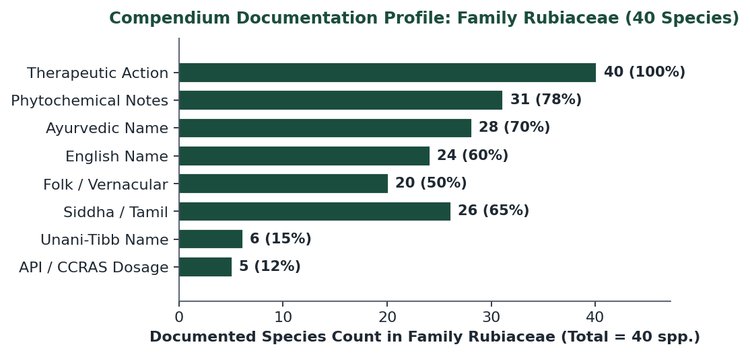
Figure 1: Quantitative documentation profile across all 40 medicinal species of family Rubiaceae.
5. Pharmacopoeial Standards, Posology & Reference Framework
In clinical and traditional dispensing, preparation and administration of Coffea arabica follow the plant-part modalities specified under its therapeutic action (Diuretic, antinarcotic, psychotropic agent, direct heart stimulant (raises blood pressure). Neutralizes therapeutic effects of many herbs; potentiates the action of aspirin and paracetamol; depletes the body of B-vitamins. Charcoal of the outer seed parts—astringent, absorbent), guided by the standard posological principles of The Ayurvedic Pharmacopoeia of India (Vols. I–IV) and CCRAS formularies. Classical and modern pharmacognostic synchronization for Coffea arabica integrates standards from The Ayurvedic Pharmacopoeia of India, The National Formulary of Unani Medicine, Formulary of Siddha Medicine, The Wealth of India (CSIR), Compendium of Indian Medicinal Plants (CDRI), Dictionary of Indian Medicinal Plants (CIMAP), German Commission E, ESCOP, WHO monographs, British Herbal Pharmacopoeia, and Natural Medicines Comprehensive Database.