Crocus sativus Linn.
1. Taxonomic, Nomenclature & Therapeutic Summary Table
| Botanical Attribute | Pharmacognostic & Therapeutic Specification |
|---|---|
| Family | Iridaceae. |
| Habitat | Cultivated in Kashmir up to 2,000 m and in Chaubattia in Uttar Pradesh. |
| English | Saffron, Crocus. |
| Ayurvedic | Kumkuma, Rudhira, Vadrika, Kaashmira, Kaashmiraka, Vaalhika, Agnishikhaa, Ghrusrrn, Rakta, Kshataja. Keshara (usually Keshara indicates Naagakeshara, Mesua ferrea Linn.) |
| Unani | Zaafraan. |
| Siddha / Tamil | Kumgumappoo (dried stigma). |
| Action | Stigma and style—nervine tonic, sedative, antispasmodic expectorant (in dry cough, whooping cough, bronchitis), stomachic, diaphoretic, emmenagogue. |
| Dosage | Dried style and stigma— 20–50 mg (API Vol. IV.) |
| Taxonomic Cohort | Genus Crocus (1 documented species); Family Iridaceae (8 documented species). |
2. Classical Nomenclature, Taxonomy & Biogeographical Context
Crocus sativus (taxonomically cited with authority Linn.) is an established medicinal plant species in Indian materia medica. It is classified under the botanical family Iridaceae (primary family classification: Iridaceae), placing it within a well-defined chemotaxonomic group of medicinal flora. Within botanical taxonomy, this taxon is cataloged directly under its primary accepted binomial without secondary botanical synonyms. Biogeographically, its documented habitat and ecological distribution span: Cultivated in Kashmir up to 2,000 m and in Chaubattia in Uttar Pradesh.
Across classical and vernacular Indian systems of medicine, Crocus sativus is recognized under distinct polyglot nomenclature: in English botanical and trade usage as Saffron, Crocus; in the Ayurvedic system (synchronized across The Ayurvedic Pharmacopoeia of India, CCRAS Standard Nomenclature, Sharangadhara Samhita, and Bhava Prakash) as Kumkuma, Rudhira, Vadrika, Kaashmira, Kaashmiraka, Vaalhika, Agnishikhaa, Ghrusrrn, Rakta, Kshataja. Keshara (usually Keshara indicates Naagakeshara, Mesua ferrea Linn.); in the Unani-Tibb materia medica (recorded in The National Formulary of Unani Medicine and CCRUM literature) as Zaafraan; in the Siddha and Tamil medical tradition (compiled from the Formulary of Siddha Medicine and IMPCOPS Chennai) as Kumgumappoo (dried stigma). Romanized Sanskrit and Ayurvedic spellings follow standard National Academy of Ayurveda (Rashtriya Ayurveda Vidyapeeth) transliteration conventions, using double vowels to preserve authentic classical pronunciation across regional medical traditions.
3. Therapeutic Actions, Phytochemistry & Pharmacological Profile
In therapeutic and clinical pharmacognosy, the primary recorded actions and clinical indications of Crocus sativus are: Stigma and style—nervine tonic, sedative, antispasmodic expectorant (in dry cough, whooping cough, bronchitis), stomachic, diaphoretic, emmenagogue. These traditional and clinical attributes reflect the plant part-specific pharmacological profile documented across classical Indian treatises and modern herbal pharmacopoeias.
Experimental phytochemistry, active chemical constituents, and pharmacological screening studies reported for Crocus sativus establish the following evidence base: The Ayurvedic Pharmacopoeia of India indicated the use of the stigma and style in migraine, chronic sinusitis, and in urinary obstruction, inflammation of the urinary tract. The saffron is used in Chinese medicine for melancholia, depression, shock and menstrual disorders. Saffron contains a volatile oil composed of terpenes, terpene alcohols and esters. The herb also contains crocin, picrocrocin, crocetin, carotenoids and riboflavin and thiamine. Preliminary evidence suggests that crocetin may improved atherosclerosis by increasing plasma oxygen diffusion and decreasing cholesterol and triglyceride levels. In addition, crocetin binds to albumin, potentially increasing oxygen diffusion and improving atherosclerosis. (Natural Medicines Comprehensive Database, 2007.) The stigma showed remarkable inhibitory effect on blood coagulation due to the presence of platelet aggregation inhibitor containing adenosine. It accelerated in vitro fibrinolytic activity of urokinase and plasmin. Small amounts of Saffron stimulate gastric secretion; larger amounts stimulate uterine smooth muscle and exhibit emmenagogue and abortifacient effects. Saffron extract showed cytotoxic and antimutagenic activity and antitumour activity against ascites tumours in mice. Chemical analysis indicated that the naturally occurring crocin may be the active principle responsible for the observed anticancer activity. A xanthone, carotenoid glycosidic conjugate, mangi-crocin, isolated from saffron, showed significant adaptogenic activity. A natural antioxidant, isolated from saffron stem callus, showed better antioxidant activity than vitamin E. Saffron bulbs are toxic, stigmas in overdoses narcotic. The dose of stigma and styles at 1.5– 5.0 g is toxic. (Recommended dose : 0.5–1.5 g per day).
In specialized pharmacognostic classifications, Crocus sativus is also documented among specialized herbal extracts utilized for cosmetic, dermatological, and topical applications.
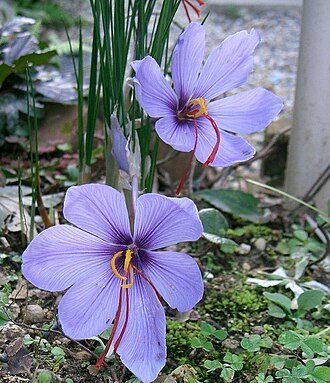
Botanical Reference 1: Crocus sativus — Botanical specimen
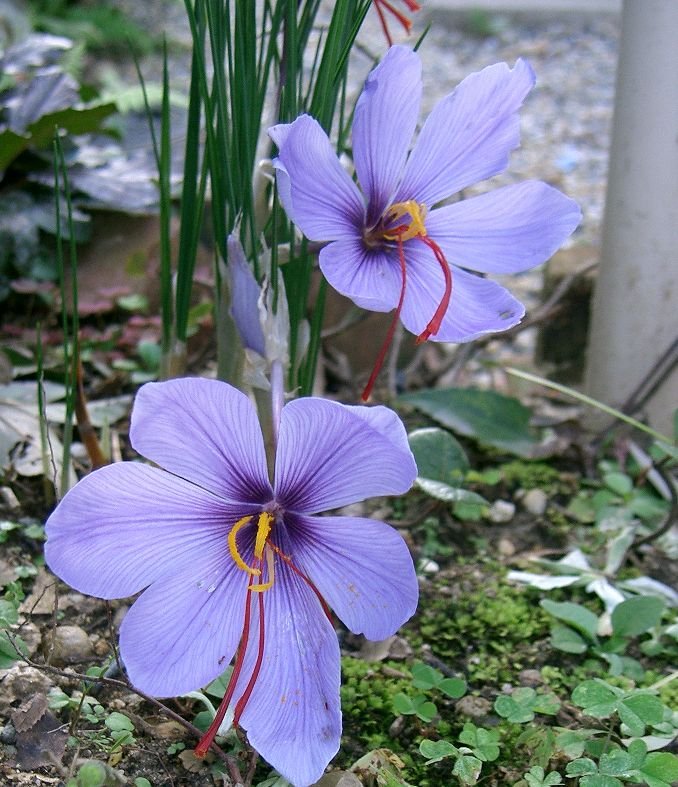
Botanical Reference 2: Crocus sativus — Botanical specimen
Botanical Reference 3: Crocus sativus — Wikimedia Commons reference
4. Comparative Genus & Family Pharmacognosy
Within Indian medicinal flora, Crocus sativus stands as a distinct representative of the genus Crocus. Its therapeutic profile underscores the role of selectively utilized medicinal genera alongside larger polytypic genera.
At the family level, Iridaceae encompasses 8 documented medicinal species (0.44% of the 1,814-species flora). Other representative medicinal members of Iridaceae include: Belamcanda chinensis (Surajkaanti), Iris ensata (Paarseeka Vachaa), Iris germanica (Paarseeka Vachaa), Iris kemaonensis (Karkar). In comparative pharmacognosy, evaluating species within the same botanical family aids quality control, authentication of crude drugs, and identification of chemotaxonomic markers.
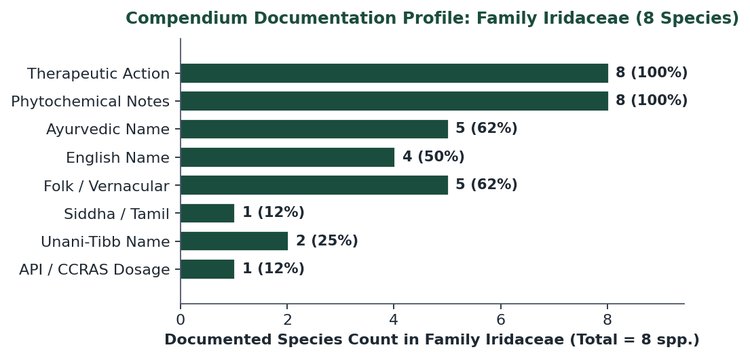
Figure 1: Quantitative documentation profile across all 8 medicinal species of family Iridaceae.
5. Pharmacopoeial Standards, Posology & Reference Framework
For clinical and traditional dispensing, the standardized posology and crude herb dosage for Crocus sativus are prescribed as follows: Dried style and stigma— 20–50 mg (API Vol. IV.). Crude drug dosages are calibrated against The Ayurvedic Pharmacopoeia of India (Vols. I–IV) and the Standard Nomenclature of Ayurvedic Medicinal Plants published by the Central Council for Research in Ayurveda and Siddha (CCRAS). Classical and modern pharmacognostic synchronization for Crocus sativus integrates standards from The Ayurvedic Pharmacopoeia of India, The National Formulary of Unani Medicine, Formulary of Siddha Medicine, The Wealth of India (CSIR), Compendium of Indian Medicinal Plants (CDRI), Dictionary of Indian Medicinal Plants (CIMAP), German Commission E, ESCOP, WHO monographs, British Herbal Pharmacopoeia, and Natural Medicines Comprehensive Database.