Curcuma longa Linn.
1. Taxonomic, Nomenclature & Therapeutic Summary Table
| Botanical Attribute | Pharmacognostic & Therapeutic Specification |
|---|---|
| Synonym | C. domestica Valeton. |
| Family | Zingiberaceae. |
| Habitat | Cultivated all over India, particularly in West Bengal, Tamil Nadu and Maharashtra. |
| English | Turmeric. |
| Ayurvedic | Haridraa, Priyaka, Haridruma, Kshanda, Gauri, Kaanchani, Krimighna, Varavarnini, Yoshitapriyaa, Hattavilaasini, Naktaahvaa, Sharvari. |
| Unani | Zard Chob. |
| Siddha / Tamil | Manjal. |
| Action | Anti-inflammatory, cholagogue, hepatoprotective, blood-purifier, antioxidant, detoxifier and regenerator of liver tissue, antiasthmatic, anti-tumour, anticutaneous, antiprotozoal, stomachic, carminative. Reduces high plasma cholesterol. Antiplatelet activity offers protection to heart and vessels. Also protects against DNA damage in lymphocytes. |
| Key Application | In dyspeptic conditions. (German Commission E, ESCOP, WHO.) As antiinflammatory, stomachic. (Indian Herbal Pharmacopoeia.) |
| Dosage | Cured rhizome—1–3 g powder. (API Vol. I.) |
| Taxonomic Cohort | Genus Curcuma (6 documented species); Family Zingiberaceae (23 documented species). |
2. Classical Nomenclature, Taxonomy & Biogeographical Context
Curcuma longa (taxonomically cited with authority Linn.) is an established medicinal plant species in Indian materia medica. It is classified under the botanical family Zingiberaceae (primary family classification: Zingiberaceae), placing it within a well-defined chemotaxonomic group of medicinal flora. In classical and modern botanical literature, the species is cross-referenced under the botanical synonymy C. domestica Valeton, which is synchronized to prevent taxonomic ambiguity across regional herbal formularies. Biogeographically, its documented habitat and ecological distribution span: Cultivated all over India, particularly in West Bengal, Tamil Nadu and Maharashtra.
Across classical and vernacular Indian systems of medicine, Curcuma longa is recognized under distinct polyglot nomenclature: in English botanical and trade usage as Turmeric; in the Ayurvedic system (synchronized across The Ayurvedic Pharmacopoeia of India, CCRAS Standard Nomenclature, Sharangadhara Samhita, and Bhava Prakash) as Haridraa, Priyaka, Haridruma, Kshanda, Gauri, Kaanchani, Krimighna, Varavarnini, Yoshitapriyaa, Hattavilaasini, Naktaahvaa, Sharvari; in the Unani-Tibb materia medica (recorded in The National Formulary of Unani Medicine and CCRUM literature) as Zard Chob; in the Siddha and Tamil medical tradition (compiled from the Formulary of Siddha Medicine and IMPCOPS Chennai) as Manjal. Romanized Sanskrit and Ayurvedic spellings follow standard National Academy of Ayurveda (Rashtriya Ayurveda Vidyapeeth) transliteration conventions, using double vowels to preserve authentic classical pronunciation across regional medical traditions.
3. Therapeutic Actions, Phytochemistry & Pharmacological Profile
In therapeutic and clinical pharmacognosy, the primary recorded actions and clinical indications of Curcuma longa are: Anti-inflammatory, cholagogue, hepatoprotective, blood-purifier, antioxidant, detoxifier and regenerator of liver tissue, antiasthmatic, anti-tumour, anticutaneous, antiprotozoal, stomachic, carminative. Reduces high plasma cholesterol. Antiplatelet activity offers protection to heart and vessels. Also protects against DNA damage in lymphocytes. These traditional and clinical attributes reflect the plant part-specific pharmacological profile documented across classical Indian treatises and modern herbal pharmacopoeias. Furthermore, international and national regulatory monographs highlight its validated key clinical application: In dyspeptic conditions. (German Commission E, ESCOP, WHO.) As antiinflammatory, stomachic. (Indian Herbal Pharmacopoeia.).
Experimental phytochemistry, active chemical constituents, and pharmacological screening studies reported for Curcuma longa establish the following evidence base: The rhizomes gave curcuminoids, the mixture known as curcumin, consisting of atleast four phenolic diarylheptanoids, including curcumin and monodesmethoxycurcumin; volatile oil (3–5%), containing about 60% of turmerones which are sesquiterpene ketones, and bitter principles, sugars, starch, resin. Curcumin related phenolics possess antioxidant, anti-inflammatory, gastroprotective and hepatoprotective activities. The antioxidant activity of curcumin is comparable to standard antioxidants—vitamin C and E, BHA and BHT. The volatile oil, also curcumin, exhibited anti-inflammatory activity in a variety of experimental models (the effects were comparable to those of cortisone and phenylbutazone). Used orally, curcumin prevents the release of inflammatory mediators. It depletes nerve endings of substance P, the neurotransmitter of pain receptors. Curcumin’s cholesterol-lowering actions include interfering with intestinal cholesterol uptake, increasing the conversion of cholesterol into bile acids and increasing the excretion of bile acids via its choleretic effects. Curcuminoids prevent the increases in liver enzymes, SGOT and SGPT; this validates the use of turmeric as a hepatoprotective drug in liver disorders. Curlone, obtained from the dried rhizome, is used against hepatitis. Turmeric and curcumin increase the mucin content of the stomach and exert gastroprotective effects against stress, alcohol, drug-induced ulcer formation. (Curcumin at doses of 100 mg/kg weight exhibited ulcerogenic activity in rats.) The ethanolic extract of the rhizome exhibited blood sugar lowering activity in alloxan-induced diabetic rats. Piperine (a constituent of black and long pepper) enhances absorption and bioavailability of curcumin.
In specialized pharmacognostic classifications, Curcuma longa is also listed among standardized commercial herbal extracts used in India with defined quantitative phytochemical markers; and documented among specialized herbal extracts utilized for cosmetic, dermatological, and topical applications.
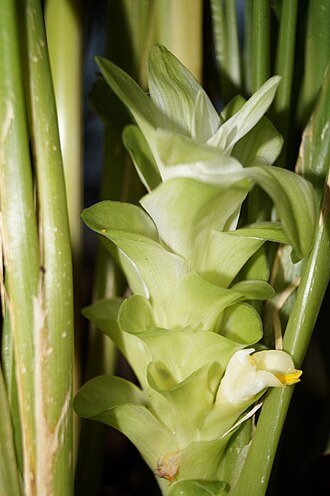
Botanical Reference 1: Turmeric — Botanical specimen
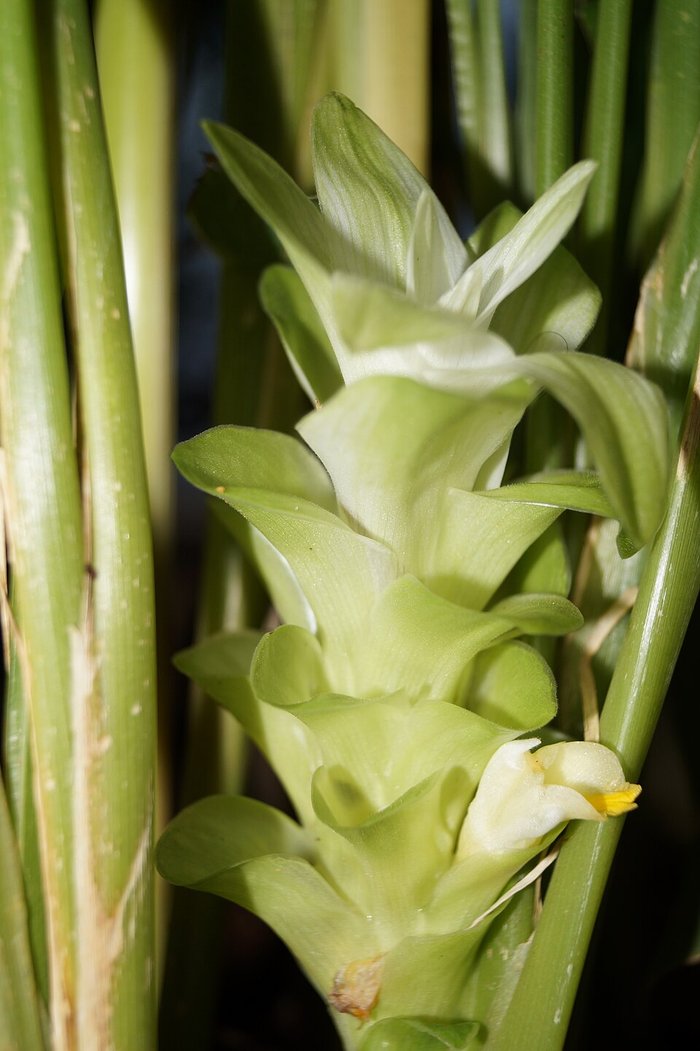
Botanical Reference 2: Turmeric — Botanical specimen
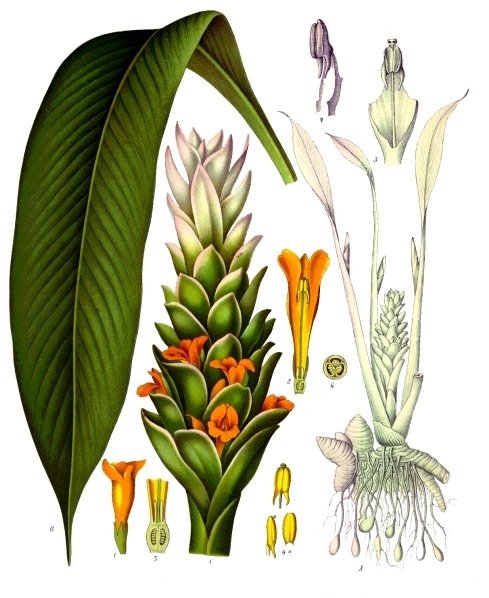
Botanical Reference 3: Curcuma longa — Wikimedia Commons reference
4. Comparative Genus & Family Pharmacognosy
Taxonomically, the genus Curcuma comprises 6 distinct medicinal species in Indian herbal literature. Closely allied congeneric species include: Curcuma amada (Action: Carminative, stomachic, appetizer, expectorant, antipyretic, anti-inflammatory….); Curcuma angustifolia (Action: Starch—Cooling, demulcent, nutritious; used for asthma and bronchitis, as a…); Curcuma aromatica (Action: Uses similar to those of C. longa. Essential oil from rhizomes— antimicrobial…); Curcuma caesia (Action: Carminative. Used externally for bruises and sprains); Curcuma zedoaria (Action: Carminative, stomachic, gastrointestinal stimulant, diuretic, expectorant…). Comparing Curcuma longa alongside its congeners in genus Curcuma highlights both shared secondary metabolite classes and species-specific organotropism across different ecological zones.
At the family level, Zingiberaceae encompasses 23 documented medicinal species (1.27% of the 1,814-species flora). Other representative medicinal members of Zingiberaceae include: Aframomum melegueta (Grains of Paradise), Alpinia galanga (Kulanjana), Alpinia malaccensis (Saliyeridumpa), Alpinia officinarum (Kulanjan), Amomum aromaticum (Sthula-elaa). In comparative pharmacognosy, evaluating species within the same botanical family aids quality control, authentication of crude drugs, and identification of chemotaxonomic markers.
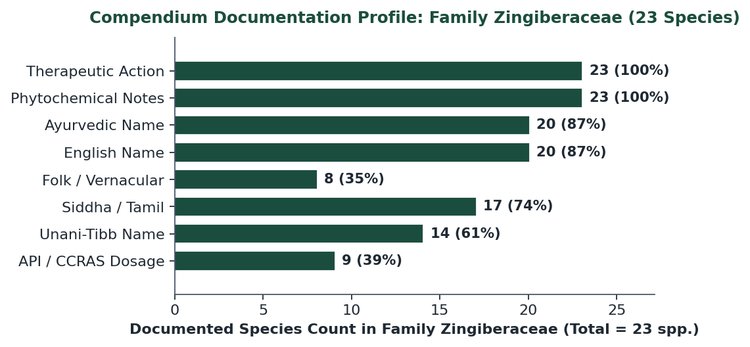
Figure 1: Quantitative documentation profile across all 23 medicinal species of family Zingiberaceae.
5. Pharmacopoeial Standards, Posology & Reference Framework
For clinical and traditional dispensing, the standardized posology and crude herb dosage for Curcuma longa are prescribed as follows: Cured rhizome—1–3 g powder. (API Vol. I.). Crude drug dosages are calibrated against The Ayurvedic Pharmacopoeia of India (Vols. I–IV) and the Standard Nomenclature of Ayurvedic Medicinal Plants published by the Central Council for Research in Ayurveda and Siddha (CCRAS). Classical and modern pharmacognostic synchronization for Curcuma longa integrates standards from The Ayurvedic Pharmacopoeia of India, The National Formulary of Unani Medicine, Formulary of Siddha Medicine, The Wealth of India (CSIR), Compendium of Indian Medicinal Plants (CDRI), Dictionary of Indian Medicinal Plants (CIMAP), German Commission E, ESCOP, WHO monographs, British Herbal Pharmacopoeia, and Natural Medicines Comprehensive Database.