Aconitum chasmanthum Stapf ex Holmes.
1. Taxonomic, Nomenclature & Therapeutic Summary Table
| Botanical Attribute | Pharmacognostic & Therapeutic Specification |
|---|---|
| Family | Ranunculaceae. |
| Habitat | The western Himalayas from Hazara to Kashmir and Chamba in Himachal Pradesh, between altitudes of 2,100 m and 3,600 m. |
| English | Indian Napellus. |
| Ayurvedic | Visha, Shringika-Visha, Vatsanaabha (related sp.). |
| Folk | Mohri, Meethaa Zahar. |
| Action | Sedative, antirheumatic, analgesic, antitussive, antidiarrhoeal. Ayurvedic Formulary of India, Part I and Part II, equated A. chasmanthum with Vatsanaabha. (See A. ferox.) It has the same uses as A. ferox. The alkaloid content of the root ranges from 2.98 to 3.11%; includes chasmaconitine and chasmanthinine. |
| Dosage | Root—10–15 mg powder. (CCRAS.) |
| Taxonomic Cohort | Genus Aconitum (11 documented species); Family Ranunculaceae (32 documented species). |
2. Classical Nomenclature, Taxonomy & Biogeographical Context
Aconitum chasmanthum (taxonomically cited with authority Stapf ex Holmes.) is an established medicinal plant species in Indian materia medica. It is classified under the botanical family Ranunculaceae (primary family classification: Ranunculaceae), placing it within a well-defined chemotaxonomic group of medicinal flora. Within botanical taxonomy, this taxon is cataloged directly under its primary accepted binomial without secondary botanical synonyms. Biogeographically, its documented habitat and ecological distribution span: The western Himalayas from Hazara to Kashmir and Chamba in Himachal Pradesh, between altitudes of 2,100 m and 3,600 m.
Across classical and vernacular Indian systems of medicine, Aconitum chasmanthum is recognized under distinct polyglot nomenclature: in English botanical and trade usage as Indian Napellus; in the Ayurvedic system (synchronized across The Ayurvedic Pharmacopoeia of India, CCRAS Standard Nomenclature, Sharangadhara Samhita, and Bhava Prakash) as Visha, Shringika-Visha, Vatsanaabha (related sp.); in regional Indian folk and vernacular ethnobotany as Mohri, Meethaa Zahar. Romanized Sanskrit and Ayurvedic spellings follow standard National Academy of Ayurveda (Rashtriya Ayurveda Vidyapeeth) transliteration conventions, using double vowels to preserve authentic classical pronunciation across regional medical traditions.
3. Therapeutic Actions, Phytochemistry & Pharmacological Profile
In therapeutic and clinical pharmacognosy, the primary recorded actions and clinical indications of Aconitum chasmanthum are: Sedative, antirheumatic, analgesic, antitussive, antidiarrhoeal. Ayurvedic Formulary of India, Part I and Part II, equated A. chasmanthum with Vatsanaabha. (See A. ferox.) It has the same uses as A. ferox. The alkaloid content of the root ranges from 2.98 to 3.11%; includes chasmaconitine and chasmanthinine. These traditional and clinical attributes reflect the plant part-specific pharmacological profile documented across classical Indian treatises and modern herbal pharmacopoeias.
Experimental phytochemistry, active chemical constituents, and pharmacological screening studies reported for Aconitum chasmanthum establish the following evidence base: Napellus, equated with Aconitum napellus Linn., is indigenous to Central Europe (named after the Black sea port Aconis and known as Wolfsbane, Monkshood). Aconitum of homoeopathic medicine is an alkaloid obtained from the roots and stems of A. nepellus. Used as an analgesic and sedative. It contains terpenoids up to 1.2%, including aconitine and aconine. Toxic constituents of A. napellus are aconitine, mesaconitine, hypaconitine, 3-acetylacoitine, lappaconitine (diterpenoid-ester alkaloids), benzaconine, benzoylaconine. Aconitine, mesaconitine and hypaconitine exert widespread effects on cardiac, neural and muscle tissue by activitating sodium channels. (Natural Medicines Comprehensive Database, 2007.) Aconitine is absorbed through mucus membranes and the skin. (Francis Brinker.) It is a cardiotoxin and interacts with antiarrhythmics, antihypertensives, Digoxin/cardiac glycosides. (Sharon M. Herr.)
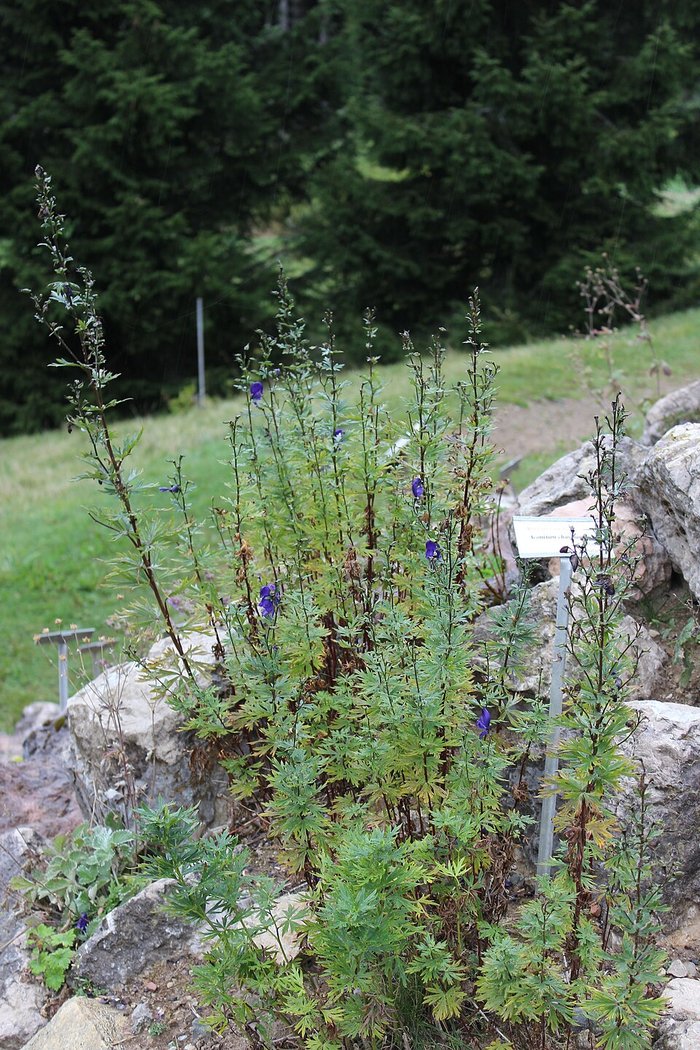
Botanical Reference 1: Aconitum chasmanthum — Wikimedia Commons
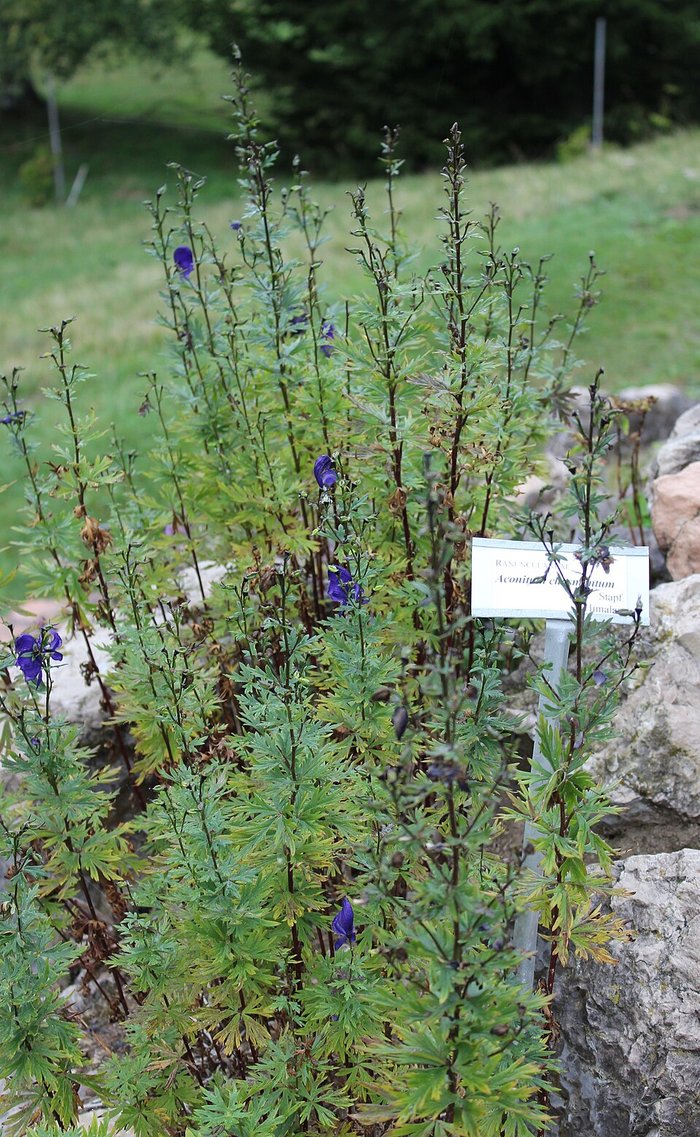
Botanical Reference 2: Aconitum chasmanthum — Wikimedia Commons
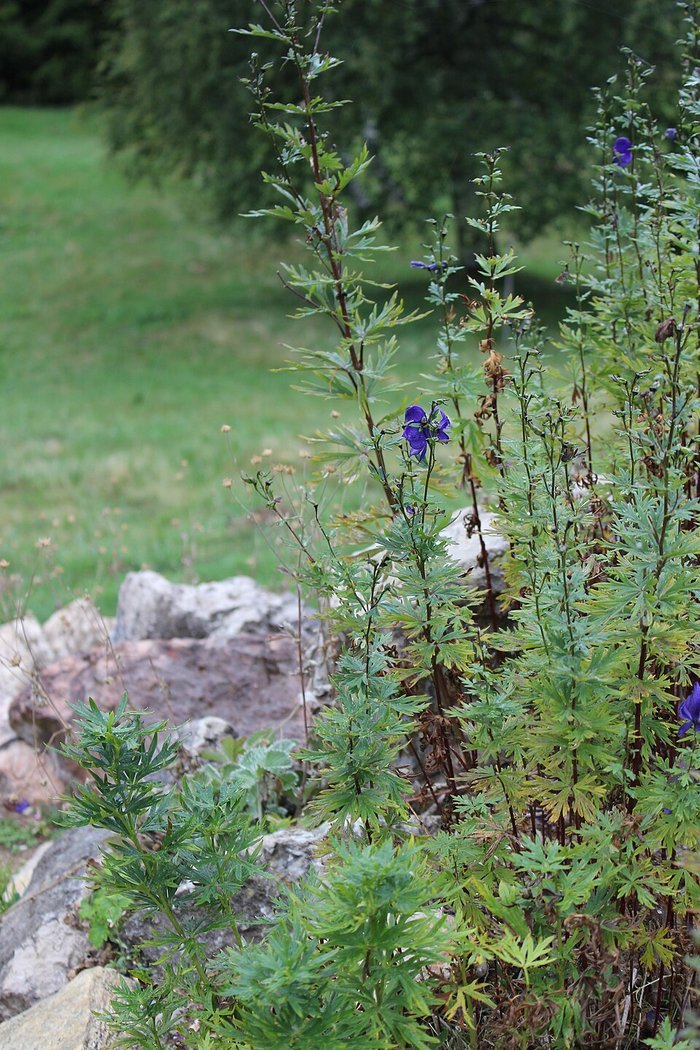
Botanical Reference 3: Aconitum chasmanthum — Wikimedia Commons
4. Comparative Genus & Family Pharmacognosy
Taxonomically, the genus Aconitum comprises 11 distinct medicinal species in Indian herbal literature. Closely allied congeneric species include: Aconitum atrox (Action: Poisonous, highly toxic); Aconitum deinorrhizum (Action: Roots and leaves are used in rheumatism, rheumatic fever and acute headache); Aconitum falconeri (Action: Sedative, carminative, anti-inflammatory (used for the treatment of nervous…); Aconitum ferox (Action: Narcotic, sedative, antileprotic, anti-inflammatory. Extremely poisonous. (Roots…); Aconitum heterophyllum (Action: Often regarded as nonpoisosnous, antiperiodic, antiinflammatory, astringent (used…) along with 5 additional congeneric species. Comparing Aconitum chasmanthum alongside its congeners in genus Aconitum highlights both shared secondary metabolite classes and species-specific organotropism across different ecological zones.
At the family level, Ranunculaceae encompasses 32 documented medicinal species (1.76% of the 1,814-species flora). Other representative medicinal members of Ranunculaceae include: Aconitum atrox (Vatsanaabha), Aconitum deinorrhizum (Vatsanaabha), Aconitum falconeri (Vatsanaabha), Aconitum ferox (Vatsanaabha), Actaea spicata (Baneberry Grapewort). In comparative pharmacognosy, evaluating species within the same botanical family aids quality control, authentication of crude drugs, and identification of chemotaxonomic markers.
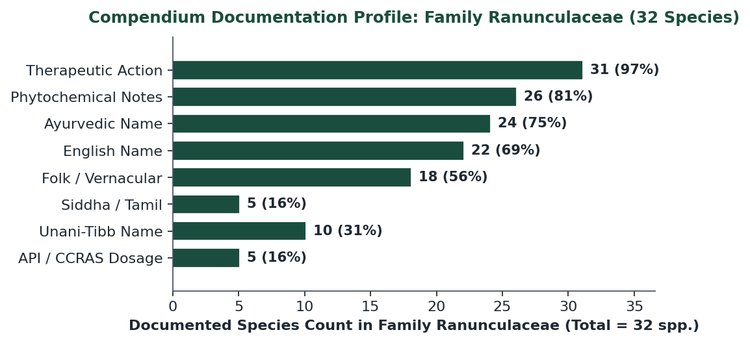
Figure 1: Quantitative documentation profile across all 32 medicinal species of family Ranunculaceae.
5. Pharmacopoeial Standards, Posology & Reference Framework
For clinical and traditional dispensing, the standardized posology and crude herb dosage for Aconitum chasmanthum are prescribed as follows: Root—10–15 mg powder. (CCRAS.). Crude drug dosages are calibrated against The Ayurvedic Pharmacopoeia of India (Vols. I–IV) and the Standard Nomenclature of Ayurvedic Medicinal Plants published by the Central Council for Research in Ayurveda and Siddha (CCRAS). Classical and modern pharmacognostic synchronization for Aconitum chasmanthum integrates standards from The Ayurvedic Pharmacopoeia of India, The National Formulary of Unani Medicine, Formulary of Siddha Medicine, The Wealth of India (CSIR), Compendium of Indian Medicinal Plants (CDRI), Dictionary of Indian Medicinal Plants (CIMAP), German Commission E, ESCOP, WHO monographs, British Herbal Pharmacopoeia, and Natural Medicines Comprehensive Database.