Acorus calamus Linn.
1. Taxonomic, Nomenclature & Therapeutic Summary Table
| Botanical Attribute | Pharmacognostic & Therapeutic Specification |
|---|---|
| Family | Araceae. |
| Habitat | Wild and cultivated throughout India in damp marshy places from 900 to 1,800 m; common in Manipur and Naga Hills. |
| English | Sweet Flag, Calamus. |
| Ayurvedic | Vachaa, Ugragandhaa, Ugraa, Golomi, Shadgranthaa, Shataparvaa, Tikshnagandhaa, Kshudra-patra, Maangalyaa, Ghorbach. |
| Unani | Waj-e-Turki, Waj. |
| Siddha / Tamil | Vasambu. |
| Action | Rhizome—nervine tonic, hypotensive, tranquilizer, sedative (with neuroleptic and antianxiety properties), analgesic, spasmolytic, anticonvulsant; used for bronchial catarrh, chronic diarrhoea and dysentery. |
| Dosage | Rhizome—60–120 mg powder. (API Vol. II.) |
| Taxonomic Cohort | Genus Acorus (2 documented species); Family Araceae (15 documented species). |
2. Classical Nomenclature, Taxonomy & Biogeographical Context
Acorus calamus (taxonomically cited with authority Linn.) is an established medicinal plant species in Indian materia medica. It is classified under the botanical family Araceae (primary family classification: Araceae), placing it within a well-defined chemotaxonomic group of medicinal flora. Within botanical taxonomy, this taxon is cataloged directly under its primary accepted binomial without secondary botanical synonyms. Biogeographically, its documented habitat and ecological distribution span: Wild and cultivated throughout India in damp marshy places from 900 to 1,800 m; common in Manipur and Naga Hills.
Across classical and vernacular Indian systems of medicine, Acorus calamus is recognized under distinct polyglot nomenclature: in English botanical and trade usage as Sweet Flag, Calamus; in the Ayurvedic system (synchronized across The Ayurvedic Pharmacopoeia of India, CCRAS Standard Nomenclature, Sharangadhara Samhita, and Bhava Prakash) as Vachaa, Ugragandhaa, Ugraa, Golomi, Shadgranthaa, Shataparvaa, Tikshnagandhaa, Kshudra-patra, Maangalyaa, Ghorbach; in the Unani-Tibb materia medica (recorded in The National Formulary of Unani Medicine and CCRUM literature) as Waj-e-Turki, Waj; in the Siddha and Tamil medical tradition (compiled from the Formulary of Siddha Medicine and IMPCOPS Chennai) as Vasambu. Romanized Sanskrit and Ayurvedic spellings follow standard National Academy of Ayurveda (Rashtriya Ayurveda Vidyapeeth) transliteration conventions, using double vowels to preserve authentic classical pronunciation across regional medical traditions.
3. Therapeutic Actions, Phytochemistry & Pharmacological Profile
In therapeutic and clinical pharmacognosy, the primary recorded actions and clinical indications of Acorus calamus are: Rhizome—nervine tonic, hypotensive, tranquilizer, sedative (with neuroleptic and antianxiety properties), analgesic, spasmolytic, anticonvulsant; used for bronchial catarrh, chronic diarrhoea and dysentery. These traditional and clinical attributes reflect the plant part-specific pharmacological profile documented across classical Indian treatises and modern herbal pharmacopoeias.
Experimental phytochemistry, active chemical constituents, and pharmacological screening studies reported for Acorus calamus establish the following evidence base: Along with other therapeutic applications, The Ayurvedic Pharmacopoeia of India indicates the use of the dried rhizomes as a brain tonic in weak memory, psychoneurosis and epilepsy. Four types of Calamus are used in herbal medicine: type I—Acorus calamus L. var. americanus, a diploid American var.; type II—var. vulgaris L. (var. calamus), a European triploid; type III and type IV—var. augustatus Bess. and var. versus L., subtropical tetraploids. Beta-asarone is carcinogenic in animals. Volatile oil of types II, III and IV—major constituent is usually betaasarone (isoasarone), up to 96%. Indian calamus oil contains asarone up to 82% and its beta-isomer. In type I, beta-asarone and other phenylpropanoids are absent. It is superior in spasmolytic activity to the other types. Indian practitioners mostly use A. calamus externally. Shveta Vachaa (Haimavati, equated with Acorus gramineus Scoland. Ex Ait., a diploid, is used internally. Unani physicians use Paris polyphylla Sim. as Khuraasaani Bach. The essential oil-free alcoholic extract of A. calamus possesses sedative and analgesic properties. Alpha-asarone potentiates pentobarbital, accounts for some, but not all, neurodepressive activity. Beta-asarone is reportedly hallucinogenic. (Francis Brinker.) The ethanolic extract of rhizomes show significant antisecretory and antiulcerogenic activity; also, protective effect against cytodestructive agents, experimentally.
In specialized pharmacognostic classifications, Acorus calamus is also listed among standardized commercial herbal extracts used in India with defined quantitative phytochemical markers; and documented among specialized herbal extracts utilized for cosmetic, dermatological, and topical applications; and represented by authenticated macro-photographic crude drug specimens in institutional pharmacognostic collections.
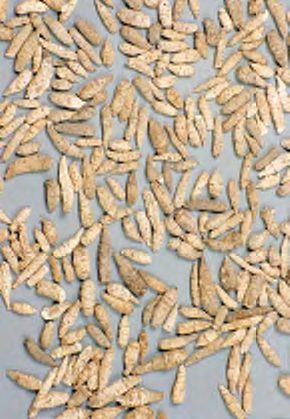
Figure 1: Authenticated crude herb specimen — Acorus calamus dried rhizome.
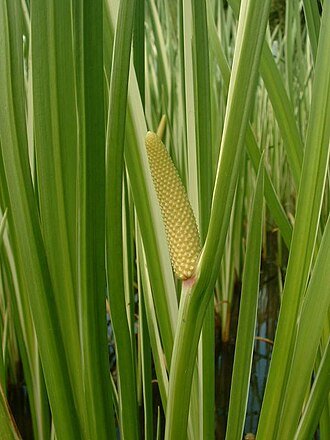
Botanical Reference 1: Acorus calamus — Botanical specimen
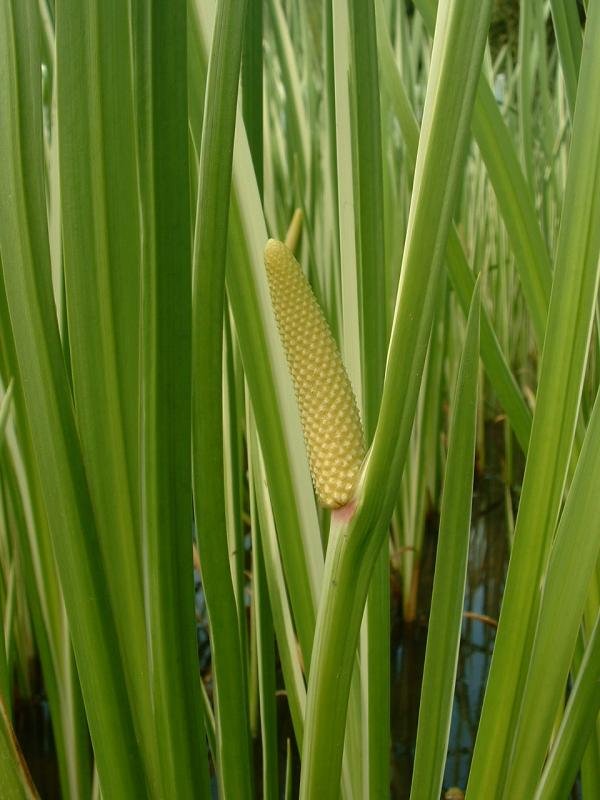
Botanical Reference 2: Acorus calamus — Botanical specimen
Botanical Reference 3: Acorus calamus — Wikimedia Commons reference
4. Comparative Genus & Family Pharmacognosy
Taxonomically, the genus Acorus comprises 2 distinct medicinal species in Indian herbal literature. Closely allied congeneric species include: Acorus gramineus (Action: Antispasmodic (used in abdominal colic). See A. calamus). Comparing Acorus calamus alongside its congeners in genus Acorus highlights both shared secondary metabolite classes and species-specific organotropism across different ecological zones.
At the family level, Araceae encompasses 15 documented medicinal species (0.83% of the 1,814-species flora). Other representative medicinal members of Araceae include: Acorus gramineus (Haimavati), Alocasia indica (Maanaka), Amorphophallus campanulatus (Suurana), Colocasia esculenta (Pindaaluka), Dracontium polyphyllum (Jangali Suuran). In comparative pharmacognosy, evaluating species within the same botanical family aids quality control, authentication of crude drugs, and identification of chemotaxonomic markers.
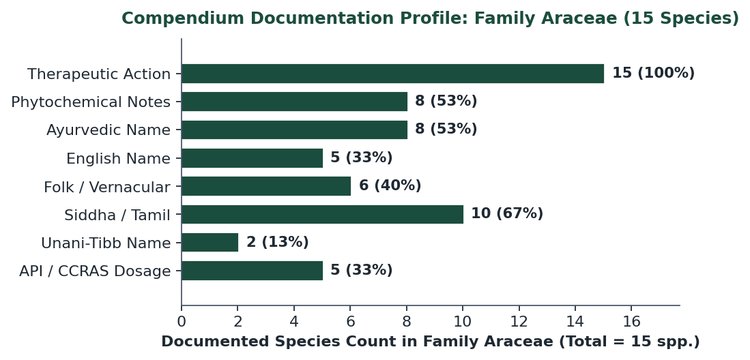
Figure 2: Quantitative documentation profile across all 15 medicinal species of family Araceae.
5. Pharmacopoeial Standards, Posology & Reference Framework
For clinical and traditional dispensing, the standardized posology and crude herb dosage for Acorus calamus are prescribed as follows: Rhizome—60–120 mg powder. (API Vol. II.). Crude drug dosages are calibrated against The Ayurvedic Pharmacopoeia of India (Vols. I–IV) and the Standard Nomenclature of Ayurvedic Medicinal Plants published by the Central Council for Research in Ayurveda and Siddha (CCRAS). Classical and modern pharmacognostic synchronization for Acorus calamus integrates standards from The Ayurvedic Pharmacopoeia of India, The National Formulary of Unani Medicine, Formulary of Siddha Medicine, The Wealth of India (CSIR), Compendium of Indian Medicinal Plants (CDRI), Dictionary of Indian Medicinal Plants (CIMAP), German Commission E, ESCOP, WHO monographs, British Herbal Pharmacopoeia, and Natural Medicines Comprehensive Database.