Aegle marmelos (L.) Correa ex Roxb.
1. Taxonomic, Nomenclature & Therapeutic Summary Table
| Botanical Attribute | Pharmacognostic & Therapeutic Specification |
|---|---|
| Family | Rutaceae. |
| Habitat | The plains and submountain regions of India, ascending to an altitude of 1,200 m in the western Himalayas; cultivated all over India. |
| English | Bael tree, Bengal Quince. |
| Ayurvedic | Bilva, Shriphala, Shaandilya, Shailuusha, Shalya, Sadaaphala, Mahaakapitha (Kapitha is equated with Feronia limonia), Maaluura, Rudrajataa, Rudranirmaalya, Shivajataakhya. |
| Unani | Bael. |
| Siddha / Tamil | Vilvam, Koovilam. |
| Action | Stomachic, antimicrobial (specific for diarrhoea, colitis, dysentery and enteric infections), digestive, astringent, spasmolytic, hypoglycaemic. |
| Key Application | As antidiarrhoeal. (Indian Herbal Pharmacopoeia.) Along with other therapeutic applications, The Ayurvedic Pharmacopoeia of India indicates the use of root in dysuria; stembark in diabetes and lipid disorders. |
| Dosage | Pulp of unripe or half ripe fruit—3 g powder. Root—6 g powder. (API Vols. I, III.) |
| Taxonomic Cohort | Genus Aegle (1 documented species); Family Rutaceae (31 documented species). |
2. Classical Nomenclature, Taxonomy & Biogeographical Context
Aegle marmelos (taxonomically cited with authority (L.) Correa ex Roxb.) is an established medicinal plant species in Indian materia medica. It is classified under the botanical family Rutaceae (primary family classification: Rutaceae), placing it within a well-defined chemotaxonomic group of medicinal flora. Within botanical taxonomy, this taxon is cataloged directly under its primary accepted binomial without secondary botanical synonyms. Biogeographically, its documented habitat and ecological distribution span: The plains and submountain regions of India, ascending to an altitude of 1,200 m in the western Himalayas; cultivated all over India.
Across classical and vernacular Indian systems of medicine, Aegle marmelos is recognized under distinct polyglot nomenclature: in English botanical and trade usage as Bael tree, Bengal Quince; in the Ayurvedic system (synchronized across The Ayurvedic Pharmacopoeia of India, CCRAS Standard Nomenclature, Sharangadhara Samhita, and Bhava Prakash) as Bilva, Shriphala, Shaandilya, Shailuusha, Shalya, Sadaaphala, Mahaakapitha (Kapitha is equated with Feronia limonia), Maaluura, Rudrajataa, Rudranirmaalya, Shivajataakhya; in the Unani-Tibb materia medica (recorded in The National Formulary of Unani Medicine and CCRUM literature) as Bael; in the Siddha and Tamil medical tradition (compiled from the Formulary of Siddha Medicine and IMPCOPS Chennai) as Vilvam, Koovilam. Romanized Sanskrit and Ayurvedic spellings follow standard National Academy of Ayurveda (Rashtriya Ayurveda Vidyapeeth) transliteration conventions, using double vowels to preserve authentic classical pronunciation across regional medical traditions.
3. Therapeutic Actions, Phytochemistry & Pharmacological Profile
In therapeutic and clinical pharmacognosy, the primary recorded actions and clinical indications of Aegle marmelos are: Stomachic, antimicrobial (specific for diarrhoea, colitis, dysentery and enteric infections), digestive, astringent, spasmolytic, hypoglycaemic. These traditional and clinical attributes reflect the plant part-specific pharmacological profile documented across classical Indian treatises and modern herbal pharmacopoeias. Furthermore, international and national regulatory monographs highlight its validated key clinical application: As antidiarrhoeal. (Indian Herbal Pharmacopoeia.) Along with other therapeutic applications, The Ayurvedic Pharmacopoeia of India indicates the use of root in dysuria; stembark in diabetes and lipid disorders.
Experimental phytochemistry, active chemical constituents, and pharmacological screening studies reported for Aegle marmelos establish the following evidence base: A number of coumarins (including xanthotoxol and alloimperatorin methyl ether), flavonoids (including rutin and marmesin), alkaloids (including alpha-fagarine), sterols and essential oils have been isolated from plant parts. Pectin is an important constituent of the fruit. Alkaloid aegeline, present in the leaves, is efficacious in asthma. The active principle in aqueous extract of leaf shows hypoglycaemic activity similar to insulin. Leaves are also given in jaundice. Alcoholic extract of seeds shows antiallergic activity. Marmin, a coumarin isolated from the roots, shows anti-inflammatory effects experimentally. Marmin also inhibited gastric haemorrhagic lesions in rats and exhibited antiulcer effects. Seed oil showed beneficial effects in regeneration of tumour cells. Aurapten is found to be the most potent inhibitor of heart rate. Rootbark is used for palpitation of the heart.
In specialized pharmacognostic classifications, Aegle marmelos is also listed among standardized commercial herbal extracts used in India with defined quantitative phytochemical markers; and represented by authenticated macro-photographic crude drug specimens in institutional pharmacognostic collections.
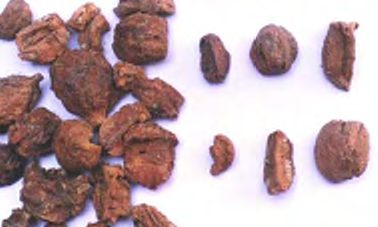
Figure 1: Authenticated crude herb specimen — Aegle marmelos dried pulp.
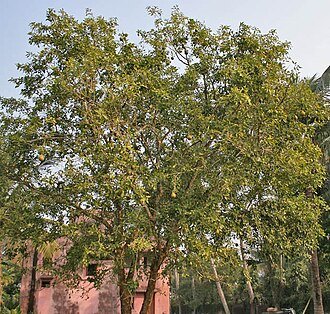
Botanical Reference 1: Aegle marmelos — Botanical specimen
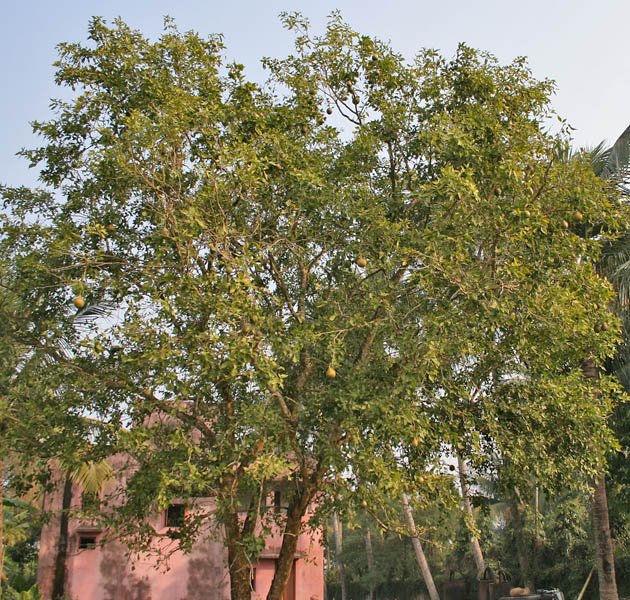
Botanical Reference 2: Aegle marmelos — Botanical specimen
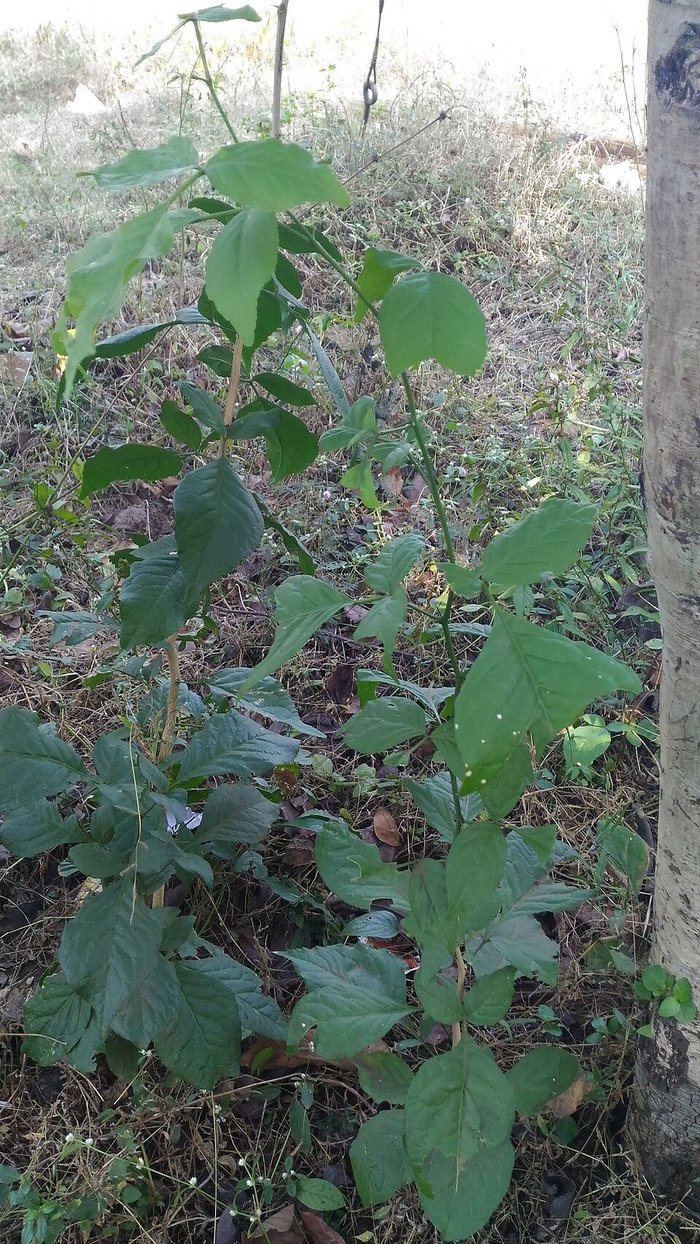
Botanical Reference 3: Aegle marmelos — Wikimedia Commons reference
4. Comparative Genus & Family Pharmacognosy
Within Indian medicinal flora, Aegle marmelos stands as a distinct representative of the genus Aegle. Its therapeutic profile underscores the role of selectively utilized medicinal genera alongside larger polytypic genera.
At the family level, Rutaceae encompasses 31 documented medicinal species (1.71% of the 1,814-species flora). Other representative medicinal members of Rutaceae include: Atalantia monophylla (Wild Lime), Chloroxylon swietenia (Provisionally equated with Bhillotaka), Citrus aurantifolia (Nimbuka), Citrus aurantium (Citrus dulcis), Clausena pentaphylla (Ratanjot). In comparative pharmacognosy, evaluating species within the same botanical family aids quality control, authentication of crude drugs, and identification of chemotaxonomic markers.
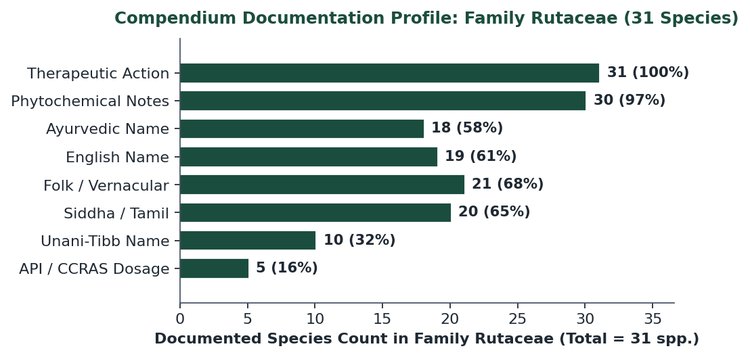
Figure 2: Quantitative documentation profile across all 31 medicinal species of family Rutaceae.
5. Pharmacopoeial Standards, Posology & Reference Framework
For clinical and traditional dispensing, the standardized posology and crude herb dosage for Aegle marmelos are prescribed as follows: Pulp of unripe or half ripe fruit—3 g powder. Root—6 g powder. (API Vols. I, III.). Crude drug dosages are calibrated against The Ayurvedic Pharmacopoeia of India (Vols. I–IV) and the Standard Nomenclature of Ayurvedic Medicinal Plants published by the Central Council for Research in Ayurveda and Siddha (CCRAS). Classical and modern pharmacognostic synchronization for Aegle marmelos integrates standards from The Ayurvedic Pharmacopoeia of India, The National Formulary of Unani Medicine, Formulary of Siddha Medicine, The Wealth of India (CSIR), Compendium of Indian Medicinal Plants (CDRI), Dictionary of Indian Medicinal Plants (CIMAP), German Commission E, ESCOP, WHO monographs, British Herbal Pharmacopoeia, and Natural Medicines Comprehensive Database.