Agaricus campestris Linn.
1. Taxonomic, Nomenclature & Therapeutic Summary Table
| Botanical Attribute | Pharmacognostic & Therapeutic Specification |
|---|---|
| Synonym | Psalliota campestris (Linn.) Fr. |
| Family | Agaricaceae. |
| Habitat | The fungi is distributed in many parts of India, particularly on the hills and plains of northern and eastern India. Grows during the rainy weather on dead organic matter, e.g. rotting leaves and manure. |
| English | Field mushroom, Edible mushroom. |
| Ayurvedic | Chhatraka, Bhuumichhatra. |
| Unani | Kammat. |
| Siddha / Tamil | Venkodiveli. |
| Folk | Khumbi. |
| Action | A protein (2.74%) supplement and an excellent source of vitamins of B complex. Vitamins K, C and D are also present. Though all the amino acids are reported to be present, the concentration of tryptophane is particularly low. |
| Taxonomic Cohort | Genus Agaricus (3 documented species); Family Agaricaceae (4 documented species). |
2. Classical Nomenclature, Taxonomy & Biogeographical Context
Agaricus campestris (taxonomically cited with authority Linn.) is an established medicinal plant species in Indian materia medica. It is classified under the botanical family Agaricaceae (primary family classification: Agaricaceae), placing it within a well-defined chemotaxonomic group of medicinal flora. In classical and modern botanical literature, the species is cross-referenced under the botanical synonymy Psalliota campestris (Linn.) Fr, which is synchronized to prevent taxonomic ambiguity across regional herbal formularies. Biogeographically, its documented habitat and ecological distribution span: The fungi is distributed in many parts of India, particularly on the hills and plains of northern and eastern India. Grows during the rainy weather on dead organic matter, e.g. rotting leaves and manure.
Across classical and vernacular Indian systems of medicine, Agaricus campestris is recognized under distinct polyglot nomenclature: in English botanical and trade usage as Field mushroom, Edible mushroom; in the Ayurvedic system (synchronized across The Ayurvedic Pharmacopoeia of India, CCRAS Standard Nomenclature, Sharangadhara Samhita, and Bhava Prakash) as Chhatraka, Bhuumichhatra; in the Unani-Tibb materia medica (recorded in The National Formulary of Unani Medicine and CCRUM literature) as Kammat; in the Siddha and Tamil medical tradition (compiled from the Formulary of Siddha Medicine and IMPCOPS Chennai) as Venkodiveli; in regional Indian folk and vernacular ethnobotany as Khumbi. Romanized Sanskrit and Ayurvedic spellings follow standard National Academy of Ayurveda (Rashtriya Ayurveda Vidyapeeth) transliteration conventions, using double vowels to preserve authentic classical pronunciation across regional medical traditions.
3. Therapeutic Actions, Phytochemistry & Pharmacological Profile
In therapeutic and clinical pharmacognosy, the primary recorded actions and clinical indications of Agaricus campestris are: A protein (2.74%) supplement and an excellent source of vitamins of B complex. Vitamins K, C and D are also present. Though all the amino acids are reported to be present, the concentration of tryptophane is particularly low. These traditional and clinical attributes reflect the plant part-specific pharmacological profile documented across classical Indian treatises and modern herbal pharmacopoeias.
Experimental phytochemistry, active chemical constituents, and pharmacological screening studies reported for Agaricus campestris establish the following evidence base: Extracts of A. campestris contain tyrosinase; lowered blood pressure of hypertensive animals when administered intravenously (exhibited no effect on normal animals). Fungal enzyme preparations have been used in digestive diseases. Field mushroom contains amylase, maltase, glycogenase, protease, catalase, tyrosinase, phosphomonoesterases, polyphosphatases, polyphenoloxidase and dehydropeptidases.
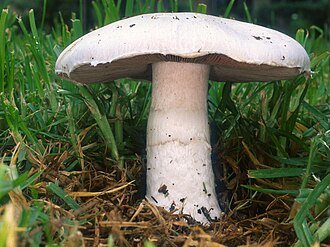
Botanical Reference 1: Agaricus campestris — Botanical specimen
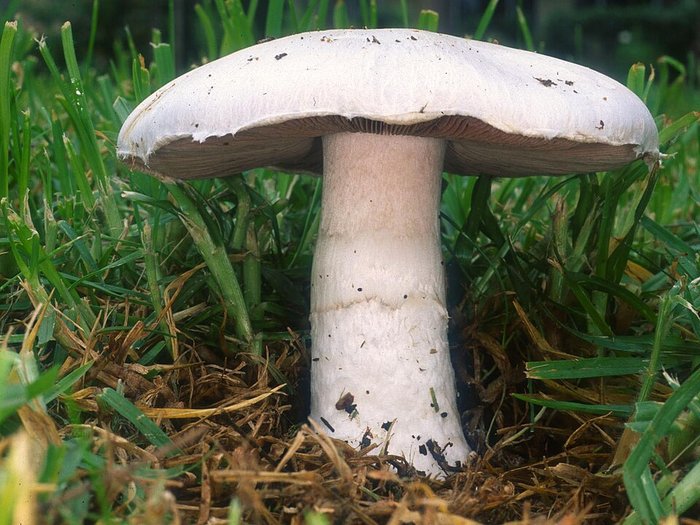
Botanical Reference 2: Agaricus campestris — Botanical specimen
Botanical Reference 3: Agaricus campestris — Wikimedia Commons reference
4. Comparative Genus & Family Pharmacognosy
Taxonomically, the genus Agaricus comprises 3 distinct medicinal species in Indian herbal literature. Closely allied congeneric species include: Agaricus albus (Action: Diuretic, laxative, deobstructant, expectorant; purgative and emetic in large…); Agaricus ostreatus (Action: Prevents excessive salivation. Also given internally in dysentery, diarrhoea…). Comparing Agaricus campestris alongside its congeners in genus Agaricus highlights both shared secondary metabolite classes and species-specific organotropism across different ecological zones.
At the family level, Agaricaceae encompasses 4 documented medicinal species (0.22% of the 1,814-species flora). Other representative medicinal members of Agaricaceae include: Agaricus albus (Purging Agaric), Agaricus ostreatus (Oyster Mushroom), Amanita muscaria (Identified as Soma of Rigveda). In comparative pharmacognosy, evaluating species within the same botanical family aids quality control, authentication of crude drugs, and identification of chemotaxonomic markers.
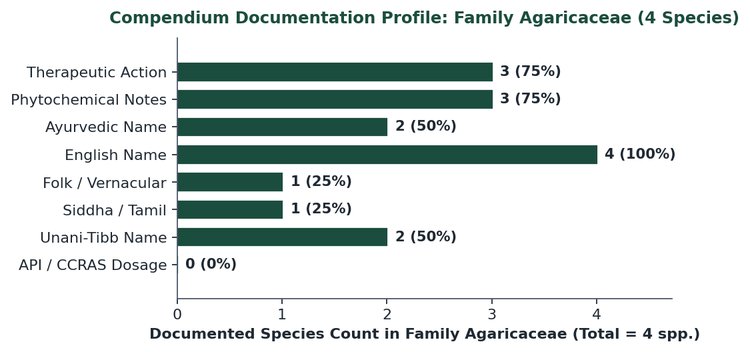
Figure 1: Quantitative documentation profile across all 4 medicinal species of family Agaricaceae.
5. Pharmacopoeial Standards, Posology & Reference Framework
In clinical and traditional dispensing, preparation and administration of Agaricus campestris follow the plant-part modalities specified under its therapeutic action (A protein (2.74%) supplement and an excellent source of vitamins of B complex. Vitamins K, C and D are also present. Though all the amino acids are reported to be present, the concentration of tryptophane is particularly low), guided by the standard posological principles of The Ayurvedic Pharmacopoeia of India (Vols. I–IV) and CCRAS formularies. Classical and modern pharmacognostic synchronization for Agaricus campestris integrates standards from The Ayurvedic Pharmacopoeia of India, The National Formulary of Unani Medicine, Formulary of Siddha Medicine, The Wealth of India (CSIR), Compendium of Indian Medicinal Plants (CDRI), Dictionary of Indian Medicinal Plants (CIMAP), German Commission E, ESCOP, WHO monographs, British Herbal Pharmacopoeia, and Natural Medicines Comprehensive Database.