Agrimonia eupatoria auct non L.
1. Taxonomic, Nomenclature & Therapeutic Summary Table
| Botanical Attribute | Pharmacognostic & Therapeutic Specification |
|---|---|
| Synonym | A. pilosa Hook.f. non Ledeb. A. pilosa Ledeb. var. nepalensis (D. Don) Nakai |
| Family | Rosacae. |
| Habitat | The Himalayas from Kashmir to West Bengal at 900– 3,000 m, and in Arunachal Pradesh, Nagaland and Meghalaya. |
| English | Agrimony, Stickle Wort. |
| Unani | Ghaafis. |
| Folk | Belu. |
| Action | Astringent, antiinflammatory, hepatic, cholagogue, diuretic, mild haemostatic, antibacterial. Used for irritations and infections of the intestinal tract, gallbladder diseases, hyperacidity, colic, urinary disorders (bedwetting, incontinence), sluggish liver, mucus membrane inflammations; externally for ulcerated and discharging skin, psoriasis and seborrhoic eczemas. |
| Key Application | In mild, nonspecific, acute diarrhoea and in inflammation of oral and pharyngeal mucosa; as astringent. (German Commission E, The British Herbal Pharmacopoeia.) |
| Taxonomic Cohort | Genus Agrimonia (1 documented species); Family Rosacae (1 documented species). |
2. Classical Nomenclature, Taxonomy & Biogeographical Context
Agrimonia eupatoria (taxonomically cited with authority auct non L.) is an established medicinal plant species in Indian materia medica. It is classified under the botanical family Rosacae (primary family classification: Rosacae), placing it within a well-defined chemotaxonomic group of medicinal flora. In classical and modern botanical literature, the species is cross-referenced under the botanical synonymy A. pilosa Hook.f. non Ledeb. A. pilosa Ledeb. var. nepalensis (D. Don) Nakai, which is synchronized to prevent taxonomic ambiguity across regional herbal formularies. Biogeographically, its documented habitat and ecological distribution span: The Himalayas from Kashmir to West Bengal at 900– 3,000 m, and in Arunachal Pradesh, Nagaland and Meghalaya.
Across classical and vernacular Indian systems of medicine, Agrimonia eupatoria is recognized under distinct polyglot nomenclature: in English botanical and trade usage as Agrimony, Stickle Wort; in the Unani-Tibb materia medica (recorded in The National Formulary of Unani Medicine and CCRUM literature) as Ghaafis; in regional Indian folk and vernacular ethnobotany as Belu. Romanized Sanskrit and Ayurvedic spellings follow standard National Academy of Ayurveda (Rashtriya Ayurveda Vidyapeeth) transliteration conventions, using double vowels to preserve authentic classical pronunciation across regional medical traditions.
3. Therapeutic Actions, Phytochemistry & Pharmacological Profile
In therapeutic and clinical pharmacognosy, the primary recorded actions and clinical indications of Agrimonia eupatoria are: Astringent, antiinflammatory, hepatic, cholagogue, diuretic, mild haemostatic, antibacterial. Used for irritations and infections of the intestinal tract, gallbladder diseases, hyperacidity, colic, urinary disorders (bedwetting, incontinence), sluggish liver, mucus membrane inflammations; externally for ulcerated and discharging skin, psoriasis and seborrhoic eczemas. These traditional and clinical attributes reflect the plant part-specific pharmacological profile documented across classical Indian treatises and modern herbal pharmacopoeias. Furthermore, international and national regulatory monographs highlight its validated key clinical application: In mild, nonspecific, acute diarrhoea and in inflammation of oral and pharyngeal mucosa; as astringent. (German Commission E, The British Herbal Pharmacopoeia.).
Experimental phytochemistry, active chemical constituents, and pharmacological screening studies reported for Agrimonia eupatoria establish the following evidence base: The herb contains condensed tannins up to 8%, coumarins, flavonoids (glucosides of luteolin, apigenin and quercetin), polysaccharides, volatile oil. Luteolin 7-glucoside shows a cholegogic action. Aqueous extracts inhibited Mycobacterium tuberculosis, also strains resistant to streptomycin and p-aminosalicylate. Essential oil is antibacterial, active against Bacillus subtilis. The ethanolic extracts of the herb are used for their antiviral properties. (Natural Medicines Comprehensive Database, 2007.) Coumarins interact with anticoagulants, and drugs that increase the risk of bleeding Furanocoumarin content increase photosensitivity. (Sharon M. Herr.)
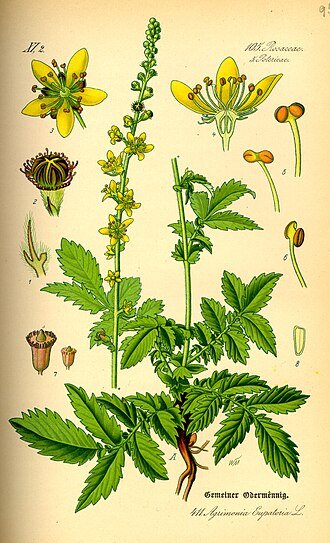
Botanical Reference 1: Agrimonia eupatoria — Botanical specimen
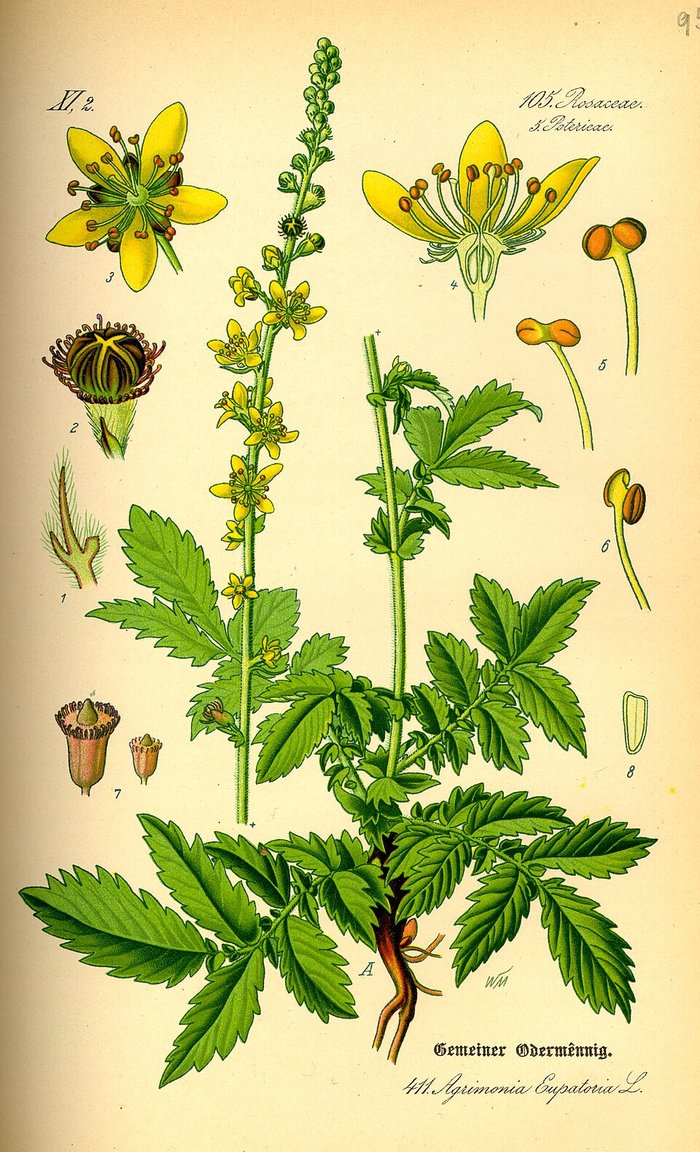
Botanical Reference 2: Agrimonia eupatoria — Botanical specimen
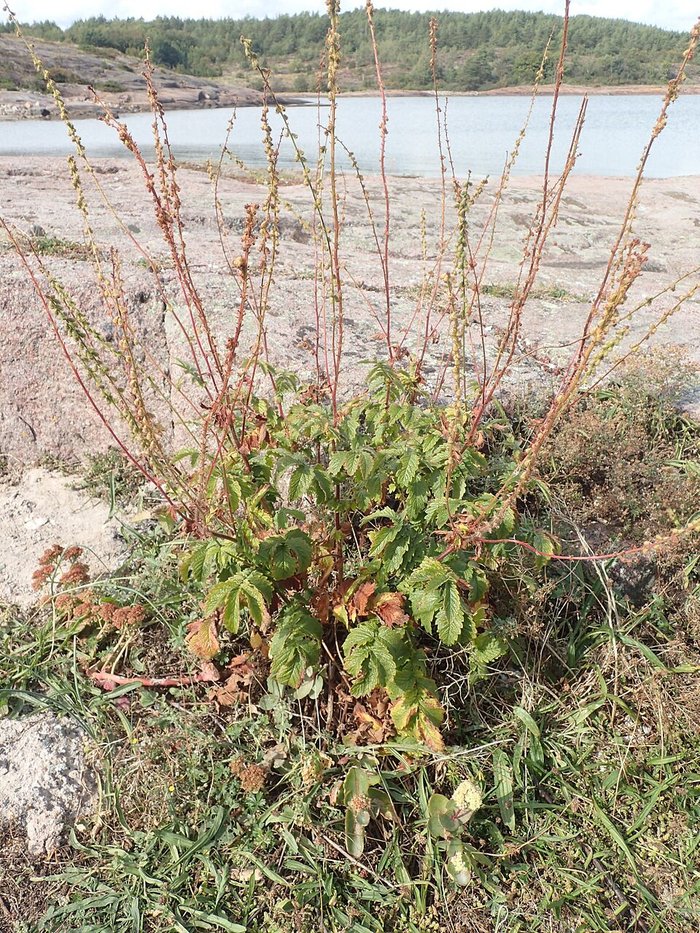
Botanical Reference 3: Agrimonia eupatoria — Wikimedia Commons reference
4. Comparative Genus & Family Pharmacognosy
Within Indian medicinal flora, Agrimonia eupatoria stands as a distinct representative of the genus Agrimonia. Its therapeutic profile underscores the role of selectively utilized medicinal genera alongside larger polytypic genera.
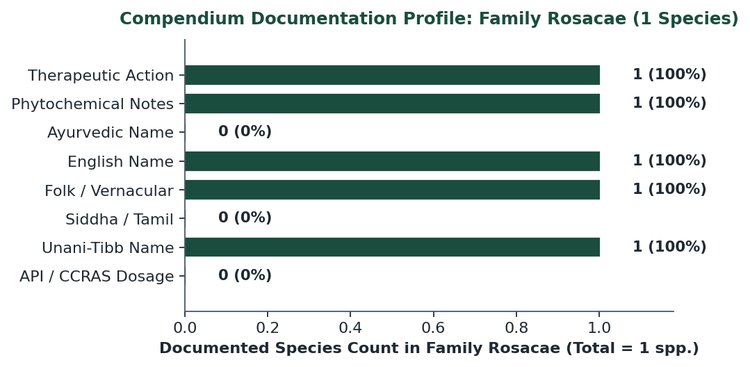
Figure 1: Quantitative documentation profile across all 1 medicinal species of family Rosacae.
5. Pharmacopoeial Standards, Posology & Reference Framework
In clinical and traditional dispensing, preparation and administration of Agrimonia eupatoria follow the plant-part modalities specified under its therapeutic action (Astringent, antiinflammatory, hepatic, cholagogue, diuretic, mild haemostatic, antibacterial. Used for irritations and infections of the intestinal tract, gallbladder diseases, hyperacidity, colic, urinary disorders (bedwetting, incontinence), sluggish liver, mucus membrane inflammations; externally for ulcerated and discharging skin, psoriasis and seborrhoic eczemas), guided by the standard posological principles of The Ayurvedic Pharmacopoeia of India (Vols. I–IV) and CCRAS formularies. Classical and modern pharmacognostic synchronization for Agrimonia eupatoria integrates standards from The Ayurvedic Pharmacopoeia of India, The National Formulary of Unani Medicine, Formulary of Siddha Medicine, The Wealth of India (CSIR), Compendium of Indian Medicinal Plants (CDRI), Dictionary of Indian Medicinal Plants (CIMAP), German Commission E, ESCOP, WHO monographs, British Herbal Pharmacopoeia, and Natural Medicines Comprehensive Database.