Ananas comosus (Linn.) Merrill
1. Taxonomic, Nomenclature & Therapeutic Summary Table
| Botanical Attribute | Pharmacognostic & Therapeutic Specification |
|---|---|
| Family | Bromeliaceae. |
| Habitat | Native to South America; cultivated mostly in Tamil Nadu, coastal Andhra Pradesh, Assam, Kerala, Karnataka, West Bengal, Tripura and Orissa. |
| English | Pineapple. |
| Ayurvedic | Anaanaasa, Bahunetra. |
| Unani | Anannaas. |
| Siddha / Tamil | Annanshippazham, Annasi. |
| Action | Anti-inflammatory (fresh juice used as a gargle for sore throat). A proteolytic enzyme, bromelain, is derived from the stem—anti-inflammatory, smooth muscle relaxant, digester, inhibitor of blood platelet aggregation. (It is used for cellulitis, post-operative oedema, sinusitis and for promoting digestion of proteins.) |
| Key Application | Bromelain, the proteolytic enzyme, is used in acute postoperative and post-traumatic conditions of swellings, especially of the nasal and paranasal sinuses. (German Commission E.) In Europe, a patented tape that contains bromelain is used for debriding escharotic skin. (Internally, bromelain’s bioavailability has been questioned.) |
| Taxonomic Cohort | Genus Ananas (1 documented species); Family Bromeliaceae (1 documented species). |
2. Classical Nomenclature, Taxonomy & Biogeographical Context
Ananas comosus (taxonomically cited with authority (Linn.) Merrill) is an established medicinal plant species in Indian materia medica. It is classified under the botanical family Bromeliaceae (primary family classification: Bromeliaceae), placing it within a well-defined chemotaxonomic group of medicinal flora. Within botanical taxonomy, this taxon is cataloged directly under its primary accepted binomial without secondary botanical synonyms. Biogeographically, its documented habitat and ecological distribution span: Native to South America; cultivated mostly in Tamil Nadu, coastal Andhra Pradesh, Assam, Kerala, Karnataka, West Bengal, Tripura and Orissa.
Across classical and vernacular Indian systems of medicine, Ananas comosus is recognized under distinct polyglot nomenclature: in English botanical and trade usage as Pineapple; in the Ayurvedic system (synchronized across The Ayurvedic Pharmacopoeia of India, CCRAS Standard Nomenclature, Sharangadhara Samhita, and Bhava Prakash) as Anaanaasa, Bahunetra; in the Unani-Tibb materia medica (recorded in The National Formulary of Unani Medicine and CCRUM literature) as Anannaas; in the Siddha and Tamil medical tradition (compiled from the Formulary of Siddha Medicine and IMPCOPS Chennai) as Annanshippazham, Annasi. Romanized Sanskrit and Ayurvedic spellings follow standard National Academy of Ayurveda (Rashtriya Ayurveda Vidyapeeth) transliteration conventions, using double vowels to preserve authentic classical pronunciation across regional medical traditions.
3. Therapeutic Actions, Phytochemistry & Pharmacological Profile
In therapeutic and clinical pharmacognosy, the primary recorded actions and clinical indications of Ananas comosus are: Anti-inflammatory (fresh juice used as a gargle for sore throat). A proteolytic enzyme, bromelain, is derived from the stem—anti-inflammatory, smooth muscle relaxant, digester, inhibitor of blood platelet aggregation. (It is used for cellulitis, post-operative oedema, sinusitis and for promoting digestion of proteins.). These traditional and clinical attributes reflect the plant part-specific pharmacological profile documented across classical Indian treatises and modern herbal pharmacopoeias. Furthermore, international and national regulatory monographs highlight its validated key clinical application: Bromelain, the proteolytic enzyme, is used in acute postoperative and post-traumatic conditions of swellings, especially of the nasal and paranasal sinuses. (German Commission E.) In Europe, a patented tape that contains bromelain is used for debriding escharotic skin. (Internally, bromelain’s bioavailability has been questioned.).
The therapeutic activity of Ananas comosus is grounded in its documented pharmacological actions (Anti-inflammatory (fresh juice used as a gargle for sore throat). A proteolytic enzyme, bromelain, is derived from the stem—anti-inflammatory, smooth muscle relaxant, digester, inhibitor of blood platelet aggregation. (It is used for cellulitis, post-operative oedema, sinusitis and for promoting digestion of proteins.)) and the characteristic secondary metabolite profile of the family Bromeliaceae.
In specialized pharmacognostic classifications, Ananas comosus is also represented by authenticated macro-photographic crude drug specimens in institutional pharmacognostic collections.
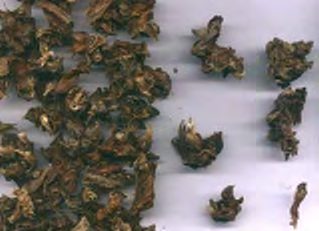
Figure 1: Authenticated crude herb specimen — Ananas comosus dried flesh.
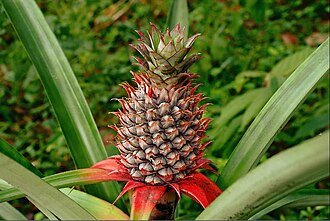
Botanical Reference 1: Pineapple — Botanical specimen
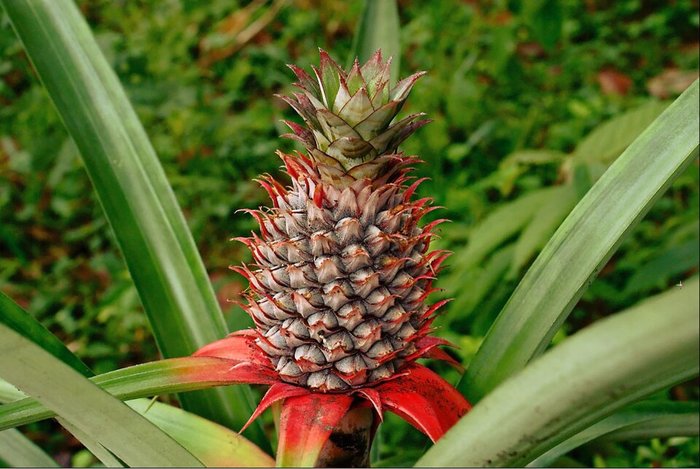
Botanical Reference 2: Pineapple — Botanical specimen
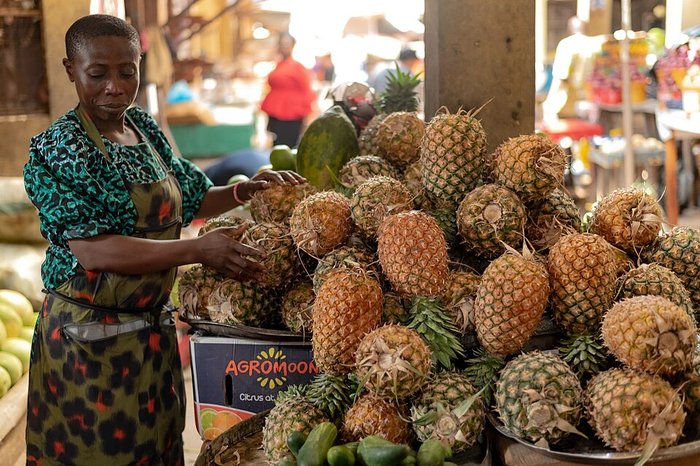
Botanical Reference 3: Ananas comosus — Wikimedia Commons reference
4. Comparative Genus & Family Pharmacognosy
Within Indian medicinal flora, Ananas comosus stands as a distinct representative of the genus Ananas. Its therapeutic profile underscores the role of selectively utilized medicinal genera alongside larger polytypic genera.
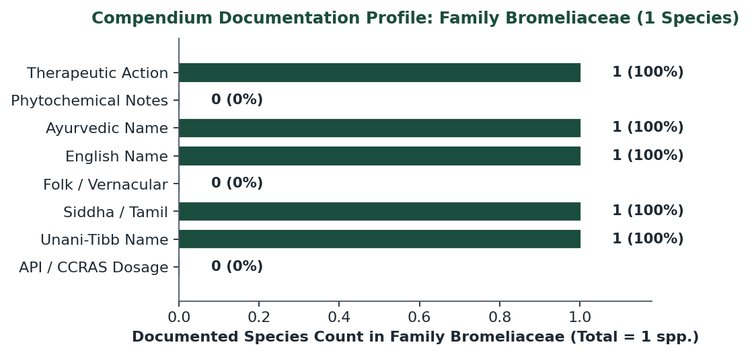
Figure 2: Quantitative documentation profile across all 1 medicinal species of family Bromeliaceae.
5. Pharmacopoeial Standards, Posology & Reference Framework
In clinical and traditional dispensing, preparation and administration of Ananas comosus follow the plant-part modalities specified under its therapeutic action (Anti-inflammatory (fresh juice used as a gargle for sore throat). A proteolytic enzyme, bromelain, is derived from the stem—anti-inflammatory, smooth muscle relaxant, digester, inhibitor of blood platelet aggregation. (It is used for cellulitis, post-operative oedema, sinusitis and for promoting digestion of proteins.)), guided by the standard posological principles of The Ayurvedic Pharmacopoeia of India (Vols. I–IV) and CCRAS formularies. Classical and modern pharmacognostic synchronization for Ananas comosus integrates standards from The Ayurvedic Pharmacopoeia of India, The National Formulary of Unani Medicine, Formulary of Siddha Medicine, The Wealth of India (CSIR), Compendium of Indian Medicinal Plants (CDRI), Dictionary of Indian Medicinal Plants (CIMAP), German Commission E, ESCOP, WHO monographs, British Herbal Pharmacopoeia, and Natural Medicines Comprehensive Database.