Argyreia speciosa Sweet.
1. Taxonomic, Nomenclature & Therapeutic Summary Table
| Botanical Attribute | Pharmacognostic & Therapeutic Specification |
|---|---|
| Synonym | A. nervosa (Burm. f.) Boj. |
| Family | Convolvulaceae. |
| Habitat | Found all over India, ascending to 300 m. |
| English | Elephant Creeper. |
| Ayurvedic | Vriddhadaaruka, Vriddhadaaru, Vriddhadaaraka, Bastaantri, Sthavira, Sthaviradaaru, Atarunadaaru, Samudrashosha. (Seeds of Salvia plebeia R. Br. are also known as Samudrashosha.) |
| Unani | Samunder sokh. |
| Siddha / Tamil | Ambgar, Samuddirapacchai |
| Folk | Bidhaaraa. |
| Action | Root—aphrodisiac (considered as a rejuvenator), nervine (used in diseases of nervous system, sexual disorders), diuretic (used in strangury), antirheumatic. Seeds—hypotensive, spasmolytic. Leaves—used externally in skin diseases (ringworm, eczema, boils, swellings); rubefacient, topically stimulant. |
| Dosage | Root—3–5 g powder. (CCRAS.) |
| Taxonomic Cohort | Genus Argyreia (1 documented species); Family Convolvulaceae (35 documented species). |
2. Classical Nomenclature, Taxonomy & Biogeographical Context
Argyreia speciosa (taxonomically cited with authority Sweet.) is an established medicinal plant species in Indian materia medica. It is classified under the botanical family Convolvulaceae (primary family classification: Convolvulaceae), placing it within a well-defined chemotaxonomic group of medicinal flora. In classical and modern botanical literature, the species is cross-referenced under the botanical synonymy A. nervosa (Burm. f.) Boj, which is synchronized to prevent taxonomic ambiguity across regional herbal formularies. Biogeographically, its documented habitat and ecological distribution span: Found all over India, ascending to 300 m.
Across classical and vernacular Indian systems of medicine, Argyreia speciosa is recognized under distinct polyglot nomenclature: in English botanical and trade usage as Elephant Creeper; in the Ayurvedic system (synchronized across The Ayurvedic Pharmacopoeia of India, CCRAS Standard Nomenclature, Sharangadhara Samhita, and Bhava Prakash) as Vriddhadaaruka, Vriddhadaaru, Vriddhadaaraka, Bastaantri, Sthavira, Sthaviradaaru, Atarunadaaru, Samudrashosha. (Seeds of Salvia plebeia R. Br. are also known as Samudrashosha.); in the Unani-Tibb materia medica (recorded in The National Formulary of Unani Medicine and CCRUM literature) as Samunder sokh; in the Siddha and Tamil medical tradition (compiled from the Formulary of Siddha Medicine and IMPCOPS Chennai) as Ambgar, Samuddirapacchai; in regional Indian folk and vernacular ethnobotany as Bidhaaraa. Romanized Sanskrit and Ayurvedic spellings follow standard National Academy of Ayurveda (Rashtriya Ayurveda Vidyapeeth) transliteration conventions, using double vowels to preserve authentic classical pronunciation across regional medical traditions.
3. Therapeutic Actions, Phytochemistry & Pharmacological Profile
In therapeutic and clinical pharmacognosy, the primary recorded actions and clinical indications of Argyreia speciosa are: Root—aphrodisiac (considered as a rejuvenator), nervine (used in diseases of nervous system, sexual disorders), diuretic (used in strangury), antirheumatic. Seeds—hypotensive, spasmolytic. Leaves—used externally in skin diseases (ringworm, eczema, boils, swellings); rubefacient, topically stimulant. These traditional and clinical attributes reflect the plant part-specific pharmacological profile documented across classical Indian treatises and modern herbal pharmacopoeias.
Experimental phytochemistry, active chemical constituents, and pharmacological screening studies reported for Argyreia speciosa establish the following evidence base: The seeds contain hallucinogenic ergoline alkaloids, the main ones being ergine and isoergine. EtOH (50%) extract of seeds exhibits hypotensive activity. (Seeds of all species of Argyreia contain ergoline alkaloids and are hypotensive.) Leaves of Argyreia sp. contain sitosterol and are antiphlogistic. In Indian medicine, A. speciosa is not used as a single drug for sexual disorders in men, but as a supporting drug for exerting its antiphlogistic, spasmolytic and hypotensive actions on the central nervous system. The drug, in itself, did not show anaboliccum-androgen-like or spermogenetic activity experimentally. Ipomoea petaloidea Chois and Ipomoea biloba Forsk of the Convolvulacae family are also used as Vriddhadaaru. In Western herbal medicine, Hawaiian Baby Woodrose is equated with Argyreia nervosa (synonym Argyreia speciosa; grows in Florida, California and Hawaii). The seed is used for pain relief and as a hallucinogen. The seeds contain hallucinogens including ergonovine, isoergine (isolysergic acid amide) and ergine (lysergic acid amide). Four to eight seeds are equivalent to 10–100 mcg of LSD, a potent serotonin-1A (5-HT1A) agonist. The effects last 6–8 h. (Natural Medicines Comprehensive Database, 2007.)
In specialized pharmacognostic classifications, Argyreia speciosa is also listed among standardized commercial herbal extracts used in India with defined quantitative phytochemical markers.
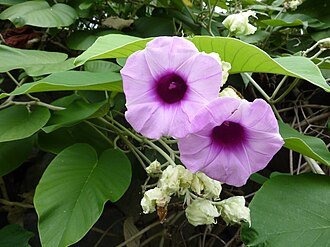
Botanical Reference 1: Argyreia nervosa — Botanical specimen
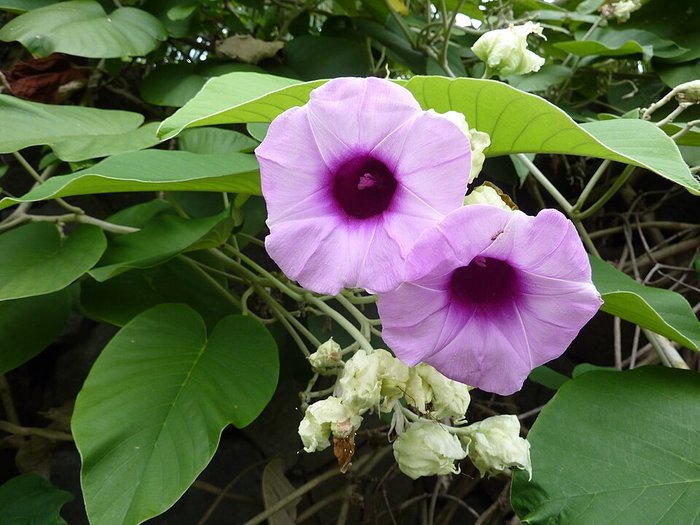
Botanical Reference 2: Argyreia nervosa — Botanical specimen
Botanical Reference 3: Argyreia speciosa — Wikimedia Commons reference
4. Comparative Genus & Family Pharmacognosy
Within Indian medicinal flora, Argyreia speciosa stands as a distinct representative of the genus Argyreia. Its therapeutic profile underscores the role of selectively utilized medicinal genera alongside larger polytypic genera.
At the family level, Convolvulaceae encompasses 35 documented medicinal species (1.93% of the 1,814-species flora). Other representative medicinal members of Convolvulaceae include: Convolvulus arvensis (Bhadrabalaa), Convolvulus pluricaulis (Shankhapushpi), Convolvulus scammonia (Scammony), Cressa cretica (Rudanti), Cuscuta epithymum (Aakaashvalli). In comparative pharmacognosy, evaluating species within the same botanical family aids quality control, authentication of crude drugs, and identification of chemotaxonomic markers.
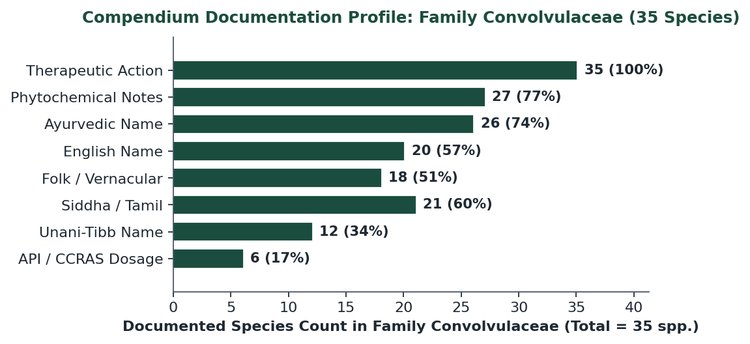
Figure 1: Quantitative documentation profile across all 35 medicinal species of family Convolvulaceae.
5. Pharmacopoeial Standards, Posology & Reference Framework
For clinical and traditional dispensing, the standardized posology and crude herb dosage for Argyreia speciosa are prescribed as follows: Root—3–5 g powder. (CCRAS.). Crude drug dosages are calibrated against The Ayurvedic Pharmacopoeia of India (Vols. I–IV) and the Standard Nomenclature of Ayurvedic Medicinal Plants published by the Central Council for Research in Ayurveda and Siddha (CCRAS). Classical and modern pharmacognostic synchronization for Argyreia speciosa integrates standards from The Ayurvedic Pharmacopoeia of India, The National Formulary of Unani Medicine, Formulary of Siddha Medicine, The Wealth of India (CSIR), Compendium of Indian Medicinal Plants (CDRI), Dictionary of Indian Medicinal Plants (CIMAP), German Commission E, ESCOP, WHO monographs, British Herbal Pharmacopoeia, and Natural Medicines Comprehensive Database.