Caesalpinia bonduc (L.) Roxb. Dandy & Exell.
1. Taxonomic, Nomenclature & Therapeutic Summary Table
| Botanical Attribute | Pharmacognostic & Therapeutic Specification |
|---|---|
| Synonym | C. bonducella Flem. C. crista Linn. |
| Family | Caesalpiniaceae. |
| Habitat | Throughout the hotter parts of India. Common in West Bengal and South India. Often grown as hedge plant. |
| English | Fever Nut, Bonduc Nut, Nikkar Nut. |
| Ayurvedic | Puutikaranja, Lataakaranja, Kantaki Karanja, Karanjin, Kuberaakshi (seed). |
| Unani | Karanjwaa. |
| Siddha / Tamil | Kazharchikkaai. |
| Action | Seed—antiperiodic, antirheumatic. Roasted and used as an antidiabetic preparation. Leaf, bark and seed—febrifuge. Leaf and bark—emmenagogue, anthelmintic. Root—diuretic, anticalculous. |
| Dosage | Seed kernel—1–3 g powder. (CCRAS.) |
| Taxonomic Cohort | Genus Caesalpinia (5 documented species); Family Caesalpiniaceae (25 documented species). |
2. Classical Nomenclature, Taxonomy & Biogeographical Context
Caesalpinia bonduc (taxonomically cited with authority (L.) Roxb. Dandy & Exell.) is an established medicinal plant species in Indian materia medica. It is classified under the botanical family Caesalpiniaceae (primary family classification: Caesalpiniaceae), placing it within a well-defined chemotaxonomic group of medicinal flora. In classical and modern botanical literature, the species is cross-referenced under the botanical synonymy C. bonducella Flem. C. crista Linn, which is synchronized to prevent taxonomic ambiguity across regional herbal formularies. Biogeographically, its documented habitat and ecological distribution span: Throughout the hotter parts of India. Common in West Bengal and South India. Often grown as hedge plant.
Across classical and vernacular Indian systems of medicine, Caesalpinia bonduc is recognized under distinct polyglot nomenclature: in English botanical and trade usage as Fever Nut, Bonduc Nut, Nikkar Nut; in the Ayurvedic system (synchronized across The Ayurvedic Pharmacopoeia of India, CCRAS Standard Nomenclature, Sharangadhara Samhita, and Bhava Prakash) as Puutikaranja, Lataakaranja, Kantaki Karanja, Karanjin, Kuberaakshi (seed); in the Unani-Tibb materia medica (recorded in The National Formulary of Unani Medicine and CCRUM literature) as Karanjwaa; in the Siddha and Tamil medical tradition (compiled from the Formulary of Siddha Medicine and IMPCOPS Chennai) as Kazharchikkaai. Romanized Sanskrit and Ayurvedic spellings follow standard National Academy of Ayurveda (Rashtriya Ayurveda Vidyapeeth) transliteration conventions, using double vowels to preserve authentic classical pronunciation across regional medical traditions.
3. Therapeutic Actions, Phytochemistry & Pharmacological Profile
In therapeutic and clinical pharmacognosy, the primary recorded actions and clinical indications of Caesalpinia bonduc are: Seed—antiperiodic, antirheumatic. Roasted and used as an antidiabetic preparation. Leaf, bark and seed—febrifuge. Leaf and bark—emmenagogue, anthelmintic. Root—diuretic, anticalculous. These traditional and clinical attributes reflect the plant part-specific pharmacological profile documented across classical Indian treatises and modern herbal pharmacopoeias.
Experimental phytochemistry, active chemical constituents, and pharmacological screening studies reported for Caesalpinia bonduc establish the following evidence base: The seeds contain an alkaloid caesalpinine; bitter principles such as bonducin; saponins; fixed oil. The seed powder, dissolved in water, showed hypoglycaemic activity in alloxanized hyperglycaemic rabbits. Aqueous extract of the seeds produced similar effects in rats. The powder forms a household remedy for treatment of diabetes in Nicobar Islands. In Kangra, Himachal Pradesh, roots are used in intermittent fevers and diabetes. In homoeopathy, the plant is considered an excellent remedy for chronic fever. (Three plant species—Pongamia pinnata Pierre, Holoptelea integrifolia (Roxb.) Planch. and Caesalpinia bonduc (L.) Roxb. are being used as varieties of Karanja (because flowers impart colour to water). P. pinnata is a tree and is equated with Karanja, Naktamaala and Udakirya; H. integrifolia, also a tree, with Chirabilva, Putika (bad smell) and Prakiryaa; and C. bonduc, a shrub, with Kantaki Karanja or Lataa Karanja.)
In specialized pharmacognostic classifications, Caesalpinia bonduc is also listed among standardized commercial herbal extracts used in India with defined quantitative phytochemical markers; and represented by authenticated macro-photographic crude drug specimens in institutional pharmacognostic collections.
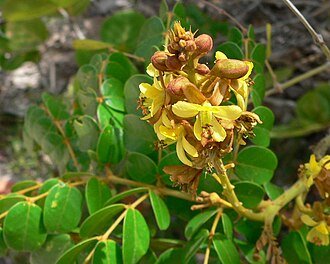
Botanical Reference 1: Guilandina bonduc — Botanical specimen
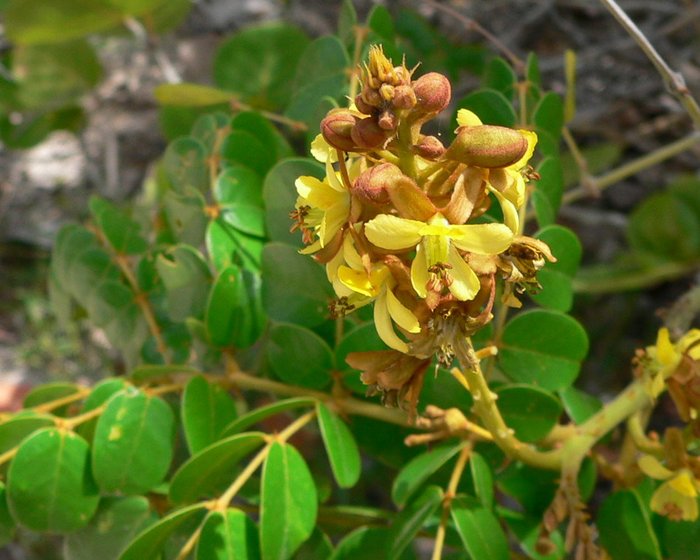
Botanical Reference 2: Guilandina bonduc — Botanical specimen
Botanical Reference 3: Caesalpinia bonduc — Wikimedia Commons reference
4. Comparative Genus & Family Pharmacognosy
Taxonomically, the genus Caesalpinia comprises 5 distinct medicinal species in Indian herbal literature. Closely allied congeneric species include: Caesalpinia coriaria (Action: Bark—febrifuge, antiperiodic. Pod—astringent (in piles). Fruit—semen coagulant); Caesalpinia digyny (Action: Root—astringent and antipyretic, used in phthisis and scrofulous affections); Caesalpinia pulcherrima (Action: Leaves—laxative, antipyretic. Used in Eastern India as a substitute for senna….); Caesalpinia sappan (Action: Wood decoction— emmenagogue, antidiarrhoeal; used in skin diseases). Comparing Caesalpinia bonduc alongside its congeners in genus Caesalpinia highlights both shared secondary metabolite classes and species-specific organotropism across different ecological zones.
At the family level, Caesalpiniaceae encompasses 25 documented medicinal species (1.38% of the 1,814-species flora). Other representative medicinal members of Caesalpiniaceae include: Bauhinia acuminata (Kaanchnaara), Bauhinia malabarica (Ashmantaka var), Bauhinia purpurea (Kovidaara), Bauhinia racemosa (Ashmantaka), Cassia absus (Chakshushyaa). In comparative pharmacognosy, evaluating species within the same botanical family aids quality control, authentication of crude drugs, and identification of chemotaxonomic markers.
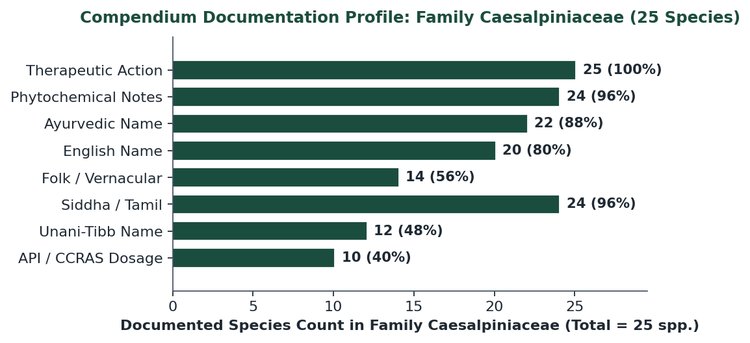
Figure 1: Quantitative documentation profile across all 25 medicinal species of family Caesalpiniaceae.
5. Pharmacopoeial Standards, Posology & Reference Framework
For clinical and traditional dispensing, the standardized posology and crude herb dosage for Caesalpinia bonduc are prescribed as follows: Seed kernel—1–3 g powder. (CCRAS.). Crude drug dosages are calibrated against The Ayurvedic Pharmacopoeia of India (Vols. I–IV) and the Standard Nomenclature of Ayurvedic Medicinal Plants published by the Central Council for Research in Ayurveda and Siddha (CCRAS). Classical and modern pharmacognostic synchronization for Caesalpinia bonduc integrates standards from The Ayurvedic Pharmacopoeia of India, The National Formulary of Unani Medicine, Formulary of Siddha Medicine, The Wealth of India (CSIR), Compendium of Indian Medicinal Plants (CDRI), Dictionary of Indian Medicinal Plants (CIMAP), German Commission E, ESCOP, WHO monographs, British Herbal Pharmacopoeia, and Natural Medicines Comprehensive Database.