Camellia sinensis (Linn.) O. Kuntze.
1. Taxonomic, Nomenclature & Therapeutic Summary Table
| Botanical Attribute | Pharmacognostic & Therapeutic Specification |
|---|---|
| Family | Theaceae. |
| Habitat | Cultivated in Assam, Darjeeling, Travancore, the Nilgiris, Malabar, Bengal, Dehra Dun and Kumaon. |
| English | Tea. |
| Unani | Chaai, Shaahi, Shaayi. |
| Siddha / Tamil | Thaeyilai. |
| Action | Stimulant, diuretic, astringent. In China, used for diarrhoea and dysentery (causes gastrointestinal upsets and nervous irritability when consumed in excess). Green tea: anticancer effects have been observed in Chinese green tea, Camellia thea, extract; the extract of Japanese green tea showed antihepatotoxic effects. |
| Taxonomic Cohort | Genus Camellia (1 documented species); Family Theaceae (3 documented species). |
2. Classical Nomenclature, Taxonomy & Biogeographical Context
Camellia sinensis (taxonomically cited with authority (Linn.) O. Kuntze.) is an established medicinal plant species in Indian materia medica. It is classified under the botanical family Theaceae (primary family classification: Theaceae), placing it within a well-defined chemotaxonomic group of medicinal flora. Within botanical taxonomy, this taxon is cataloged directly under its primary accepted binomial without secondary botanical synonyms. Biogeographically, its documented habitat and ecological distribution span: Cultivated in Assam, Darjeeling, Travancore, the Nilgiris, Malabar, Bengal, Dehra Dun and Kumaon.
Across classical and vernacular Indian systems of medicine, Camellia sinensis is recognized under distinct polyglot nomenclature: in English botanical and trade usage as Tea; in the Unani-Tibb materia medica (recorded in The National Formulary of Unani Medicine and CCRUM literature) as Chaai, Shaahi, Shaayi; in the Siddha and Tamil medical tradition (compiled from the Formulary of Siddha Medicine and IMPCOPS Chennai) as Thaeyilai. Romanized Sanskrit and Ayurvedic spellings follow standard National Academy of Ayurveda (Rashtriya Ayurveda Vidyapeeth) transliteration conventions, using double vowels to preserve authentic classical pronunciation across regional medical traditions.
3. Therapeutic Actions, Phytochemistry & Pharmacological Profile
In therapeutic and clinical pharmacognosy, the primary recorded actions and clinical indications of Camellia sinensis are: Stimulant, diuretic, astringent. In China, used for diarrhoea and dysentery (causes gastrointestinal upsets and nervous irritability when consumed in excess). Green tea: anticancer effects have been observed in Chinese green tea, Camellia thea, extract; the extract of Japanese green tea showed antihepatotoxic effects. These traditional and clinical attributes reflect the plant part-specific pharmacological profile documented across classical Indian treatises and modern herbal pharmacopoeias.
Experimental phytochemistry, active chemical constituents, and pharmacological screening studies reported for Camellia sinensis establish the following evidence base: Important constituents of leaf buds and very young leaves are: caffeine, with a much smaller amount of other xanthines (theophylline and theobromine); tannins (the main tannin in green tea is (−)-epigallocatechin); flavonoids, quercetin, kaempferol. The stimulant and diuretic are due to caffeine content, the astringency due to the tannins. Drinking tea lowers thiamine and thiamine diphosphate losses in urine and blood serum respectively but increases niacin losses. Hot water extract of black tea facilitates Ca absorption in the body experimentally. Tea may decrease zinc bioavailability. The tea, if added to the meal, significantly lower the availability of iron. Milk is as effective as ascorbic acid in countering the depressing effect of tea on iron availability (in vitro). The green tea catechin inhibited carcinogenesis in small intestines when given during or after carcinogen treatment to experimental rats. (−)-epigallocatechin gallate and theaflavin digallate from green tea inhibited the infectivity of both influenza A and B virus (in vitro). Green tea, when added to a lardcholesterol diet, decreased the cholesterol and triglyceride levels in fowls. Tea polyphenols exhibit hypocholesterolaemic activity. Tea polyphenols—(−)-epicatechin gallate, (−)-epigallocatechine galate, theaflavin monogallate A or B, and or theaflavin digallate—are used for treating hyperglycaemia. Saponins from tea are used as antiulcer agents. Concurrent use of tea and betaadrenergic agonists may increase the risk of cardiac arrhythmias. Caffeine, a component of tea, may increase insulin resistance. (Sharon M. Herr.)
In specialized pharmacognostic classifications, Camellia sinensis is also listed among standardized commercial herbal extracts used in India with defined quantitative phytochemical markers.
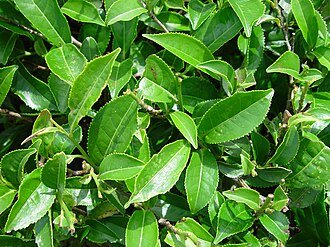
Botanical Reference 1: Camellia sinensis — Botanical specimen
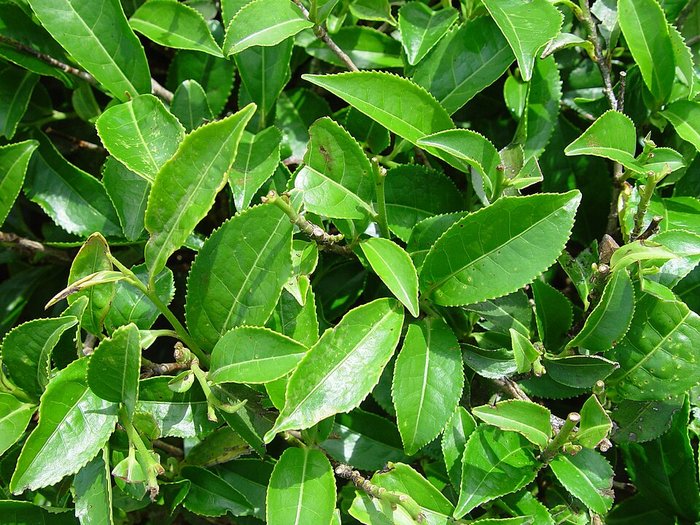
Botanical Reference 2: Camellia sinensis — Botanical specimen

Botanical Reference 3: Camellia sinensis — Wikimedia Commons reference
4. Comparative Genus & Family Pharmacognosy
Within Indian medicinal flora, Camellia sinensis stands as a distinct representative of the genus Camellia. Its therapeutic profile underscores the role of selectively utilized medicinal genera alongside larger polytypic genera.
At the family level, Theaceae encompasses 3 documented medicinal species (0.17% of the 1,814-species flora). Other representative medicinal members of Theaceae include: Gordonia obtusa (Miyili), Schima wallichii (Chilauni Needle Wood). In comparative pharmacognosy, evaluating species within the same botanical family aids quality control, authentication of crude drugs, and identification of chemotaxonomic markers.
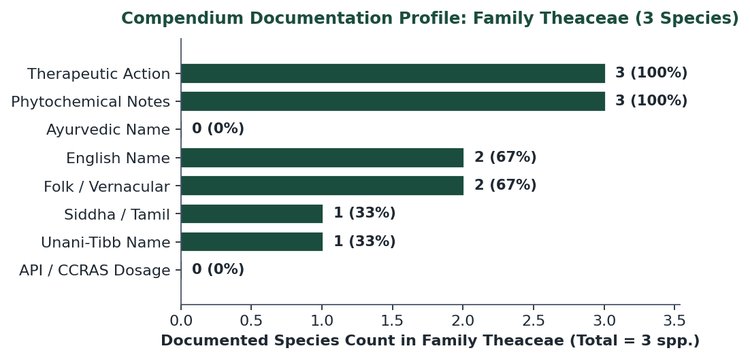
Figure 1: Quantitative documentation profile across all 3 medicinal species of family Theaceae.
5. Pharmacopoeial Standards, Posology & Reference Framework
In clinical and traditional dispensing, preparation and administration of Camellia sinensis follow the plant-part modalities specified under its therapeutic action (Stimulant, diuretic, astringent. In China, used for diarrhoea and dysentery (causes gastrointestinal upsets and nervous irritability when consumed in excess). Green tea: anticancer effects have been observed in Chinese green tea, Camellia thea, extract; the extract of Japanese green tea showed antihepatotoxic effects), guided by the standard posological principles of The Ayurvedic Pharmacopoeia of India (Vols. I–IV) and CCRAS formularies. Classical and modern pharmacognostic synchronization for Camellia sinensis integrates standards from The Ayurvedic Pharmacopoeia of India, The National Formulary of Unani Medicine, Formulary of Siddha Medicine, The Wealth of India (CSIR), Compendium of Indian Medicinal Plants (CDRI), Dictionary of Indian Medicinal Plants (CIMAP), German Commission E, ESCOP, WHO monographs, British Herbal Pharmacopoeia, and Natural Medicines Comprehensive Database.