Carica papaya Linn.
1. Taxonomic, Nomenclature & Therapeutic Summary Table
| Botanical Attribute | Pharmacognostic & Therapeutic Specification |
|---|---|
| Family | Caricaceae. |
| Habitat | Native to West Indies and Central America; now cultivated in Uttar Pradesh, Punjab, Rajasthan, Gujarat, Maharashtra and South India. |
| English | Papaya, Papaw. |
| Ayurvedic | Erand-karkati, Papitaa. |
| Unani | Papitaa Desi. |
| Siddha / Tamil | Pappaali, Pappayi. |
| Action | Ripe fruit—stomachic, digestive, carminative, diuretic, galactagogue. Useful in bleeding piles, haemoptysis, dysentery and chronic diarrhoea. Seeds— emmengagogue, abortifacient, vermifuge. Juice of seeds is administered in enlarged liver and spleen, and in bleeding piles. |
| Key Application | Papain, the enzyme mixture extracted from raw papain (latex of Carica papaya), has been included among unapproved herbs by German Commission E. Experiment-based as well as clinical research indicate that papain may be effective (in the treatment of inflammations) in high doses (daily dose 1500 mg corresponding to 2520 FIP units). |
| Dosage | Leaf—40–80 ml infusion; latex—3–6 g (CCRAS.) |
| Taxonomic Cohort | Genus Carica (1 documented species); Family Caricaceae (1 documented species). |
2. Classical Nomenclature, Taxonomy & Biogeographical Context
Carica papaya (taxonomically cited with authority Linn.) is an established medicinal plant species in Indian materia medica. It is classified under the botanical family Caricaceae (primary family classification: Caricaceae), placing it within a well-defined chemotaxonomic group of medicinal flora. Within botanical taxonomy, this taxon is cataloged directly under its primary accepted binomial without secondary botanical synonyms. Biogeographically, its documented habitat and ecological distribution span: Native to West Indies and Central America; now cultivated in Uttar Pradesh, Punjab, Rajasthan, Gujarat, Maharashtra and South India.
Across classical and vernacular Indian systems of medicine, Carica papaya is recognized under distinct polyglot nomenclature: in English botanical and trade usage as Papaya, Papaw; in the Ayurvedic system (synchronized across The Ayurvedic Pharmacopoeia of India, CCRAS Standard Nomenclature, Sharangadhara Samhita, and Bhava Prakash) as Erand-karkati, Papitaa; in the Unani-Tibb materia medica (recorded in The National Formulary of Unani Medicine and CCRUM literature) as Papitaa Desi; in the Siddha and Tamil medical tradition (compiled from the Formulary of Siddha Medicine and IMPCOPS Chennai) as Pappaali, Pappayi. Romanized Sanskrit and Ayurvedic spellings follow standard National Academy of Ayurveda (Rashtriya Ayurveda Vidyapeeth) transliteration conventions, using double vowels to preserve authentic classical pronunciation across regional medical traditions.
3. Therapeutic Actions, Phytochemistry & Pharmacological Profile
In therapeutic and clinical pharmacognosy, the primary recorded actions and clinical indications of Carica papaya are: Ripe fruit—stomachic, digestive, carminative, diuretic, galactagogue. Useful in bleeding piles, haemoptysis, dysentery and chronic diarrhoea. Seeds— emmengagogue, abortifacient, vermifuge. Juice of seeds is administered in enlarged liver and spleen, and in bleeding piles. These traditional and clinical attributes reflect the plant part-specific pharmacological profile documented across classical Indian treatises and modern herbal pharmacopoeias. Furthermore, international and national regulatory monographs highlight its validated key clinical application: Papain, the enzyme mixture extracted from raw papain (latex of Carica papaya), has been included among unapproved herbs by German Commission E. Experiment-based as well as clinical research indicate that papain may be effective (in the treatment of inflammations) in high doses (daily dose 1500 mg corresponding to 2520 FIP units).
Experimental phytochemistry, active chemical constituents, and pharmacological screening studies reported for Carica papaya establish the following evidence base: Unripe fruit—emmengagogue and abortifacient. Latex—applied topically on eczema, ringworm, psoriasis, corns, warts, sloughing wounds, carbuncles and eschar of burns. Green parts of the plant and seed contain an alkaloid carpaine. Seeds also contain carpasemine. Latex contain enzymes—papain and chymopapain and alkaloids carpaine and pseudocarpaine. A proteinaceous material from latex showed anticoagulant activity; in higher doses it is heart depressant and as a spasmogen on smooth muscle of guinea pig ileum. An alkaloid solution showed depressant action on heart, blood pressure and intestine. The anthelmintic action of seeds against Ascaris lumbricoides is due to carpasemine. Papain, an enzyme mixture prepared from the fruit, seeds and leaf, hydrolyses polypeptides, amides and esters, particularly when used in an alkaline environment, and is used in digestive disorders. Papain inhibits platelet aggregation, which may further increase the risk of bleeding in patients also taking anticoagulants. Concurrent administration of cyclophosphamide with papain caused sever damage to lung tissues in rats. (Sharon M. Herr.) Chymopapin C is an immunosuppressive enzyme from plant extract. Carpaine, extracted from the plant, exhibited anti-tubercular activity, also antitumour in vitro, and hypotensive.
In specialized pharmacognostic classifications, Carica papaya is also represented by authenticated macro-photographic crude drug specimens in institutional pharmacognostic collections.
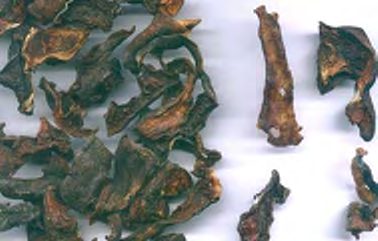
Figure 1: Authenticated crude herb specimen — Carica papaya dried pulp.
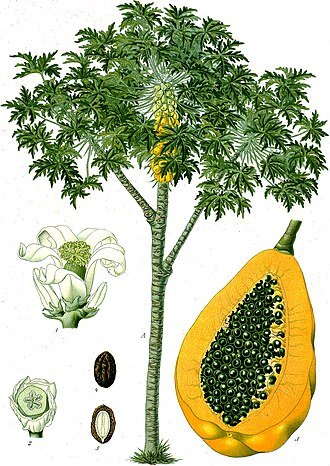
Botanical Reference 1: Papaya — Botanical specimen
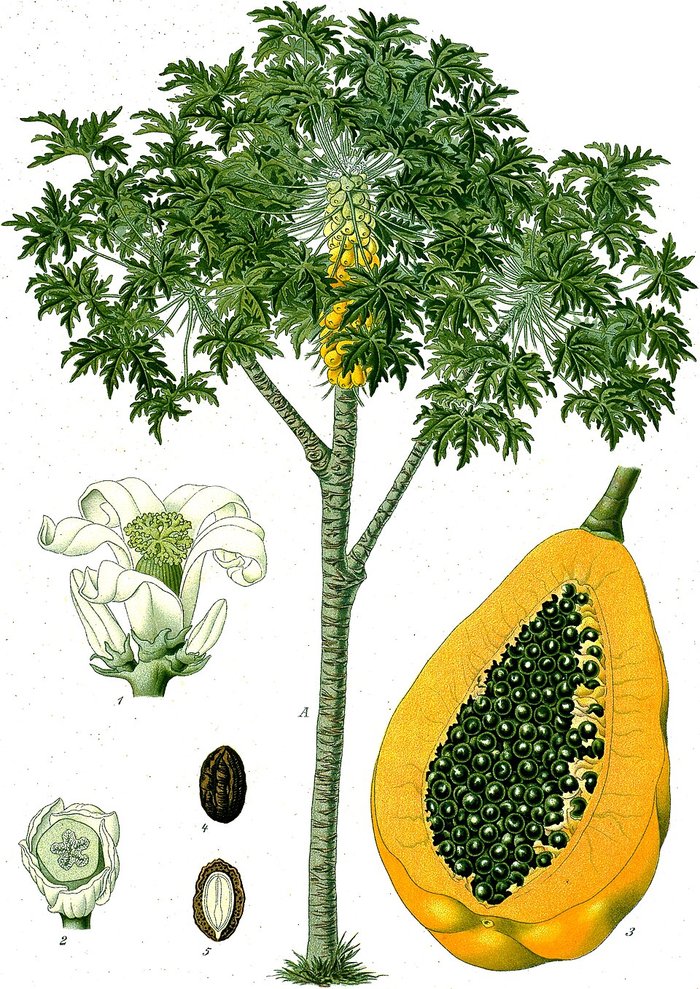
Botanical Reference 2: Papaya — Botanical specimen
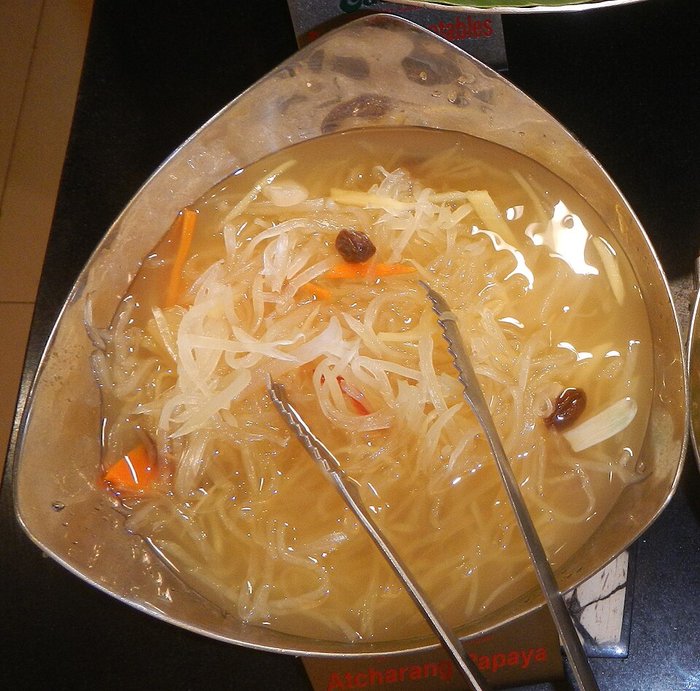
Botanical Reference 3: Carica papaya — Wikimedia Commons reference
4. Comparative Genus & Family Pharmacognosy
Within Indian medicinal flora, Carica papaya stands as a distinct representative of the genus Carica. Its therapeutic profile underscores the role of selectively utilized medicinal genera alongside larger polytypic genera.
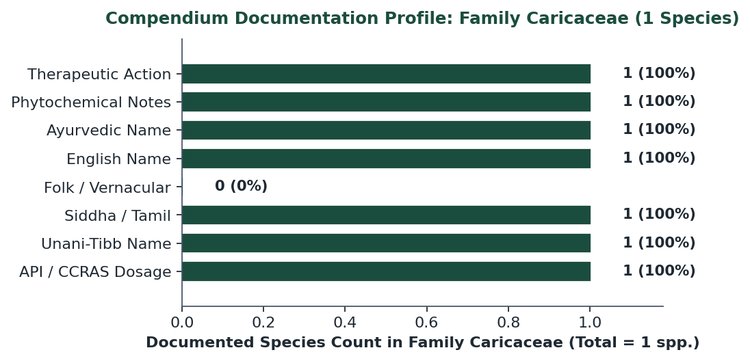
Figure 2: Quantitative documentation profile across all 1 medicinal species of family Caricaceae.
5. Pharmacopoeial Standards, Posology & Reference Framework
For clinical and traditional dispensing, the standardized posology and crude herb dosage for Carica papaya are prescribed as follows: Leaf—40–80 ml infusion; latex—3–6 g (CCRAS.). Crude drug dosages are calibrated against The Ayurvedic Pharmacopoeia of India (Vols. I–IV) and the Standard Nomenclature of Ayurvedic Medicinal Plants published by the Central Council for Research in Ayurveda and Siddha (CCRAS). Classical and modern pharmacognostic synchronization for Carica papaya integrates standards from The Ayurvedic Pharmacopoeia of India, The National Formulary of Unani Medicine, Formulary of Siddha Medicine, The Wealth of India (CSIR), Compendium of Indian Medicinal Plants (CDRI), Dictionary of Indian Medicinal Plants (CIMAP), German Commission E, ESCOP, WHO monographs, British Herbal Pharmacopoeia, and Natural Medicines Comprehensive Database.