Cyamopsis tetragonoloba (Linn.) Taub.
1. Taxonomic, Nomenclature & Therapeutic Summary Table
| Botanical Attribute | Pharmacognostic & Therapeutic Specification |
|---|---|
| Family | Fabaceae; Papilionaceae. |
| Habitat | Cultivated throughout India, particularly in Haryana, Punjab, Rajasthan, Uttar Pradesh and Orissa. |
| English | Cluster bean, Guar. |
| Ayurvedic | Kshudra Shimbi, Gorakshaphalini, Guaar, Gwaalin. |
| Unani | Guaar phali. |
| Siddha / Tamil | Kothaveray. |
| Action | Laxative, antibilious. Gum—hypoglycaemic, hypolipidaemic, appetite depressor (weight loss not observed), reduces glycosuria during gum supplementation. |
| Taxonomic Cohort | Genus Cyamopsis (1 documented species); Family Fabaceae (25 documented species). |
2. Classical Nomenclature, Taxonomy & Biogeographical Context
Cyamopsis tetragonoloba (taxonomically cited with authority (Linn.) Taub.) is an established medicinal plant species in Indian materia medica. It is classified under the botanical family Fabaceae; Papilionaceae (primary family classification: Fabaceae), placing it within a well-defined chemotaxonomic group of medicinal flora. Within botanical taxonomy, this taxon is cataloged directly under its primary accepted binomial without secondary botanical synonyms. Biogeographically, its documented habitat and ecological distribution span: Cultivated throughout India, particularly in Haryana, Punjab, Rajasthan, Uttar Pradesh and Orissa.
Across classical and vernacular Indian systems of medicine, Cyamopsis tetragonoloba is recognized under distinct polyglot nomenclature: in English botanical and trade usage as Cluster bean, Guar; in the Ayurvedic system (synchronized across The Ayurvedic Pharmacopoeia of India, CCRAS Standard Nomenclature, Sharangadhara Samhita, and Bhava Prakash) as Kshudra Shimbi, Gorakshaphalini, Guaar, Gwaalin; in the Unani-Tibb materia medica (recorded in The National Formulary of Unani Medicine and CCRUM literature) as Guaar phali; in the Siddha and Tamil medical tradition (compiled from the Formulary of Siddha Medicine and IMPCOPS Chennai) as Kothaveray. Romanized Sanskrit and Ayurvedic spellings follow standard National Academy of Ayurveda (Rashtriya Ayurveda Vidyapeeth) transliteration conventions, using double vowels to preserve authentic classical pronunciation across regional medical traditions.
3. Therapeutic Actions, Phytochemistry & Pharmacological Profile
In therapeutic and clinical pharmacognosy, the primary recorded actions and clinical indications of Cyamopsis tetragonoloba are: Laxative, antibilious. Gum—hypoglycaemic, hypolipidaemic, appetite depressor (weight loss not observed), reduces glycosuria during gum supplementation. These traditional and clinical attributes reflect the plant part-specific pharmacological profile documented across classical Indian treatises and modern herbal pharmacopoeias.
Experimental phytochemistry, active chemical constituents, and pharmacological screening studies reported for Cyamopsis tetragonoloba establish the following evidence base: The administration of Guar gum (15 g/day) with normal diet for 6 weeks produced significant reduction in plasma, total cholesterol and LDL-cholesterol. The gum (10 g daily) is reported to decrease blood-glucose level in normal and diabetic volunteers. The supplementation of the gum in the diet of insulin-dependent diabetics failed to improve the long-term diabetic control, but significantly reduced serum cholesterol levels. Taking Guar gum orally with meals was found to lower post-prandial glucose levels in patients with type 1 diabetes. (Am J clin Nutr, 56, 1992, 1056– 1060.) Oral administration of an ethanol extract of powdered pods has shown significant antiulcer, antisecretory and cytoprotective effects on various experimentally-induced gastric lesions in rats. Guarmeal contains galactomannan, 3-epikatonic acid and a saponin.
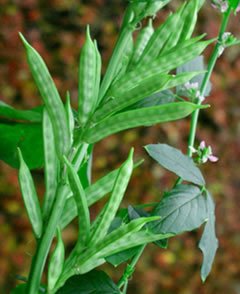
Botanical Reference 1: Guar — Botanical specimen
Botanical Reference 2: Cyamopsis tetragonoloba — Wikimedia Commons reference
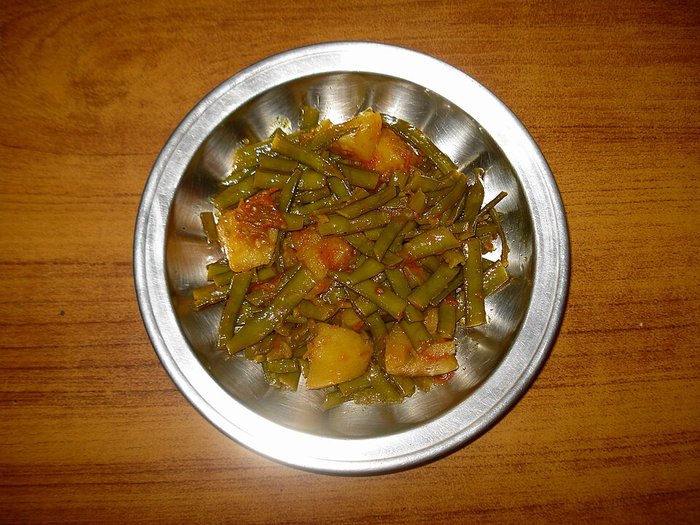
Botanical Reference 3: Cyamopsis tetragonoloba — Wikimedia Commons reference
4. Comparative Genus & Family Pharmacognosy
Within Indian medicinal flora, Cyamopsis tetragonoloba stands as a distinct representative of the genus Cyamopsis. Its therapeutic profile underscores the role of selectively utilized medicinal genera alongside larger polytypic genera.
At the family level, Fabaceae encompasses 25 documented medicinal species (1.38% of the 1,814-species flora). Other representative medicinal members of Fabaceae include: Astragalus candolleanus (Rudanti), Astragalus gummifer (Tragacanth Gum), Astragalus hamosus (Tonkin bean), Astragalus sarcocola (Rudanti), Derris indica (Naktmaal). In comparative pharmacognosy, evaluating species within the same botanical family aids quality control, authentication of crude drugs, and identification of chemotaxonomic markers.
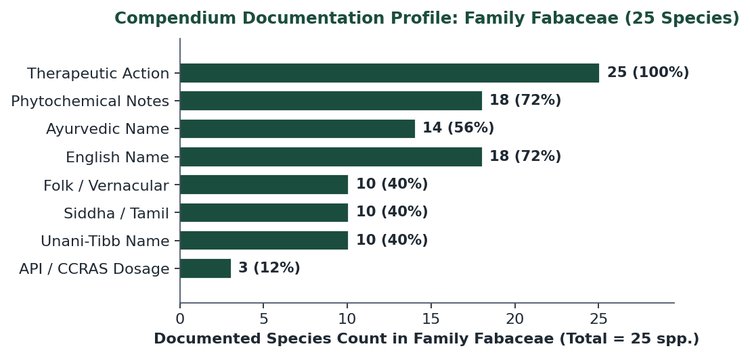
Figure 1: Quantitative documentation profile across all 25 medicinal species of family Fabaceae.
5. Pharmacopoeial Standards, Posology & Reference Framework
In clinical and traditional dispensing, preparation and administration of Cyamopsis tetragonoloba follow the plant-part modalities specified under its therapeutic action (Laxative, antibilious. Gum—hypoglycaemic, hypolipidaemic, appetite depressor (weight loss not observed), reduces glycosuria during gum supplementation), guided by the standard posological principles of The Ayurvedic Pharmacopoeia of India (Vols. I–IV) and CCRAS formularies. Classical and modern pharmacognostic synchronization for Cyamopsis tetragonoloba integrates standards from The Ayurvedic Pharmacopoeia of India, The National Formulary of Unani Medicine, Formulary of Siddha Medicine, The Wealth of India (CSIR), Compendium of Indian Medicinal Plants (CDRI), Dictionary of Indian Medicinal Plants (CIMAP), German Commission E, ESCOP, WHO monographs, British Herbal Pharmacopoeia, and Natural Medicines Comprehensive Database.