Cyperus esculentus Linn.
1. Taxonomic, Nomenclature & Therapeutic Summary Table
| Botanical Attribute | Pharmacognostic & Therapeutic Specification |
|---|---|
| Family | Cyperaceae. |
| Habitat | Indigenous to West Asia and North Africa; occurring scattered from Punjab to Nilgiri hills as a grass-like sedge. |
| English | Earth Almond, Chufa, Rush Nut, Tiger Nut. (Tuber is called Nut.) |
| Ayurvedic | Chichoda. |
| Folk | Chichodaa, Kaseru (Punjab). Also equated with Naagaramustaka. |
| Action | A digestive tonic (used for indigestion, flatulence, colic, diarrhoea, dysentery); promotes diuresis and menstruation. The juice is taken for treating ulcers of the mouth and gums. |
| Taxonomic Cohort | Genus Cyperus (4 documented species); Family Cyperaceae (12 documented species). |
2. Classical Nomenclature, Taxonomy & Biogeographical Context
Cyperus esculentus (taxonomically cited with authority Linn.) is an established medicinal plant species in Indian materia medica. It is classified under the botanical family Cyperaceae (primary family classification: Cyperaceae), placing it within a well-defined chemotaxonomic group of medicinal flora. Within botanical taxonomy, this taxon is cataloged directly under its primary accepted binomial without secondary botanical synonyms. Biogeographically, its documented habitat and ecological distribution span: Indigenous to West Asia and North Africa; occurring scattered from Punjab to Nilgiri hills as a grass-like sedge.
Across classical and vernacular Indian systems of medicine, Cyperus esculentus is recognized under distinct polyglot nomenclature: in English botanical and trade usage as Earth Almond, Chufa, Rush Nut, Tiger Nut. (Tuber is called Nut.); in the Ayurvedic system (synchronized across The Ayurvedic Pharmacopoeia of India, CCRAS Standard Nomenclature, Sharangadhara Samhita, and Bhava Prakash) as Chichoda; in regional Indian folk and vernacular ethnobotany as Chichodaa, Kaseru (Punjab). Also equated with Naagaramustaka. Romanized Sanskrit and Ayurvedic spellings follow standard National Academy of Ayurveda (Rashtriya Ayurveda Vidyapeeth) transliteration conventions, using double vowels to preserve authentic classical pronunciation across regional medical traditions.
3. Therapeutic Actions, Phytochemistry & Pharmacological Profile
In therapeutic and clinical pharmacognosy, the primary recorded actions and clinical indications of Cyperus esculentus are: A digestive tonic (used for indigestion, flatulence, colic, diarrhoea, dysentery); promotes diuresis and menstruation. The juice is taken for treating ulcers of the mouth and gums. These traditional and clinical attributes reflect the plant part-specific pharmacological profile documented across classical Indian treatises and modern herbal pharmacopoeias.
Experimental phytochemistry, active chemical constituents, and pharmacological screening studies reported for Cyperus esculentus establish the following evidence base: Tiger Nut is used in debility and as a nervine tonic due to its high crude lipid and carbohydrate contents and fairly good essential amino acid composition.
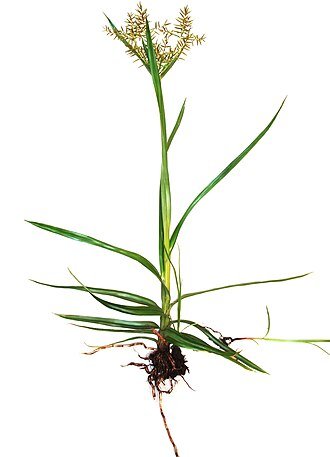
Botanical Reference 1: Cyperus esculentus — Botanical specimen
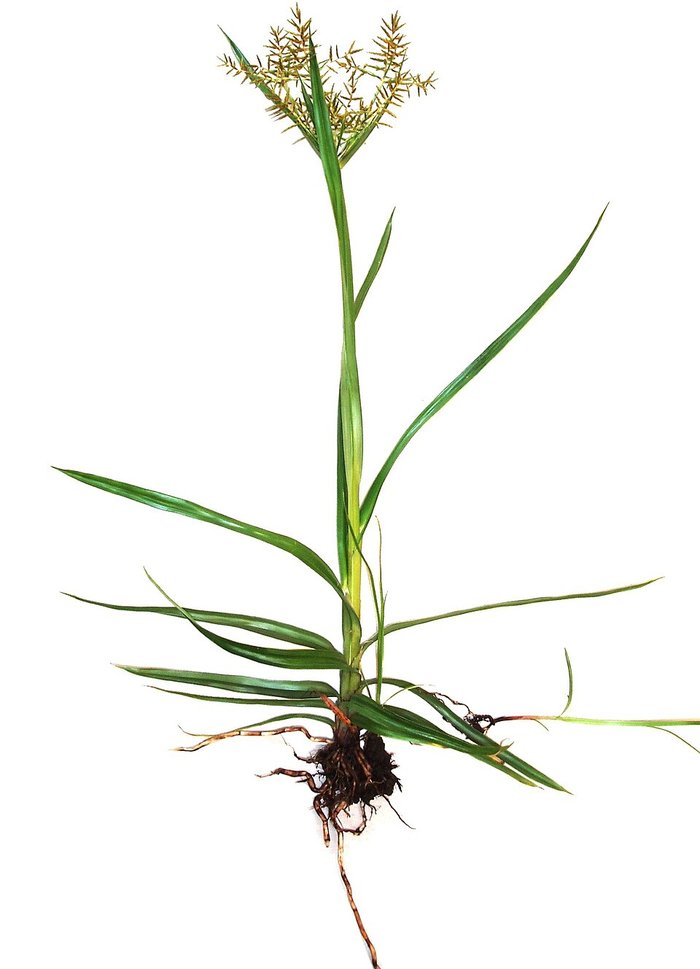
Botanical Reference 2: Cyperus esculentus — Botanical specimen
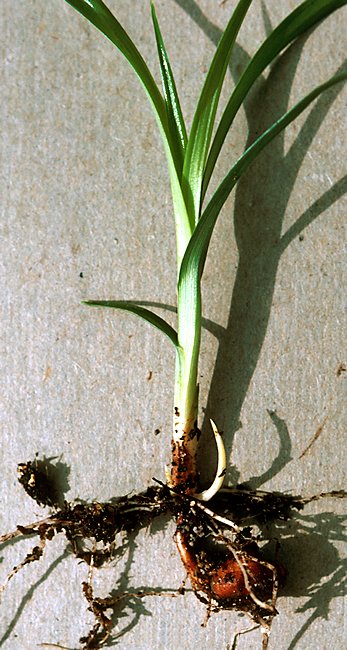
Botanical Reference 3: Cyperus esculentus — Wikimedia Commons reference
4. Comparative Genus & Family Pharmacognosy
Taxonomically, the genus Cyperus comprises 4 distinct medicinal species in Indian herbal literature. Closely allied congeneric species include: Cyperus articulatus (Action: Carminative, antiemetic (useful in vomiting of pregnancy), sedative (in dyspeptic…); Cyperus rotundus (Action: Carminative, astringent, anti-inflammatory, antirheumatic, hepatoprotective…); Cyperus scariosus (Action: Essential oil—hypotensive, anti-inflammatory, CNS stimulant, antimicrobial….). Comparing Cyperus esculentus alongside its congeners in genus Cyperus highlights both shared secondary metabolite classes and species-specific organotropism across different ecological zones.
At the family level, Cyperaceae encompasses 12 documented medicinal species (0.66% of the 1,814-species flora). Other representative medicinal members of Cyperaceae include: Cyperus articulatus (Kronchaadana), Cyperus rotundus (Musta), Cyperus scariosus (Bhadramustaa), Eleocharis dulcis (Shringaataka), Fimbristylis ovata (Ibha-muulaka). In comparative pharmacognosy, evaluating species within the same botanical family aids quality control, authentication of crude drugs, and identification of chemotaxonomic markers.
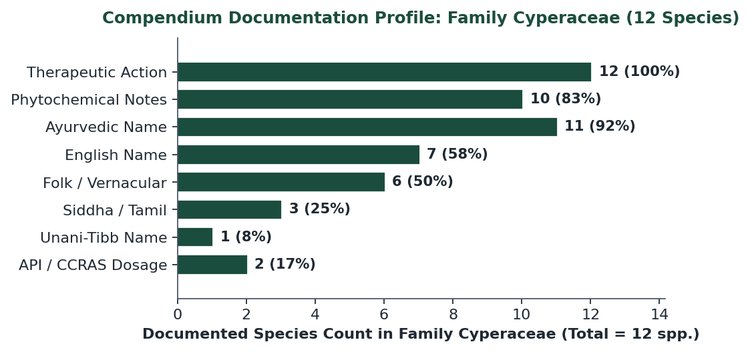
Figure 1: Quantitative documentation profile across all 12 medicinal species of family Cyperaceae.
5. Pharmacopoeial Standards, Posology & Reference Framework
In clinical and traditional dispensing, preparation and administration of Cyperus esculentus follow the plant-part modalities specified under its therapeutic action (A digestive tonic (used for indigestion, flatulence, colic, diarrhoea, dysentery); promotes diuresis and menstruation. The juice is taken for treating ulcers of the mouth and gums), guided by the standard posological principles of The Ayurvedic Pharmacopoeia of India (Vols. I–IV) and CCRAS formularies. Classical and modern pharmacognostic synchronization for Cyperus esculentus integrates standards from The Ayurvedic Pharmacopoeia of India, The National Formulary of Unani Medicine, Formulary of Siddha Medicine, The Wealth of India (CSIR), Compendium of Indian Medicinal Plants (CDRI), Dictionary of Indian Medicinal Plants (CIMAP), German Commission E, ESCOP, WHO monographs, British Herbal Pharmacopoeia, and Natural Medicines Comprehensive Database.