Brugmansia suaveolens Bercht. & Presl.
1. Taxonomic, Nomenclature & Therapeutic Summary Table
| Botanical Attribute | Pharmacognostic & Therapeutic Specification |
|---|---|
| Synonym | Datura suaveolens Humb. & Bonpl. ex Willd. |
| Family | Solanaceae. |
| Habitat | Native to Mexico; grown in Indian gardens. |
| English | Angel’s Trumpet. |
| Action | Leaf and flower—used to treat asthma; to induce hallucinations. Can cause severe toxicity. |
| Taxonomic Cohort | Genus Brugmansia (1 documented species); Family Solanaceae (38 documented species). |
2. Classical Nomenclature, Taxonomy & Biogeographical Context
Brugmansia suaveolens (taxonomically cited with authority Bercht. & Presl.) is an established medicinal plant species in Indian materia medica. It is classified under the botanical family Solanaceae (primary family classification: Solanaceae), placing it within a well-defined chemotaxonomic group of medicinal flora. In classical and modern botanical literature, the species is cross-referenced under the botanical synonymy Datura suaveolens Humb. & Bonpl. ex Willd, which is synchronized to prevent taxonomic ambiguity across regional herbal formularies. Biogeographically, its documented habitat and ecological distribution span: Native to Mexico; grown in Indian gardens.
Across classical and vernacular Indian systems of medicine, Brugmansia suaveolens is recognized under distinct polyglot nomenclature: in English botanical and trade usage as Angel’s Trumpet. Romanized Sanskrit and Ayurvedic spellings follow standard National Academy of Ayurveda (Rashtriya Ayurveda Vidyapeeth) transliteration conventions, using double vowels to preserve authentic classical pronunciation across regional medical traditions.
3. Therapeutic Actions, Phytochemistry & Pharmacological Profile
In therapeutic and clinical pharmacognosy, the primary recorded actions and clinical indications of Brugmansia suaveolens are: Leaf and flower—used to treat asthma; to induce hallucinations. Can cause severe toxicity. These traditional and clinical attributes reflect the plant part-specific pharmacological profile documented across classical Indian treatises and modern herbal pharmacopoeias.
Experimental phytochemistry, active chemical constituents, and pharmacological screening studies reported for Brugmansia suaveolens establish the following evidence base: All parts of the plant contain tropane alkaloids (concentration highest in the foliage and seeds), particularly atropine, hyoscyamine and hyoscine (scopolamine.)
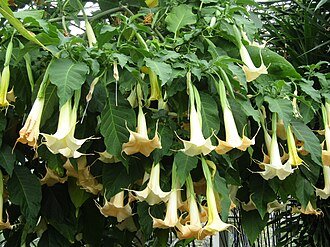
Botanical Reference 1: Brugmansia suaveolens — Botanical specimen
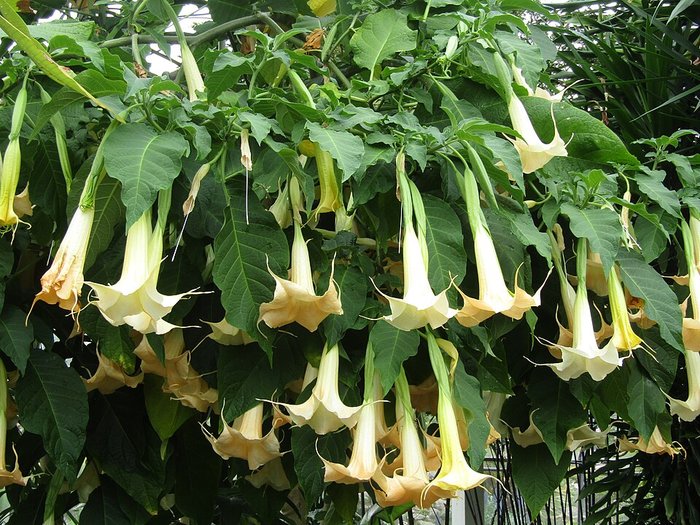
Botanical Reference 2: Brugmansia suaveolens — Botanical specimen
Botanical Reference 3: Brugmansia suaveolens — Wikimedia Commons reference
4. Comparative Genus & Family Pharmacognosy
Within Indian medicinal flora, Brugmansia suaveolens stands as a distinct representative of the genus Brugmansia. Its therapeutic profile underscores the role of selectively utilized medicinal genera alongside larger polytypic genera.
At the family level, Solanaceae encompasses 38 documented medicinal species (2.09% of the 1,814-species flora). Other representative medicinal members of Solanaceae include: Atropa acuminata (Suuchi), Capsicum annuum (Raktamaricha), Capsicum frutescens (Katuviraa), Datura alba (Dhattuura), Hyoscyamus muticus (Paarsika-yavaani). In comparative pharmacognosy, evaluating species within the same botanical family aids quality control, authentication of crude drugs, and identification of chemotaxonomic markers.
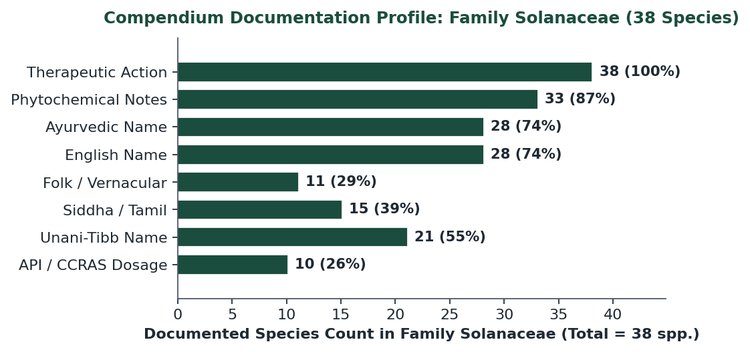
Figure 1: Quantitative documentation profile across all 38 medicinal species of family Solanaceae.
5. Pharmacopoeial Standards, Posology & Reference Framework
In clinical and traditional dispensing, preparation and administration of Brugmansia suaveolens follow the plant-part modalities specified under its therapeutic action (Leaf and flower—used to treat asthma; to induce hallucinations. Can cause severe toxicity), guided by the standard posological principles of The Ayurvedic Pharmacopoeia of India (Vols. I–IV) and CCRAS formularies. Classical and modern pharmacognostic synchronization for Brugmansia suaveolens integrates standards from The Ayurvedic Pharmacopoeia of India, The National Formulary of Unani Medicine, Formulary of Siddha Medicine, The Wealth of India (CSIR), Compendium of Indian Medicinal Plants (CDRI), Dictionary of Indian Medicinal Plants (CIMAP), German Commission E, ESCOP, WHO monographs, British Herbal Pharmacopoeia, and Natural Medicines Comprehensive Database.