Chukrassia tabularis A. Juss.
1. Taxonomic, Nomenclature & Therapeutic Summary Table
| Botanical Attribute | Pharmacognostic & Therapeutic Specification |
|---|---|
| Family | Meliaceae. |
| Habitat | Hills of Sikkim, Maharashtra, Tamil Nadu and the Andamans. |
| English | Bastard Cedar, White Cedar, Indian Red Wood. |
| Siddha / Tamil | Aglay, Melei Veppu. |
| Folk | Chikrassy. |
| Action | Bark—astringent, febrifuge, antidiarrhoeic, spasmolytic, diuretic. The plant is used in skeltal fractures. |
| Taxonomic Cohort | Genus Chukrassia (1 documented species); Family Meliaceae (16 documented species). |
2. Classical Nomenclature, Taxonomy & Biogeographical Context
Chukrassia tabularis (taxonomically cited with authority A. Juss.) is an established medicinal plant species in Indian materia medica. It is classified under the botanical family Meliaceae (primary family classification: Meliaceae), placing it within a well-defined chemotaxonomic group of medicinal flora. Within botanical taxonomy, this taxon is cataloged directly under its primary accepted binomial without secondary botanical synonyms. Biogeographically, its documented habitat and ecological distribution span: Hills of Sikkim, Maharashtra, Tamil Nadu and the Andamans.
Across classical and vernacular Indian systems of medicine, Chukrassia tabularis is recognized under distinct polyglot nomenclature: in English botanical and trade usage as Bastard Cedar, White Cedar, Indian Red Wood; in the Siddha and Tamil medical tradition (compiled from the Formulary of Siddha Medicine and IMPCOPS Chennai) as Aglay, Melei Veppu; in regional Indian folk and vernacular ethnobotany as Chikrassy. Romanized Sanskrit and Ayurvedic spellings follow standard National Academy of Ayurveda (Rashtriya Ayurveda Vidyapeeth) transliteration conventions, using double vowels to preserve authentic classical pronunciation across regional medical traditions.
3. Therapeutic Actions, Phytochemistry & Pharmacological Profile
In therapeutic and clinical pharmacognosy, the primary recorded actions and clinical indications of Chukrassia tabularis are: Bark—astringent, febrifuge, antidiarrhoeic, spasmolytic, diuretic. The plant is used in skeltal fractures. These traditional and clinical attributes reflect the plant part-specific pharmacological profile documented across classical Indian treatises and modern herbal pharmacopoeias.
Experimental phytochemistry, active chemical constituents, and pharmacological screening studies reported for Chukrassia tabularis establish the following evidence base: The bark contains sitosterol, melianone, scopoletin and 6,7-di-MeOcoumarin. The leaves gave quercetin galactoside, galloyl glucocide and tannic acid. The bark and young leaves contain 15 and 20% tannin respectively. Seeds contain tetranortriterpenoids. EtOH (50%) extract of the stem bark exhibited spasmolytic, hypotensive and diuretic activity. The saline extract of seeds showed haemagglutinating activity.
4. Comparative Genus & Family Pharmacognosy
Within Indian medicinal flora, Chukrassia tabularis stands as a distinct representative of the genus Chukrassia. Its therapeutic profile underscores the role of selectively utilized medicinal genera alongside larger polytypic genera.
At the family level, Meliaceae encompasses 16 documented medicinal species (0.88% of the 1,814-species flora). Other representative medicinal members of Meliaceae include: Aglaia roxburghiana (Priyangu), Amoora cucullata (Amur), Aphanamixis polystachya (Rohitaka), Azadirachta indica (Nimba), Cedrela toona (Tuunikaa). In comparative pharmacognosy, evaluating species within the same botanical family aids quality control, authentication of crude drugs, and identification of chemotaxonomic markers.
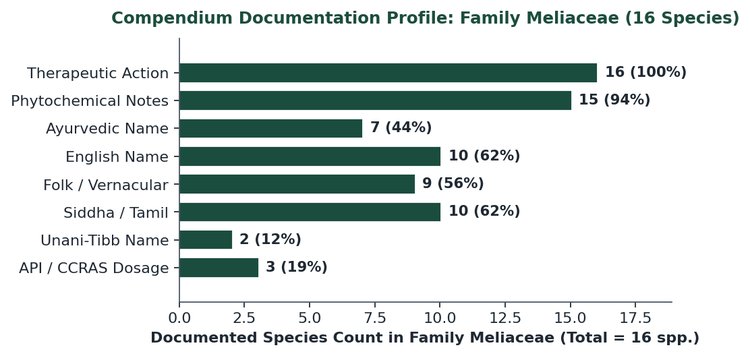
Figure 1: Quantitative documentation profile across all 16 medicinal species of family Meliaceae.
5. Pharmacopoeial Standards, Posology & Reference Framework
In clinical and traditional dispensing, preparation and administration of Chukrassia tabularis follow the plant-part modalities specified under its therapeutic action (Bark—astringent, febrifuge, antidiarrhoeic, spasmolytic, diuretic. The plant is used in skeltal fractures), guided by the standard posological principles of The Ayurvedic Pharmacopoeia of India (Vols. I–IV) and CCRAS formularies. Classical and modern pharmacognostic synchronization for Chukrassia tabularis integrates standards from The Ayurvedic Pharmacopoeia of India, The National Formulary of Unani Medicine, Formulary of Siddha Medicine, The Wealth of India (CSIR), Compendium of Indian Medicinal Plants (CDRI), Dictionary of Indian Medicinal Plants (CIMAP), German Commission E, ESCOP, WHO monographs, British Herbal Pharmacopoeia, and Natural Medicines Comprehensive Database.