Citrus aurantium Linn.
1. Taxonomic, Nomenclature & Therapeutic Summary Table
| Botanical Attribute | Pharmacognostic & Therapeutic Specification |
|---|---|
| Family | Rutaceae. |
| Habitat | Cultivated in Khasi hills and Cachar. Also in Guntur (Andhra Pradesh). Found in semiwild state in the Naga and Khasi hills. |
| English | Citrus dulcis, Sour Orange, Sweet Orange. |
| Folk | Khattaa. |
| Siddha / Tamil | Mallikanarangi. |
| Action | Peel—laxative, feeble stomachic, emmenagogue. Leaves— prescribed in the treatment of arthritis and bronchitis. Flowers— aqueous extract is employed in scurvy, fever, inflammation, nervous and hysterical cases. Fruit— a decoction is used to recover from cachexia left by intermittent fever and in cases of enlarged spleen. Dried rind—used in atonic dyspepsia. |
| Key Application | Cut peel—in loss of appetite and dyspeptic ailments. (German Commission E.). As a bitter tonic. (British Pharmacopoeia.) |
| Taxonomic Cohort | Genus Citrus (6 documented species); Family Rutaceae (31 documented species). |
2. Classical Nomenclature, Taxonomy & Biogeographical Context
Citrus aurantium (taxonomically cited with authority Linn.) is an established medicinal plant species in Indian materia medica. It is classified under the botanical family Rutaceae (primary family classification: Rutaceae), placing it within a well-defined chemotaxonomic group of medicinal flora. Within botanical taxonomy, this taxon is cataloged directly under its primary accepted binomial without secondary botanical synonyms. Biogeographically, its documented habitat and ecological distribution span: Cultivated in Khasi hills and Cachar. Also in Guntur (Andhra Pradesh). Found in semiwild state in the Naga and Khasi hills.
Across classical and vernacular Indian systems of medicine, Citrus aurantium is recognized under distinct polyglot nomenclature: in English botanical and trade usage as Citrus dulcis, Sour Orange, Sweet Orange; in the Siddha and Tamil medical tradition (compiled from the Formulary of Siddha Medicine and IMPCOPS Chennai) as Mallikanarangi; in regional Indian folk and vernacular ethnobotany as Khattaa. Romanized Sanskrit and Ayurvedic spellings follow standard National Academy of Ayurveda (Rashtriya Ayurveda Vidyapeeth) transliteration conventions, using double vowels to preserve authentic classical pronunciation across regional medical traditions.
3. Therapeutic Actions, Phytochemistry & Pharmacological Profile
In therapeutic and clinical pharmacognosy, the primary recorded actions and clinical indications of Citrus aurantium are: Peel—laxative, feeble stomachic, emmenagogue. Leaves— prescribed in the treatment of arthritis and bronchitis. Flowers— aqueous extract is employed in scurvy, fever, inflammation, nervous and hysterical cases. Fruit— a decoction is used to recover from cachexia left by intermittent fever and in cases of enlarged spleen. Dried rind—used in atonic dyspepsia. These traditional and clinical attributes reflect the plant part-specific pharmacological profile documented across classical Indian treatises and modern herbal pharmacopoeias. Furthermore, international and national regulatory monographs highlight its validated key clinical application: Cut peel—in loss of appetite and dyspeptic ailments. (German Commission E.). As a bitter tonic. (British Pharmacopoeia.).
Experimental phytochemistry, active chemical constituents, and pharmacological screening studies reported for Citrus aurantium establish the following evidence base: The main constituents of the peel include the alkaloid synephrine and Nmethyltyramine. Synephrine, an alpha 1-adrenergic agonist, stimulates a rise in blood pressure through vasoconstriction. N-methyltyramine also raises blood pressure. The root gave xanthyletin. The essential oil exhibits antifungal activity, it was found effective in treatment-resistant fungal skin diseases. (Expanded Commission E Monographs.) Commercially available Citrus vulgaris (bitter orange) extracts are often promoted for weight loss due to purported thermogenic effects. In animal models, synephrine causes weight loss, but also increases cardiovascular toxicity. (Natural Medicines Comprehensive Database, 2007.)
In specialized pharmacognostic classifications, Citrus aurantium is also listed among standardized commercial herbal extracts used in India with defined quantitative phytochemical markers; and documented among specialized herbal extracts utilized for cosmetic, dermatological, and topical applications.
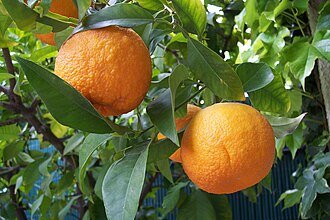
Botanical Reference 1: Bitter orange — Botanical specimen
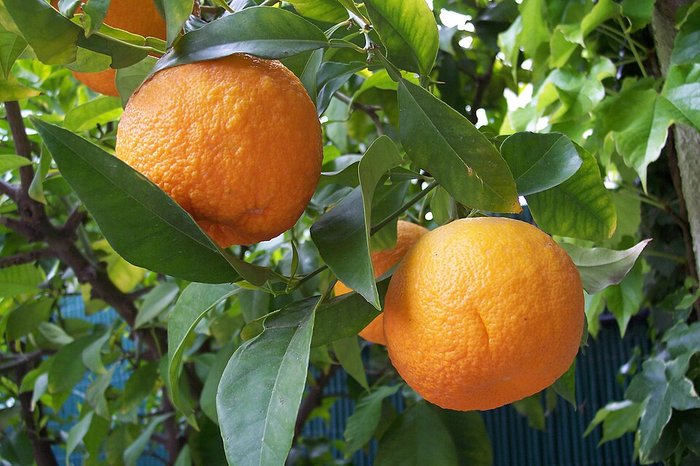
Botanical Reference 2: Bitter orange — Botanical specimen
Botanical Reference 3: Citrus aurantium — Wikimedia Commons reference
4. Comparative Genus & Family Pharmacognosy
Taxonomically, the genus Citrus comprises 6 distinct medicinal species in Indian herbal literature. Closely allied congeneric species include: Citrus aurantifolia (Action: Antiscorbutic, stomachic, appetizer, refrigerant. Used in bilious vomiting….); Citrus limon (Action: Fruit—antiscorbutic, carminative, stomachic, antihistaminic, antibacterial. Used…); Citrus maxima (Action: Fruit—cardiotonic. Leaves, flowers and rind—used as a sedative in nervous…); Citrus medica (Action: Fruit—antiscorbutic, refrigerant, astringent, carminative, stomachic…); Citrus paradisi (Action: Young leaves—decoction is used to relieve cold or headache. Fruit—used for…). Comparing Citrus aurantium alongside its congeners in genus Citrus highlights both shared secondary metabolite classes and species-specific organotropism across different ecological zones.
At the family level, Rutaceae encompasses 31 documented medicinal species (1.71% of the 1,814-species flora). Other representative medicinal members of Rutaceae include: Aegle marmelos (Bilva), Atalantia monophylla (Wild Lime), Chloroxylon swietenia (Provisionally equated with Bhillotaka), Citrus aurantifolia (Nimbuka), Clausena pentaphylla (Ratanjot). In comparative pharmacognosy, evaluating species within the same botanical family aids quality control, authentication of crude drugs, and identification of chemotaxonomic markers.
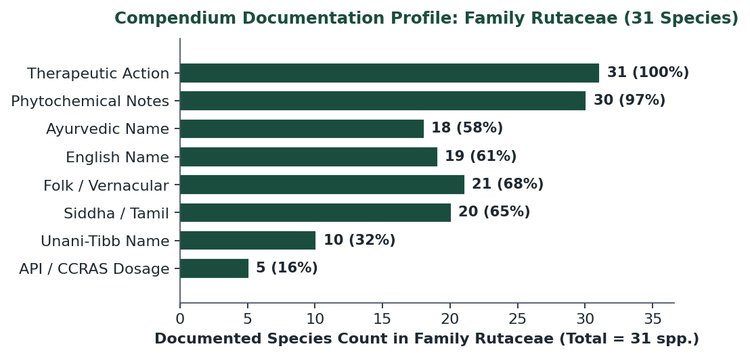
Figure 1: Quantitative documentation profile across all 31 medicinal species of family Rutaceae.
5. Pharmacopoeial Standards, Posology & Reference Framework
In clinical and traditional dispensing, preparation and administration of Citrus aurantium follow the plant-part modalities specified under its therapeutic action (Peel—laxative, feeble stomachic, emmenagogue. Leaves— prescribed in the treatment of arthritis and bronchitis. Flowers— aqueous extract is employed in scurvy, fever, inflammation, nervous and hysterical cases. Fruit— a decoction is used to recover from cachexia left by intermittent fever and in cases of enlarged spleen. Dried rind—used in atonic dyspepsia), guided by the standard posological principles of The Ayurvedic Pharmacopoeia of India (Vols. I–IV) and CCRAS formularies. Classical and modern pharmacognostic synchronization for Citrus aurantium integrates standards from The Ayurvedic Pharmacopoeia of India, The National Formulary of Unani Medicine, Formulary of Siddha Medicine, The Wealth of India (CSIR), Compendium of Indian Medicinal Plants (CDRI), Dictionary of Indian Medicinal Plants (CIMAP), German Commission E, ESCOP, WHO monographs, British Herbal Pharmacopoeia, and Natural Medicines Comprehensive Database.