Abutilon indicum Linn. Sweet.
1. Taxonomic, Nomenclature & Therapeutic Summary Table
| Botanical Attribute | Pharmacognostic & Therapeutic Specification |
|---|---|
| Synonym | A. indicum G. Don. |
| Family | Malvaceae. |
| Habitat | Throughout the hotter parts of India. Found as a weed in the sub-Himalayan tract and other hills up to 1,200 m. |
| English | Country Mallow, Flowering Maples, Chinese Bell-flowers. |
| Ayurvedic | Atibalaa, Kankatikaa, Rishyaproktaa. |
| Unani | Kanghi, Musht-ul-Ghaul, Darkht-e-Shaan. |
| Siddha / Tamil | Thutthi. |
| Folk | Kanghi, Kakahi, Kakahiyaa. |
| Action | Dried, whole plant— febrifuge, anthelmintic, demulcent, diuretic, anti-inflammatory (in urinary and uterine discharges, piles, lumbago). Juice of the plant— emollient. Seeds—demulcent (used in cough, chronic cystitis), laxative. Leaves—cooked and eaten for bleeding piles. Flowers— antibacterial, anti-inflammatory. Bark—astringent, diuretic. Root— nervine tonic, given in paralysis; also prescribed in strangury. |
| Dosage | Root—3–6 g powder. (API Vol I.) |
| Taxonomic Cohort | Genus Abutilon (1 documented species); Family Malvaceae (27 documented species). |
2. Classical Nomenclature, Taxonomy & Biogeographical Context
Abutilon indicum (taxonomically cited with authority Linn. Sweet.) is an established medicinal plant species in Indian materia medica. It is classified under the botanical family Malvaceae (primary family classification: Malvaceae), placing it within a well-defined chemotaxonomic group of medicinal flora. In classical and modern botanical literature, the species is cross-referenced under the botanical synonymy A. indicum G. Don, which is synchronized to prevent taxonomic ambiguity across regional herbal formularies. Biogeographically, its documented habitat and ecological distribution span: Throughout the hotter parts of India. Found as a weed in the sub-Himalayan tract and other hills up to 1,200 m.
Across classical and vernacular Indian systems of medicine, Abutilon indicum is recognized under distinct polyglot nomenclature: in English botanical and trade usage as Country Mallow, Flowering Maples, Chinese Bell-flowers; in the Ayurvedic system (synchronized across The Ayurvedic Pharmacopoeia of India, CCRAS Standard Nomenclature, Sharangadhara Samhita, and Bhava Prakash) as Atibalaa, Kankatikaa, Rishyaproktaa; in the Unani-Tibb materia medica (recorded in The National Formulary of Unani Medicine and CCRUM literature) as Kanghi, Musht-ul-Ghaul, Darkht-e-Shaan; in the Siddha and Tamil medical tradition (compiled from the Formulary of Siddha Medicine and IMPCOPS Chennai) as Thutthi; in regional Indian folk and vernacular ethnobotany as Kanghi, Kakahi, Kakahiyaa. Romanized Sanskrit and Ayurvedic spellings follow standard National Academy of Ayurveda (Rashtriya Ayurveda Vidyapeeth) transliteration conventions, using double vowels to preserve authentic classical pronunciation across regional medical traditions.
3. Therapeutic Actions, Phytochemistry & Pharmacological Profile
In therapeutic and clinical pharmacognosy, the primary recorded actions and clinical indications of Abutilon indicum are: Dried, whole plant— febrifuge, anthelmintic, demulcent, diuretic, anti-inflammatory (in urinary and uterine discharges, piles, lumbago). Juice of the plant— emollient. Seeds—demulcent (used in cough, chronic cystitis), laxative. Leaves—cooked and eaten for bleeding piles. Flowers— antibacterial, anti-inflammatory. Bark—astringent, diuretic. Root— nervine tonic, given in paralysis; also prescribed in strangury. These traditional and clinical attributes reflect the plant part-specific pharmacological profile documented across classical Indian treatises and modern herbal pharmacopoeias.
Experimental phytochemistry, active chemical constituents, and pharmacological screening studies reported for Abutilon indicum establish the following evidence base: Along with other therapeutic applications, The Ayurvedic Pharmacopoeia of India indicates the use of the root in gout, polyuria and haemorrhagic diseases. The plant contains mucilage, tannins, asparagines, gallic acid and sesquiterpenes. Presence of alkaloids, leucoanthocyanins, flavonoids, sterols, triterpenoids, saponins and cardiac glycosides is also reported. Asparagine is diuretic. Gallic acid is analgesic. Mucilages act by reflex, loosen cough as well as bronchial tension. Essential oil—antibacterial, antifungal. The drug exhibits immunological activity. It augments antibody in animals. EtOH (50%) extract of A. indicum ssp. guineense Borssum, synonym A. asiaticum (Linn.) Sweet, exhibits anticancer activity. Related sp. include: Abutilon avicennae Gaertn., synonym A. theophrastii Medic.; A. fruticosum Guill. et al.; A. hirtum (Lam.) Sweet, synonym A. graveolens Wt. and Arn.; A. muticum Sweet, synonym A. glaucum Sweet; and A. polyandrum Wight and Arn., synonym A. persicum (Burm. f.) Merrill (known as Naani-khapaat, Jhinakikhapaat, Kanghi, Makhamali-khapaat and Khaajavani-khapaat, respectively, in folk medicine).
In specialized pharmacognostic classifications, Abutilon indicum is also listed among standardized commercial herbal extracts used in India with defined quantitative phytochemical markers; and represented by authenticated macro-photographic crude drug specimens in institutional pharmacognostic collections.
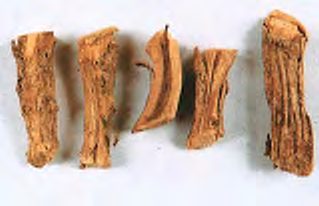
Figure 1: Authenticated crude herb specimen — Abutilon indicum root.
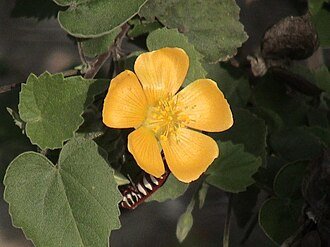
Botanical Reference 1: Abutilon indicum — Botanical specimen
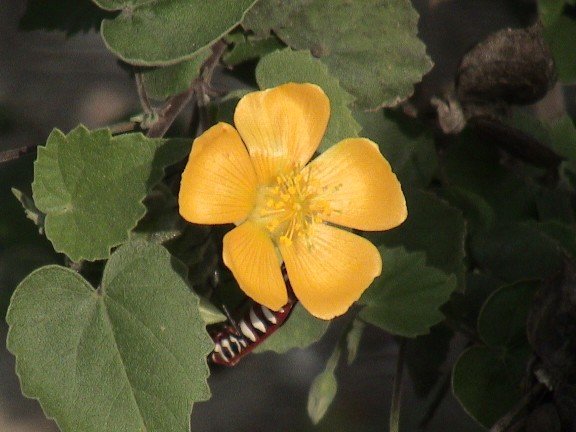
Botanical Reference 2: Abutilon indicum — Botanical specimen
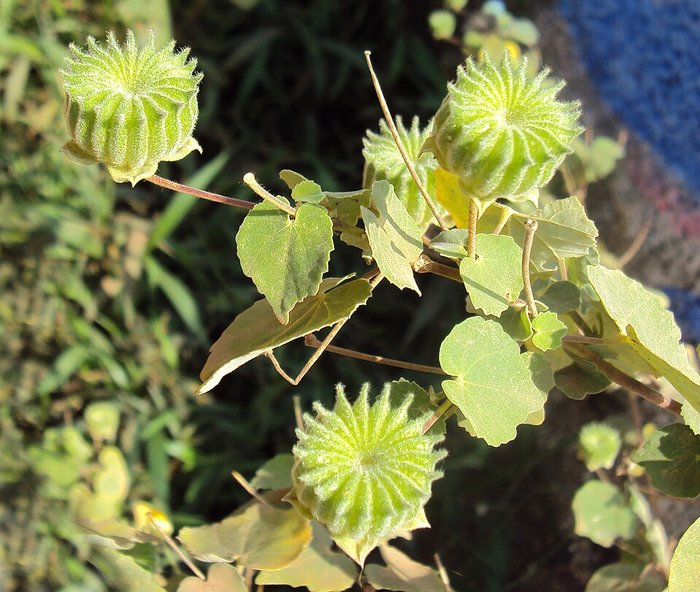
Botanical Reference 3: Abutilon indicum — Wikimedia Commons reference
4. Comparative Genus & Family Pharmacognosy
Within Indian medicinal flora, Abutilon indicum stands as a distinct representative of the genus Abutilon. Its therapeutic profile underscores the role of selectively utilized medicinal genera alongside larger polytypic genera.
At the family level, Malvaceae encompasses 27 documented medicinal species (1.49% of the 1,814-species flora). Other representative medicinal members of Malvaceae include: Abelmoschus esculentus (Bhaandi), Althaea officinalis (Marshmallow), Gossypium arboreum (Kaarpaasi), Gossypium barbadense (Kaarpaasa), Hibiscus abelmoschus (Lataakasturi). In comparative pharmacognosy, evaluating species within the same botanical family aids quality control, authentication of crude drugs, and identification of chemotaxonomic markers.
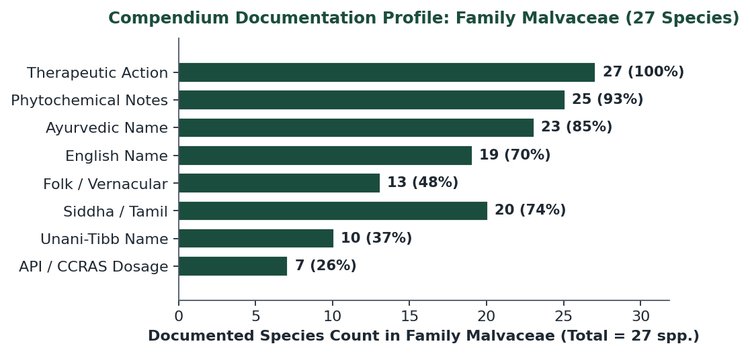
Figure 2: Quantitative documentation profile across all 27 medicinal species of family Malvaceae.
5. Pharmacopoeial Standards, Posology & Reference Framework
For clinical and traditional dispensing, the standardized posology and crude herb dosage for Abutilon indicum are prescribed as follows: Root—3–6 g powder. (API Vol I.). Crude drug dosages are calibrated against The Ayurvedic Pharmacopoeia of India (Vols. I–IV) and the Standard Nomenclature of Ayurvedic Medicinal Plants published by the Central Council for Research in Ayurveda and Siddha (CCRAS). Classical and modern pharmacognostic synchronization for Abutilon indicum integrates standards from The Ayurvedic Pharmacopoeia of India, The National Formulary of Unani Medicine, Formulary of Siddha Medicine, The Wealth of India (CSIR), Compendium of Indian Medicinal Plants (CDRI), Dictionary of Indian Medicinal Plants (CIMAP), German Commission E, ESCOP, WHO monographs, British Herbal Pharmacopoeia, and Natural Medicines Comprehensive Database.